Shai Gilgeous-Alexander Needs Career Year to Win Third MVP
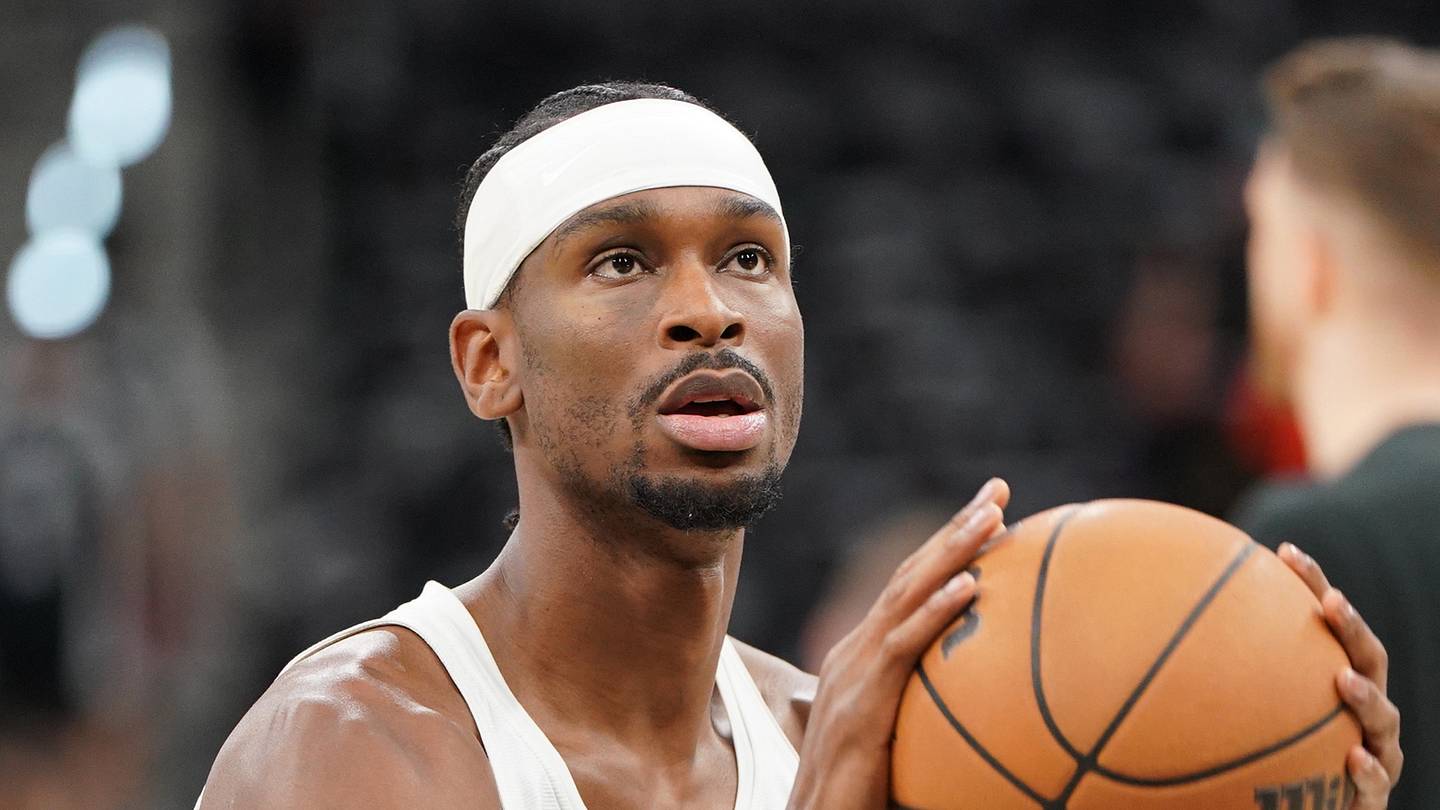
Source: SI NBA. Casualplayhub News adds summary, context, and editorial framing while linking back to the original report.
Ad eligibility review: sensitive-topic
The Oklahoma City Thunder have become accustomed to greatness. Their floor general, Shai Gilgeous-Alexander, has spent the last two seasons proving he is the best player in the world, stacking back-to-back Most Valuable Player awards alongside a championship and a Finals MVP. But as the 2025-26 season approaches, the question isn't whether he can keep winning—it's whether he can keep winning over the voters.
History is not on his side. Only three players have ever captured three straight MVP trophies: Bill Russell (1961-63), Wilt Chamberlain (1966-68), and Larry Bird (1984-86). That exclusive club has remained untouched for nearly four decades. Gilgeous-Alexander has the talent to join them, but the path is narrower than his previous runs.
A subtle yet powerful force stands in his way: voter fatigue. It is not a rule written in the league's bylaws, but it has toppled dynasties. When a player dominates for years, voters often look for a fresh face—someone who offers a compelling narrative or a statistical leap. Michael Jordan, LeBron James, and Stephen Curry all experienced seasons where they were arguably the league's best but were passed over for the award. The same logic applies to SGA. His brilliance has become routine, and that familiarity can work against him.
Last season, Gilgeous-Alexander's numbers slipped ever so slightly from his first MVP campaign. His points per game dropped from 32.1 to 31.4, and his rebounds dipped from 5.5 to 5.2. Those are still elite numbers, but they represent a trend. If he declines again, voters will have an easier excuse to look elsewhere. To win a third straight MVP, he must not only maintain his level but elevate it. A career-best season—perhaps averaging 33 points, 6 rebounds, and 7 assists—would send a clear message that he is still evolving.
Beyond individual stats, team success will play a crucial role. The Thunder have been a top contender, but finishing with the best record in the league would give Gilgeous-Alexander a powerful talking point. Another scoring title would also help. Last season, Luka Dončić led the league in scoring, but SGA was close behind. If he reclaims that crown, the narrative shifts from "he's still great" to "he's even better."
There is also the matter of competition. Players like Luka Dončić, Giannis Antetokounmpo, and Joel Embiid are perennial candidates. Emerging stars like Victor Wembanyama and Anthony Edwards are hungry for their first MVP. The voting pool is as crowded as ever. Gilgeous-Alexander's advantage is his all-around game—his defense, playmaking, and leadership set him apart. But he cannot rely on reputation alone.
In the end, the challenge is psychological as much as physical. He has to be so good that no one can look away. Every game, every highlight, every clutch performance must remind the league why he is the reigning king. If he can do that, a third consecutive MVP is within reach. If he falters, even slightly, the door opens for a new face to claim the throne.
Article commentary
The pursuit of a third consecutive MVP is one of the most daunting tasks in professional sports. Shai Gilgeous-Alexander has already achieved what few imagined: back-to-back awards in an era of unprecedented talent. But the historical precedent is unforgiving. Since Larry Bird's three-peat in the mid-1980s, no player has managed to replicate that feat. The reasons are complex, but they center on a combination of voter psychology, statistical volatility, and the natural ebb of competition. Voter fatigue is real, though it is rarely acknowledged publicly. The NBA MVP is as much a narrative award as a statistical one. When a player wins repeatedly, the media and fans begin to crave a new story. This is not a flaw in the system—it reflects the human desire for novelty. For Gilgeous-Alexander, the risk is that his excellence becomes expected. A 30-point triple-double no longer feels extraordinary; it feels routine. To overcome that, he must do something that breaks the mold—a 60-point game, a historic winning streak, or a dominant playoff run that reshapes the conversation. But there is another layer: the evolution of the game itself. The NBA is deeper than ever. Young stars like Victor Wembanyama, Anthony Edwards, and Luka Dončić are not just competing for the trophy; they are reshaping what it means to be an MVP candidate. Dončić's triple-double averages, Wembanyama's defensive impact, and Edwards' explosive scoring all offer distinct narratives. Gilgeous-Alexander's strength is his balance—he is a two-way player who can score at will, facilitate, and defend at an elite level. Yet that balance can sometimes be overlooked in favor of a single, flashy statistic. Team success is another critical variable. The Thunder have built a deep roster around SGA, but competition in the Western Conference is fierce. The Denver Nuggets, Dallas Mavericks, and Minnesota Timberwolves are all legitimate threats. If Oklahoma City finishes with a top-two seed, Gilgeous-Alexander's case strengthens. If they slip to fourth or fifth, voters may question his impact relative to the team's record. Ultimately, the conversation around a third MVP is not about whether Gilgeous-Alexander deserves it—he does. It is about whether the system will allow it. The league has seen only three three-peats in nearly 70 years, and each came during eras of less competition. Today's NBA is a gauntlet. If SGA manages to pull it off, he will not just join an exclusive club—he will redefine what is possible in the modern game. The spotlight is on him, and the next season will reveal whether he can deliver the kind of transcendent performance that silences all doubt.