WNBA: Fans Wrongly Told to Cover Transgender-Message Shirts
Source: ABC News Sports. Casualplayhub News adds summary, context, and editorial framing while linking back to the original report.
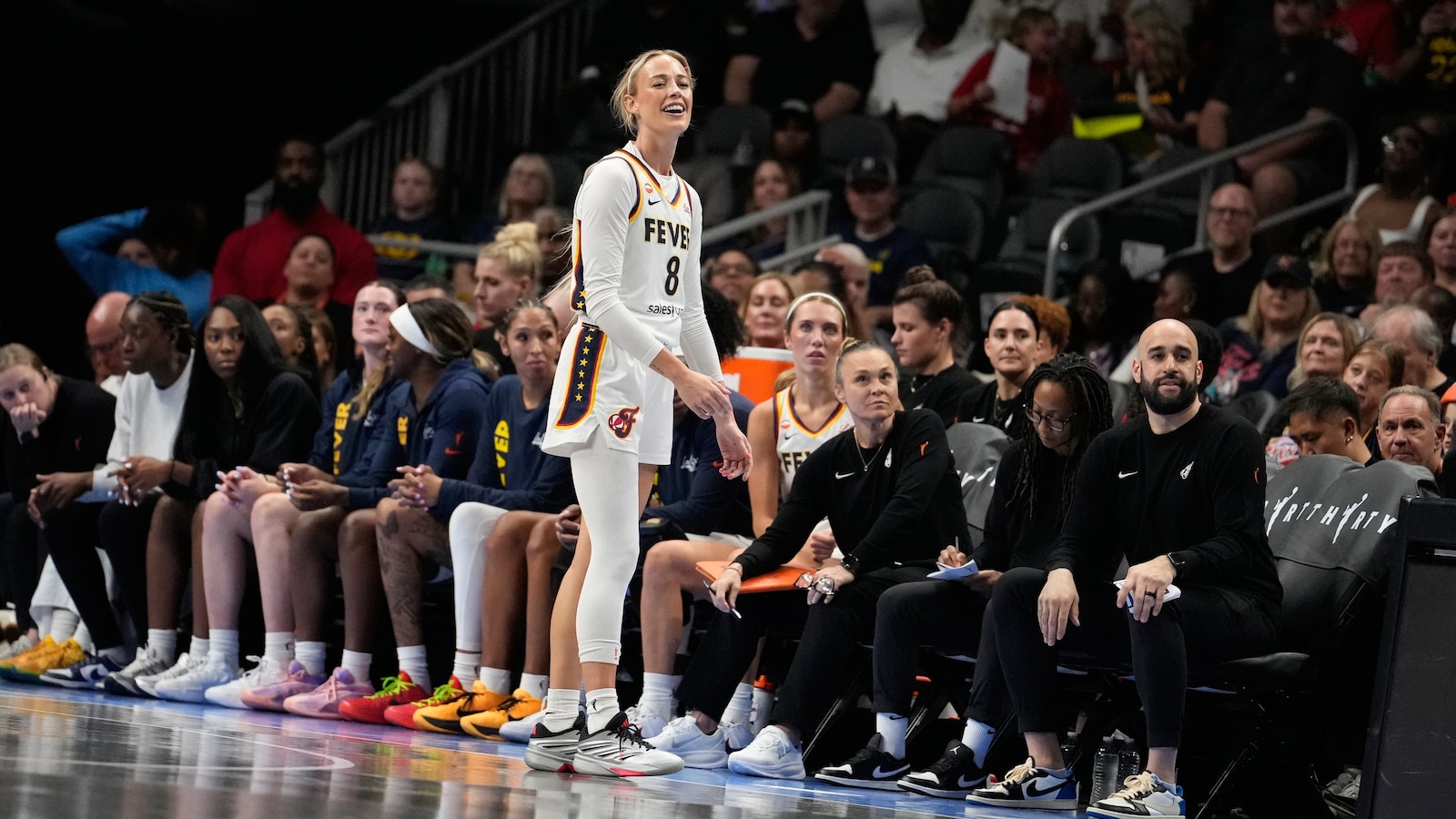
The WNBA has acknowledged a misstep after league security personnel asked at least three fans to cover their shirts during a game on Sunday in Atlanta, where the Dream hosted the Indiana Fever. The shirts displayed messages about the participation of transgender women in women's sports, a topic that has stirred intense debate both within and outside the league.
Two of the fans wore shirts advocating for women's and girls' sports to be restricted to individuals assigned female at birth. A third fan sported a shirt expressing support for transgender people. The league's security team intervened, instructing the fans to conceal the messages. The WNBA released a statement on Monday conceding that the request was a mistake. "The WNBA is aware of interactions at (Sunday) night's game in Atlanta in which fans were asked by league security to cover their shirts," the statement read. "This should not have happened."
The league emphasized that fans should be allowed to express their views through clothing, as long as it does not violate venue policies or disrupt the event. The security personnel were subsequently informed that their actions were wrong. The Atlanta Dream, the home team, distanced itself from the incident. "The Atlanta Dream believes in creating a safe and inclusive environment for everyone. Unfortunately, at last night's game, WNBA security took actions that fell short of that standard," the team said in a statement. "At no point was Dream personnel involved in the decisions made by WNBA security."
This incident unfolds against a backdrop of ongoing contention within the WNBA regarding transgender athletes. The league has never had a player who is a transgender woman—someone assigned male at birth who transitions to align with her gender identity. The WNBA's collective bargaining agreement specifies that the league is restricted to women but does not contain explicit language about gender identity or sex assigned at birth. However, several players who were assigned female at birth have publicly identified as transgender or nonbinary after joining the league.
Fever guard Sophie Cunningham has been at the center of recent controversy. In an ESPN profile published last month, Cunningham stated her opposition to transgender girls and women competing in girls' and women's sports. Her stance sparked small rallies and protests outside Fever games in Seattle and Portland. In response, Storm minority owner Celeste Keaton received a five-game ban for confronting two fans who were holding signs supporting Cunningham.
The league's handling of the shirt incident has drawn attention to the broader challenge of balancing free expression, inclusivity, and the rights of athletes. The WNBA has not changed its stance on transgender participation, but the episode underscores the sensitivities surrounding the issue. The league's statement did not address the underlying policy but focused on the procedural error by security.
As the season progresses, the WNBA continues to navigate these complex social dynamics. The incident in Atlanta may prompt further discussions about how the league and its teams address fan conduct and messaging in the stands. For now, the league has made clear that the security team's actions were an overreach, and that fans have the right to wear shirts conveying their opinions on transgender issues, whether those opinions are supportive or critical.
Article commentary
The WNBA's acknowledgment that its security personnel erred in asking fans to cover shirts with transgender-related messages is a telling moment in the league's ongoing navigation of a deeply polarizing issue. The incident itself is relatively minor—three fans, a few shirts, a mistaken request—but it reflects a broader tension that the WNBA, like many sports organizations, is struggling to manage. First, the league's response was swift and unequivocal: the fans should have been free to wear the shirts. This is consistent with principles of free expression, particularly in a public sports venue where fans are expected to voice opinions short of hate speech or incitement. The WNBA's statement did not endorse or condemn the messages themselves, but focused on the process. By doing so, the league avoided taking a substantive position on the transgender debate while still asserting a procedural norm. That is a careful balancing act, but it may not satisfy either side of the issue. Critics of transgender inclusion in women's sports may see the incident as proof that the league is over-policing dissent. Supporters of transgender rights, meanwhile, might argue that allowing shirts advocating for exclusion creates a hostile environment. The WNBA has effectively chosen neutrality on the content, which is a defensible position for a sports league that wants to remain a venue for diverse viewpoints rather than a platform for advocacy. But the incident also highlights a deeper inconsistency. The league has no transgender women players, yet it has become a flashpoint for the debate. The collective bargaining agreement's silence on gender identity leaves room for interpretation, but it also means that any future transgender player would face uncertain policy. The protest and counter-protests around Sophie Cunningham's comments show that the issue is not hypothetical—it is already affecting fan behavior and team dynamics. The security personnel's actions, while corrected, raise questions about training and consistency. If fans are allowed to wear shirts with political or social messages, where is the line? The league's security team likely acted out of a desire to avoid disruptions, but they overstepped. The Dream's statement that they were not involved suggests a possible lack of coordination between league and team security, a common issue in professional sports. Looking ahead, the WNBA may need to develop clearer guidelines for fan attire and expression. This would reduce ambiguity for security staff and fans alike. It could also defuse some of the tension by creating predictable rules. However, any such policy would inevitably be contested, as it would require defining what constitutes acceptable speech in a polarized environment. Ultimately, the Atlanta shirt incident is a microcosm of a larger societal debate. The WNBA, as a league with a progressive image and a predominantly female player base, is uniquely positioned to shape the conversation. Its decision to side with fan expression, even when the messages are controversial, signals a commitment to open dialogue. Whether that commitment will withstand future, more intense conflicts remains to be seen.