Joint practices signal the end of NFL preseason as we know it
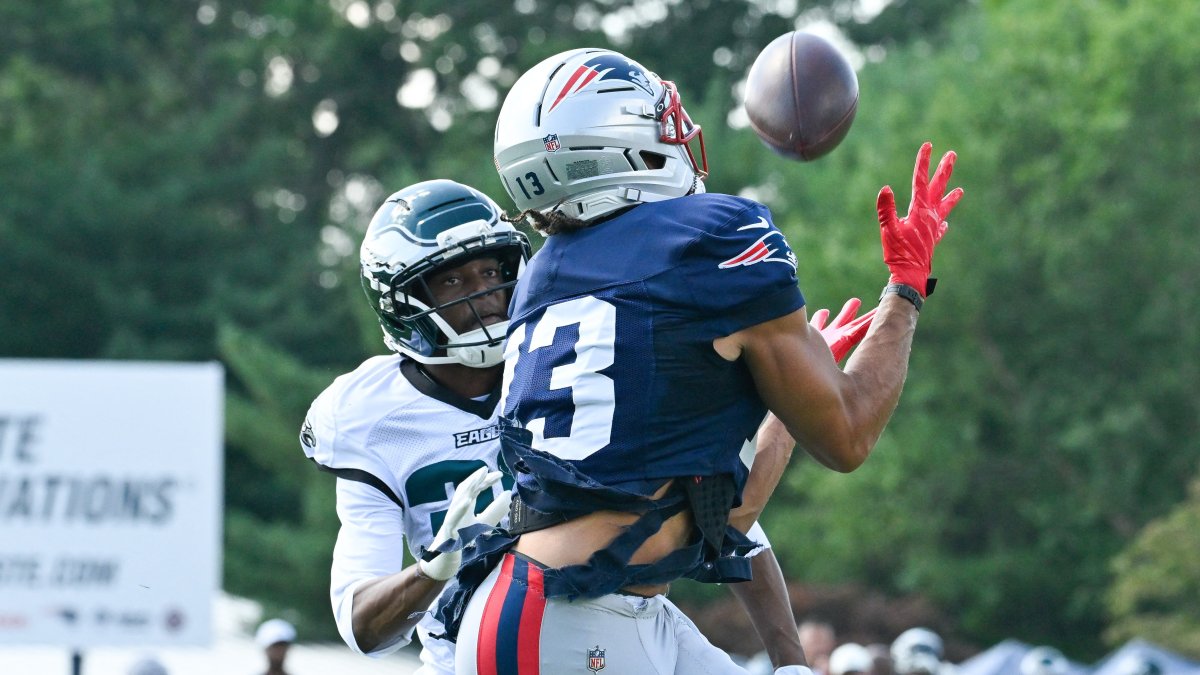
Source: NECN Providence. Casualplayhub News adds summary, context, and editorial framing while linking back to the original report.
The NFL’s preseason is fading into irrelevance, and the joint practices between the Philadelphia Eagles and New England Patriots this week offered the clearest evidence yet. While Commissioner Roger Goodell and league executives plot global expansion, a domestic tradition is quietly dying on the practice fields of Foxboro. The preseason isn’t literally dead—there are still games scheduled—but the energy, the stakes, and the audience have migrated elsewhere.
On Wednesday, the sun had barely risen over Gillette Stadium when a line formed that The Athletic’s Chad Graff described as the longest he had ever seen for a training camp session. Eagles fans mixed with Patriots faithful, and when Philadelphia’s players stepped onto the field, boos thundered from the stands. The crowd roared during one-on-one drills, especially when Drake Maye launched a deep ball toward A.J. Brown that nearly connected. The Boston Herald’s Andrew Callahan noted that the noise level rivaled anything he had heard in nine years covering the Patriots. It was a scene more typical of a playoff game than a mid-August practice.
Social media exploded. Eagles reporter Elliott Shorr-Parks, who created a win-loss record for joint practices, sent 39 tweets about the session, including a video of himself awarding the day’s “W” to the Patriots. Clips of plays drew thousands of interactions, with fans arguing over which team had the upper hand. After the session ended, star players strode to podiums for press conferences, and reporters filed detailed breakdowns of every competitive snap. The hype was indistinguishable from a regular-season Sunday, yet it was only Wednesday.
The second day of joint practices brought the same intensity. The Eagles and Patriots squared off again, with starters like Jalen Hurts and A.J. Brown mixing it up with their counterparts. The media coverage was relentless, with beat writers from both sides providing blow-by-blow accounts. The result: a collective exhaustion that would seem to drain energy from the actual preseason game scheduled for Saturday night. But that’s the point—everyone knows the game won’t feature these stars. Instead, Tommy DeVito and Andy Dalton will take the snaps, while Brown and Maye watch from the sidelines alongside the paying customers. (Fans paid nothing to attend the joint practices.)
This transformation didn’t happen overnight. For years, teams have gradually reduced the playing time of starters in preseason games, citing injury risk and the growing value of player contracts. Joint practices offer a controlled environment where coaches can dictate the tempo, limit contact, and still get meaningful work for their top players. The shift is logical from a business and health perspective, but it raises questions about the purpose of the preseason games themselves.
Tom Brady, the greatest player in NFL history, weighed in this week on Instagram after a clip of his 2010 preseason connection with Randy Moss resurfaced. “Preseason, regular season, I never wanted to be taken off the field,” Brady wrote. “Practice makes perfect. Too many people looking for easy ways out these days. When you’re a football player, and it’s football season, your job is to play football.” His sentiment underscores the value of game reps, but today’s teams have decided that controlled practice reps are a satisfactory substitute. The preseason games now serve primarily as auditions for fringe players competing for roster spots and practice squad slots. That work is crucial, but it no longer provides the glimpses of the team that fans used to expect.
Modernizing the preseason would be straightforward. The league could take these joint practices and move them into stadiums, schedule them in prime time, and broadcast them over three-hour windows. Key players would get their work in, fans would watch live or on television, and statisticians could produce data far more useful than the fourth-quarter yardage of a fifth-string running back. The only downside would be fewer reps for the bottom-of-the-roster players under the lights. But coaches have all summer to evaluate talent. The NFL is a business, and joint practices are its most marketable product in August. The league should embrace the change rather than let the preseason limp along as a hollow ritual.
Article commentary
The NFL’s preseason has been in decline for years, and the joint practices in Foxboro this week merely confirmed what many insiders already suspected: the exhibition games are no longer the primary vehicle for August preparation. The decision by teams to prioritize controlled practices over unpredictable scrimmages is a rational response to soaring player salaries and heightened awareness of injury risks. Every team wants to protect its investments, and joint practices allow coaches to script scenarios, manage contact, and still evaluate their rosters against live competition. What makes this shift particularly striking is the contrast between the passion generated by the practices and the apathy surrounding the actual preseason games. Fans flocked to the Patriots’ training camp, creating a atmosphere that rivaled a regular-season contest. Media coverage was exhaustive, with beat reporters and analysts treating each drill as a headline event. Meanwhile, the preseason game that followed will feature backup quarterbacks and players fighting for the final roster spots. The disconnect is stark: the product that fans want to see is the joint practice, not the game. This evolution has implications beyond the schedule. The NFL’s traditional preseason structure has long been a source of revenue for teams and a platform for player development. But as the league’s priorities shift, so must its approach. The idea of moving joint practices into stadiums and broadcasting them in prime time is not only feasible but long overdue. The networks would likely embrace the content, as it would offer genuine competitive action with star players, rather than the often sluggish play of third-stringers. The league could also monetize the practices through ticket sales, though the current model of free admission might need to be reconsidered. Critics will argue that eliminating the traditional preseason games would harm the development of young players who need game-speed reps. But the reality is that these players already get ample opportunities in training camp, preseason games, and practice squad drills. The NFL is a meritocracy, and the players who cannot adapt to the new reality will likely find themselves on the outside. The league’s expansion goals—global growth, new markets, and increased viewership—are better served by a product that excites fans. Joint practices, with their intensity and star power, do exactly that. The underlying message is clear: the NFL is evolving, and the preseason must evolve with it. The joint practices in Foxboro are not an anomaly but a harbinger. Teams will continue to prioritize player safety and competitive integrity, and the fans will follow the action wherever it leads. The league should formalize this shift, creating a structured August schedule that highlights the best of what these practices offer. The preseason may be dead, but the spirit of August football is alive and well—it just looks different now.