Advocates Demand Safer Access to Dogwood Vietnam Memorial
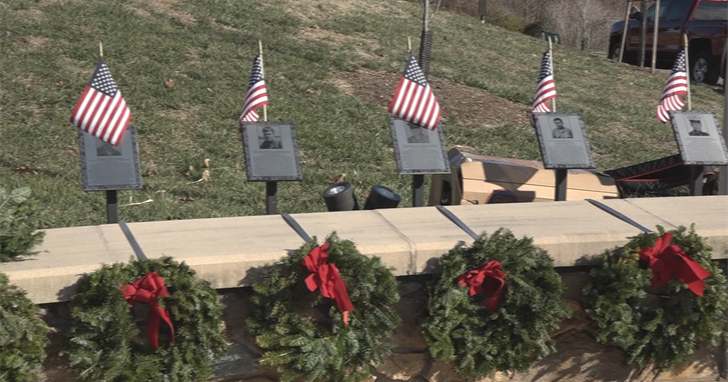
Source: CBS19 News Crime. Casualplayhub News adds summary, context, and editorial framing while linking back to the original report.
Charlottesville, Va. — Drivers traveling along Route 29 have recently spotted a bold new message suspended from a pedestrian bridge: “Build a Bridge That Matters.” The words, painted on a large banner, are part of a growing campaign to fix what many see as a glaring oversight in the way the city honors its Vietnam War veterans.
The target of the protest is the Dogwood Vietnam Memorial, a somber site that lists the names of local men and women who lost their lives in the conflict. But for years, getting to the memorial has been a challenge. The site is located on a narrow stretch of land adjacent to a busy highway, with no dedicated pedestrian infrastructure. Visitors must cross multiple lanes of traffic or navigate uneven terrain, a task that is particularly hazardous for elderly veterans and people with disabilities.
“We have a memorial that is supposed to honor those who served, but it’s practically inaccessible to the very people who fought for our freedom,” said one advocate who spoke on condition of anonymity. “That’s not just an inconvenience — it’s a failure of respect.”
The banner, hung from the pedestrian bridge that spans Route 29, is a direct plea to the city. It calls for construction of a new bridge that would connect a nearby parking area or sidewalk directly to the memorial, bypassing the dangerous road crossings. The message has resonated with many residents, sparking conversations on social media and at community meetings.
City officials have previously stated that they are working to improve access to the Dogwood Vietnam Memorial. However, specific plans have been slow to materialize, and advocates say the pace of progress is unacceptable. “We’ve heard promises for years,” said a local disability rights organizer. “We need action, not more talk.”
The memorial itself is a quiet, reflective space, featuring a granite wall engraved with the names of the fallen. It was dedicated in the 1990s and has since become a focal point for annual ceremonies on Veterans Day and Memorial Day. But those ceremonies often require attendees to park far away and walk along a grassy shoulder, a route that is impassable for wheelchairs and walkers.
The city’s Department of Parks and Recreation has acknowledged the issue in past statements, noting that it has explored options such as a pedestrian bridge or a tunnel. But funding and engineering challenges have delayed any concrete steps. Critics argue that the city has prioritized other projects over this one, leaving the memorial neglected.
“We are not asking for a grand monument — we are asking for a safe path to an existing one,” said a veteran who uses a cane. “It’s about basic dignity.”
As the banner continues to flutter over Route 29, the debate has taken on a new urgency. The coming weeks may see further demonstrations, and advocates are planning to present a formal petition to the city council. They hope the message — both literal and figurative — will finally push the city to build a bridge that truly matters.
Related coverage: The issue adds to a broader conversation about accessibility in public spaces across Virginia, where aging infrastructure often fails to meet the needs of an aging population. The Dogwood case is a microcosm of a national challenge: how to honor the past without excluding the present.
Article commentary
The campaign for better access to the Dogwood Vietnam Memorial is a poignant example of how physical infrastructure can either honor or undermine a community’s values. On one level, it is a straightforward request: build a safe bridge so that everyone — including elderly veterans and people with disabilities — can visit a war memorial. On another, it raises deeper questions about what it means to truly commemorate sacrifice. What makes this case particularly compelling is the symbolic weight of the memorial itself. The Vietnam War remains a deeply contested chapter in American history, and the veterans who served often felt forgotten or marginalized. Now, decades later, the very site meant to honor them is inaccessible to many of them. That irony is not lost on advocates, who see the lack of access as a form of neglect — a quiet, unintentional erasure. The city’s response, while acknowledging the problem, has been characteristically slow. Municipal bureaucracies often struggle with projects that require significant funding, interdepartmental coordination, and public buy-in. But the stakes here are higher than asphalt and steel. The memorial is a sacred space, and the barriers to entry send a subtle message: that some visitors are more welcome than others. From a policy perspective, the issue also highlights the gap between disability rights laws and actual implementation. The Americans with Disabilities Act requires public accommodations, but many older structures — including memorials — were built before the law took full effect. Retrofitting them is costly, and communities often delay or underfund such work. The Dogwood memorial is just one of many sites across the country facing similar challenges. What makes the current moment different is the visibility of the protest. The banner on Route 29 is a clever, low-cost tactic that forces everyone who drives by to confront the issue. It transforms a passive commute into an active conversation. This kind of grassroots pressure can be more effective than formal complaints, because it creates a public narrative that politicians cannot ignore. Critics might argue that the city has limited resources and must prioritize other needs, such as roads, schools, and public safety. That is a valid concern, but it misses the point: accessibility is not a luxury, it is a core function of public space. A memorial that excludes people is not really a memorial at all — it is a monument to exclusivity. Looking ahead, the outcome of this campaign could set a precedent for other communities wrestling with similar issues. If Charlottesville builds a bridge, it will send a clear message: that honoring the past requires accommodating the present. If it does not, the banner will remain a reminder of a promise unfulfilled. In the end, the Dogwood Vietnam Memorial is not just about the names carved in stone. It is about the living people who want to touch that stone, read those names, and pay their respects. The bridge they are asking for is not just a structure — it is a symbol of inclusion, of saying that every veteran, every family member, every citizen deserves a safe way to remember.