Sen. Ed Markey on Moulton Primary Challenge and Impeachment Strategy
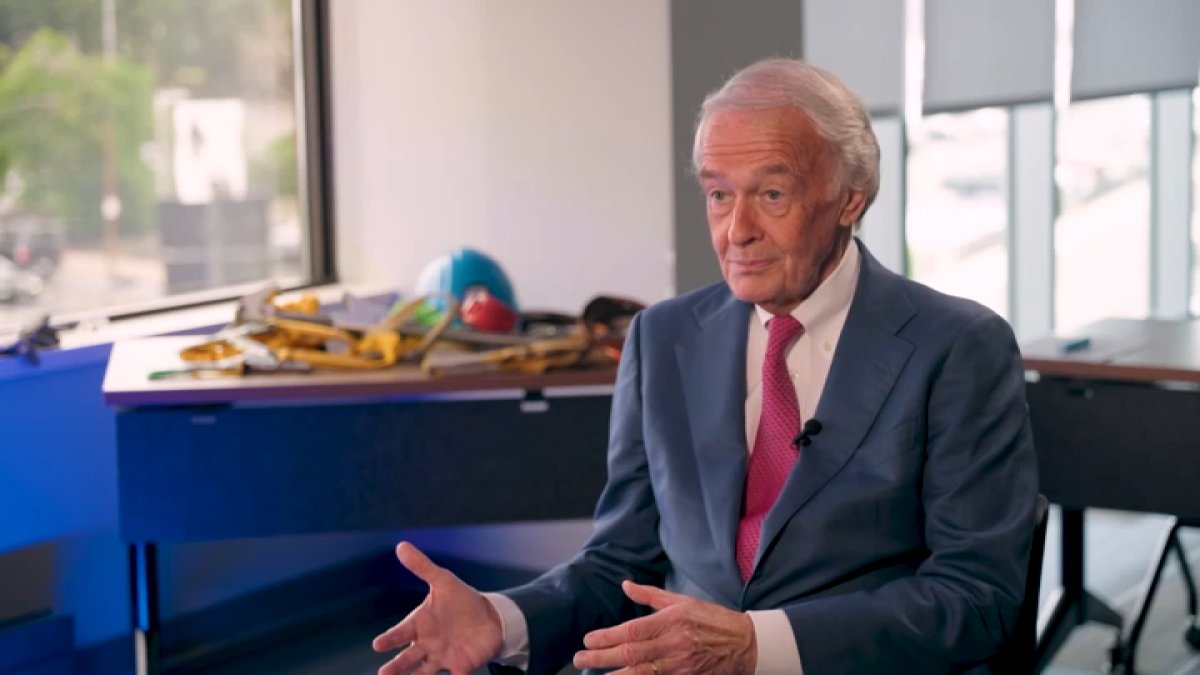
Source: NECN Providence. Casualplayhub News adds summary, context, and editorial framing while linking back to the original report.
Ad eligibility review: sensitive-topic
Senator Ed Markey is making his final pitch to Massachusetts voters, laying out a bold agenda as he seeks another six-year term in the U.S. Senate. The 80-year-old Democrat, who has served in Congress for half a century and was a Beacon Hill lawmaker before that, faces a spirited primary challenge from Congressman Seth Moulton. In a wide-ranging interview with NBC10 Boston, Markey dismissed questions about his age, insisting his energy and ideas are as fresh as ever.
"This is the most energized I've ever been," Markey said, pushing back against the narrative that at 80, he might be too old for another term. If reelected, he would be 86 at the end of his next term. "If I couldn't do the job, I would step down," he added. "Anyone who can't do the job should step down, regardless of their age." He pointed to his progressive policy slate as evidence of his forward-thinking approach, particularly on healthcare. "We're running a sick care system. It just doesn't work. We just have to overhaul that system," Markey said, noting his partnership with Vermont Senator Bernie Sanders on Medicare for All.
The interview also touched on the looming possibility of impeaching former President Donald Trump should Democrats regain control of the House. Markey did not shy away from the issue. "He must be held accountable in the same way that we attempted to hold him accountable after he sought to steal the election of 2020," Markey stated. When asked whether impeachment would distract from pressing issues like affordability, the senator argued that the party can handle both. "We can do both. We have to do both," he said.
Markey's campaign is part of a broader political landscape in Massachusetts, which includes a tight Republican primary for governor, Boston Mayor Michelle Wu's controversial decision to support challengers of two sitting state senators, and the closely watched 8th Congressional district race between Representative Stephen Lynch and Patrick Roath. NBC10 Boston's Matt Prichard and MassLive politics editor John Micek analyzed the dynamics in the state's Democratic Senate primary, noting that Markey's age is a central theme but not necessarily a liability.
The senator's interview aired as part of the @Issue series, with a full sit-down scheduled for Sunday morning at 9:30 a.m. Viewers can also watch a conversation with Congressman Moulton and listen to the podcast version. The primary election, set for September, will be a critical test of whether Markey's long tenure and progressive vision can withstand the challenge from a younger, also-progressive congressman. Moulton, who cleared the ballot hurdle in October 2025, has argued that Massachusetts needs new leadership. Markey, however, remains confident that his experience and big ideas will carry him through.
Article commentary
Senator Ed Markey's reelection bid encapsulates a broader tension in American politics: the value of experience versus the call for generational change. At 80, Markey is one of the oldest members of the Senate, and his primary challenge from Seth Moulton, who is 46, brings this dynamic to the forefront. Markey's response—insisting he is more energized than ever and pointing to his progressive partnerships—demonstrates a strategy that leans into his record rather than dodging the age question. He is betting that voters in Massachusetts, a state with a strong progressive streak, will prioritize policy substance over youth. The impeachment issue is a double-edged sword. While many Democrats are eager to hold Donald Trump accountable, the party also remembers that the 2019 impeachment process consumed political capital and did little to sway public opinion. Markey's assertion that Democrats can pursue both impeachment and affordability is optimistic but may underestimate the bandwidth of a divided Congress. His framing of accountability as a moral imperative, however, aligns with the base's desire for justice, particularly after the 2020 election aftermath. Markey's healthcare stance—pushing Medicare for All with Bernie Sanders—is a clear appeal to the left, but it also risks alienating moderate voters. Massachusetts has a popular state healthcare system, and some residents may be wary of a federal overhaul. Still, Markey's long tenure gives him credibility on the issue, and his ability to cite specific policy proposals offers a contrast to Moulton's more general calls for change. The broader Massachusetts political scene adds context. The Republican primary for governor is tight, indicating that the state is not entirely blue across the board. Mayor Michelle Wu's involvement in state senate races shows the interconnectedness of local and state politics, while the 8th Congressional district race between Lynch and Roath underscores the internal Democratic struggles. Markey's campaign is but one piece of a complex puzzle. Ultimately, the primary will test whether voters in the Bay State are willing to stick with a known quantity or opt for a fresh face. Markey's argument that his ideas are young—even if his body is not—may resonate with those who remember his work on climate change and technology. But Moulton's ability to campaign on the need for a new generation could sway undecided voters. The outcome will likely hinge on turnout and the effectiveness of each candidate's ground game. Regardless, the race offers a microcosm of the national Democratic debate over age, experience, and the party's future direction.