Bridgewater Celebrates Little League Heroes' Return
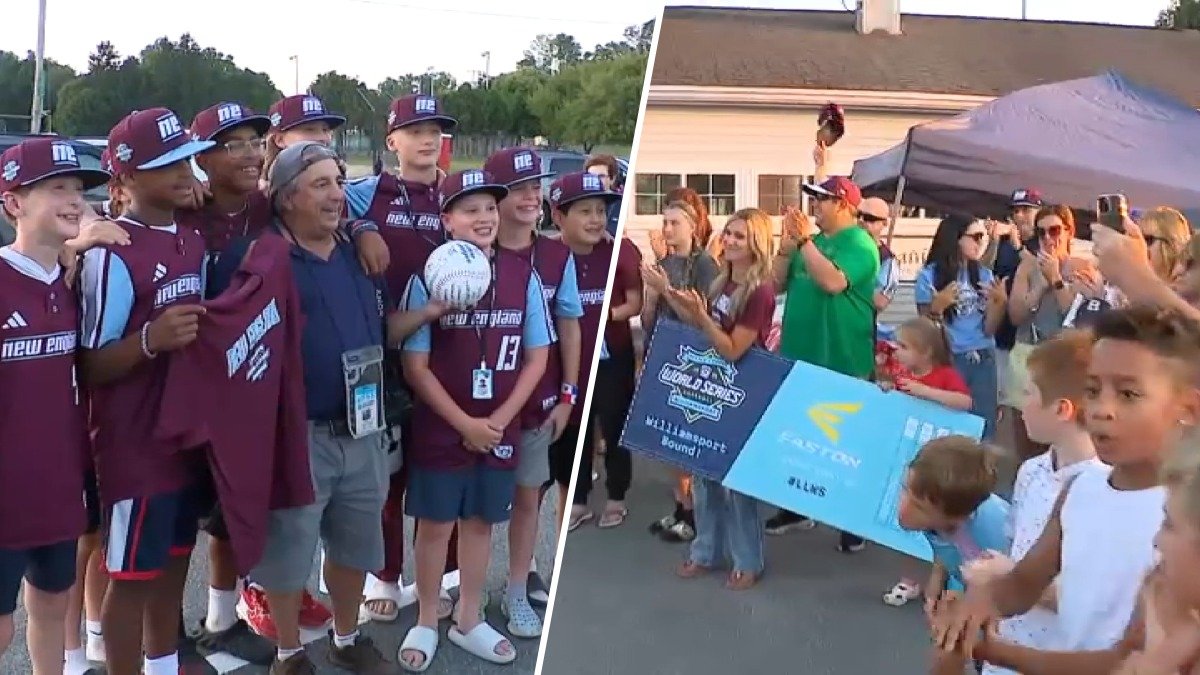
Source: NECN Providence. Casualplayhub News adds summary, context, and editorial framing while linking back to the original report.
A wave of cheers and applause swept through Legion Field in Bridgewater, Massachusetts, on Monday as the town welcomed home its Little League team from the Little League World Series. The boys, who had captured the hearts of their community, returned after a hard-fought journey that ended Saturday with a 2-1 loss to a team from Hamilton, Ohio. Despite the defeat, the atmosphere was one of pure celebration, with families, friends, and neighbors lining the field, holding signs that read "Welcome Home, Champions" and waving blue and white balloons.
The team's run to the World Series was a dream come true for the players, many of whom had never imagined playing on such a grand stage. For 12-year-old Anthony Sullivan, the experience was unforgettable. "It was just so fun being able to play on that big stage, in front of everybody, spending time with my teammates, just having the time of my life," he said, beaming as he clutched a souvenir from the tournament. His teammate, JJ Gaff, echoed the sentiment, highlighting the bond with the community. "We were already excited to make it there, and then knowing that they're all proud of us, just to parade through the town is just awesome," Gaff added, his voice filled with emotion.
The celebration at Legion Field was more than just a homecoming; it was a testament to the power of youth sports to unite a town. Parents hugged their sons, coaches exchanged handshakes with supporters, and the sense of pride was palpable. The team's journey had been a rollercoaster of emotions, from the initial thrill of qualifying for the World Series to the intense games under the national spotlight. Each player had grown through the experience, learning lessons in teamwork, resilience, and sportsmanship.
Bridgewater's Little League team had earned its spot in the World Series through a series of impressive victories, showcasing talent and determination that caught the attention of baseball fans across the region. The loss to Hamilton, Ohio, was a tough pill to swallow, but the players held their heads high, knowing they had given their best effort. The support from their hometown, including a police escort and a parade through the streets, reminded them that they were champions in the eyes of their community.
As the sun set on Legion Field, the celebration continued with a barbecue and speeches from local officials. The team's coaches praised the boys for their dedication and composure under pressure, noting that this experience would shape their futures. For the residents of Bridgewater, the day was a reminder that sometimes the greatest victories are not measured by scores, but by the bonds formed and the memories created. The boys of Bridgewater's Little League team may have come home without a trophy, but they returned as heroes, their story forever etched in the town's history.
Article commentary
The return of Bridgewater's Little League team from the World Series offers a compelling lens through which to examine the role of youth sports in American communities. At its core, this story is not about a 2-1 loss or a trophy; it is about the collective pride and identity that a small town can derive from its young athletes. The celebration at Legion Field, with signs and balloons, underscores a fundamental truth: in communities like Bridgewater, sports serve as a powerful unifying force, bringing together families, neighbors, and local officials in shared joy and support. This phenomenon is not unique to Bridgewater. Across the United States, Little League Baseball has long been a rite of passage, teaching children not just the mechanics of the game but also lessons in leadership, perseverance, and handling both victory and defeat. The emotional quotes from players Anthony Sullivan and JJ Gaff reveal how deeply these experiences resonate. Sullivan's focus on "the big stage" and "spending time with teammates" highlights the intrinsic value of participation, while Gaff's appreciation for the community's pride speaks to the reciprocal relationship between the team and the town. From a broader perspective, the Little League World Series itself is a microcosm of American culture—a tournament that amplifies local stories and turns ordinary children into temporary celebrities. The media coverage, including outlets like NBC10 Boston, amplifies this effect, giving towns like Bridgewater a moment in the national spotlight. Yet the real story lies in the aftermath: the homecoming, the parades, and the quiet moments when families reflect on what was achieved. These rituals are as important as the games themselves, reinforcing social bonds and creating lasting memories. Critically, the narrative also invites reflection on the pressures of youth sports. While the boys expressed joy and gratitude, the loss could have been a bitter disappointment. The community's response—focusing on celebration rather than defeat—offers a model for how to frame success. It shifts the emphasis from winning to effort, from individual achievement to collective experience. This approach is vital in an era where youth sports are increasingly commercialized and competitive, sometimes to the detriment of young players' well-being. In conclusion, Bridgewater's welcome home ceremony is a reminder that the true value of youth sports extends far beyond the scoreboard. It fosters resilience, builds community, and creates stories that endure long after the final out. For the boys of Bridgewater, the journey to the World Series was a triumph not because they advanced far, but because they represented something larger than themselves. And for the town, the celebration was a declaration that their children are cherished, regardless of the outcome. This balance of ambition and perspective is a lesson worth sharing beyond the diamond.