Massachusetts Trooper Cited After Brockton Crash Injures Three
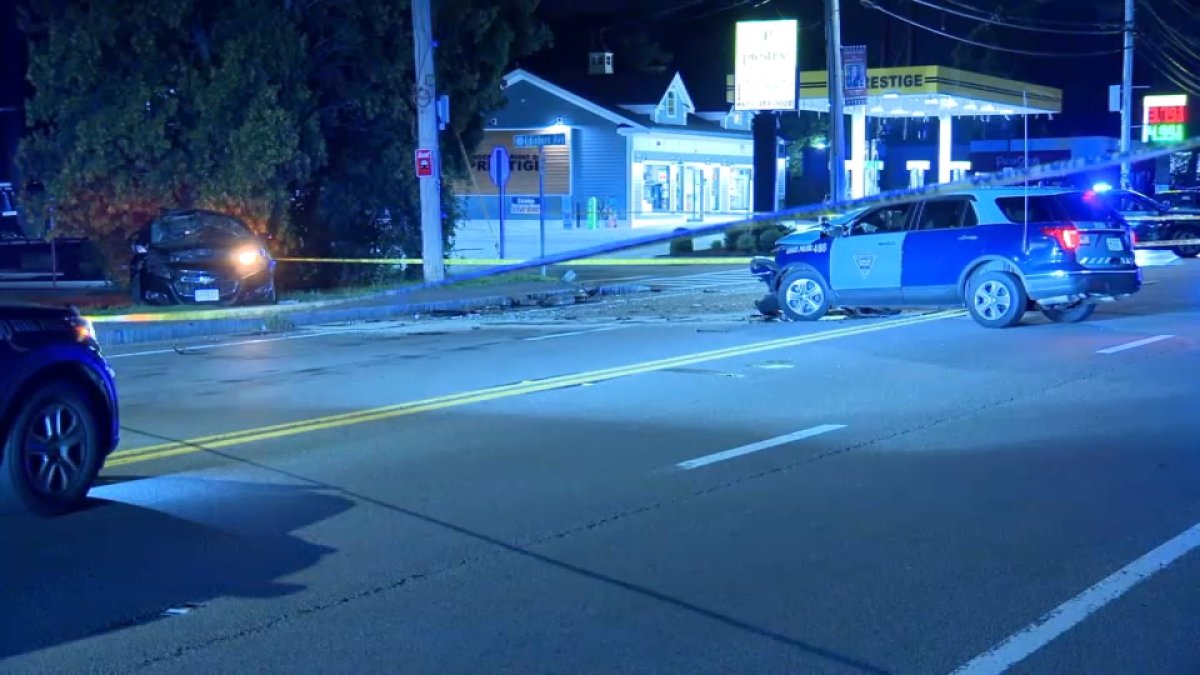
Source: NECN Providence. Casualplayhub News adds summary, context, and editorial framing while linking back to the original report.
A Massachusetts State Police trooper is facing citations for negligent operation and speeding after a crash that sent three people to the hospital earlier this month in Brockton. The incident unfolded on the night of August 10, around 10:50 p.m., on the 800 block of Belmont Street, a busy thoroughfare in the city. The state police cruiser collided with another vehicle, leaving the trooper, the other driver, and a passenger injured. All three were transported to local hospitals for treatment. Authorities have not disclosed the extent of their injuries or their current conditions. The trooper, whose name has not been released, remains on injured leave, according to state police. The crash forced the closure of Belmont Street at Edinboro Avenue, a key intersection, and the road did not reopen until early the following morning. In a statement issued Wednesday, a Massachusetts State Police spokesperson said the department is fully cooperating with the Bristol County District Attorney’s Office, which is leading the investigation into the crash. “The Massachusetts State Police remain committed to supporting the investigation into the facts and circumstances of this crash,” the spokesperson said. “Based on the preliminary information available at this time, the Department has cited the Trooper-operator for negligent operation of a motor vehicle and speeding. We wish all who were injured a swift and full recovery.” The citation comes as a rare but notable step in holding an officer accountable for a crash while on duty. Speeding and negligent operation charges against law enforcement are not common, often raising questions about how such incidents are handled. The Brockton crash highlights the inherent risks when police vehicles, which often respond to calls with urgency, are involved in collisions. The Bristol County District Attorney’s Office is expected to review the evidence and determine whether further charges are warranted. The crash has also reignited public discussion about police driving protocols and the balance between emergency response and public safety. Some residents in the area have expressed concern over the frequency of accidents involving emergency vehicles on Belmont Street, a road known for heavy traffic and occasional congestion. The Massachusetts State Police have not provided additional details about the cause of the crash, such as whether the trooper was responding to an emergency call at the time. The investigation remains ongoing, and the department has said it will release more information as it becomes available. For now, the focus is on the recovery of those injured and the legal process ahead. The citation serves as a reminder that even those sworn to protect are not immune to the rules of the road. The case is likely to be closely watched, as it touches on issues of accountability, transparency, and the standard of care expected from law enforcement officers behind the wheel.
Article commentary
The Brockton crash involving a Massachusetts State Police trooper raises important questions about accountability and the standards applied to law enforcement officers when they are behind the wheel. While the citation for negligent operation and speeding is a step toward transparency, it also underscores the complexities of holding officers accountable for actions that occur in the line of duty. Police officers, by nature of their work, often drive at high speeds and in unpredictable conditions. But the expectation of safety does not disappear when an emergency vehicle is involved. The fact that the trooper was cited based on preliminary information suggests that the initial evidence pointed to a clear violation of traffic laws. Yet, the broader context matters. The crash occurred on a residential street in Brockton, not a highway, and at a time of night when visibility may have been reduced. The injuries to three people, including the trooper, indicate a serious collision. The Bristol County District Attorney’s Office investigation will be critical in determining whether the trooper’s actions were justified or if they constituted a reckless disregard for safety. One key issue is the lack of details about the trooper’s status at the time of the crash. Was he responding to an emergency call? Was he on routine patrol? The answer could significantly affect public perception. If he was not responding to a call, the citation for speeding and negligent operation seems straightforward. But if he was, it raises the question of whether the urgency of the situation excused his driving. Massachusetts law, like that of many states, grants emergency vehicles some leeway in traffic laws, but that leeway is not absolute. Drivers of emergency vehicles must still exercise due care. The citation itself is a rare public acknowledgment of fault from a police department. Typically, police-involved crashes are investigated internally, and citations are less common. The decision to publicly cite the trooper may reflect a shift toward greater accountability, or it may simply be a response to the severity of the injuries. Either way, it sets a precedent. The incident also highlights the risks faced by civilians when sharing the road with emergency vehicles. The other driver and passenger were innocent parties whose lives were disrupted by a crash they did not cause. Their recovery is paramount, but the legal outcome will also shape how the community views the integrity of the police force. Moving forward, this case could prompt renewed scrutiny of state police driving policies, including training for high-speed maneuvers and the use of lights and sirens. It may also lead to calls for independent oversight of police-involved crashes, especially when injuries occur. The balance between enabling officers to do their jobs and protecting the public is delicate, but incidents like this remind us that the rules of the road apply to everyone, even those who enforce them.