Trump Envoys Witkoff and Kushner Head to Moscow, Kyiv with Ukraine Peace Plan
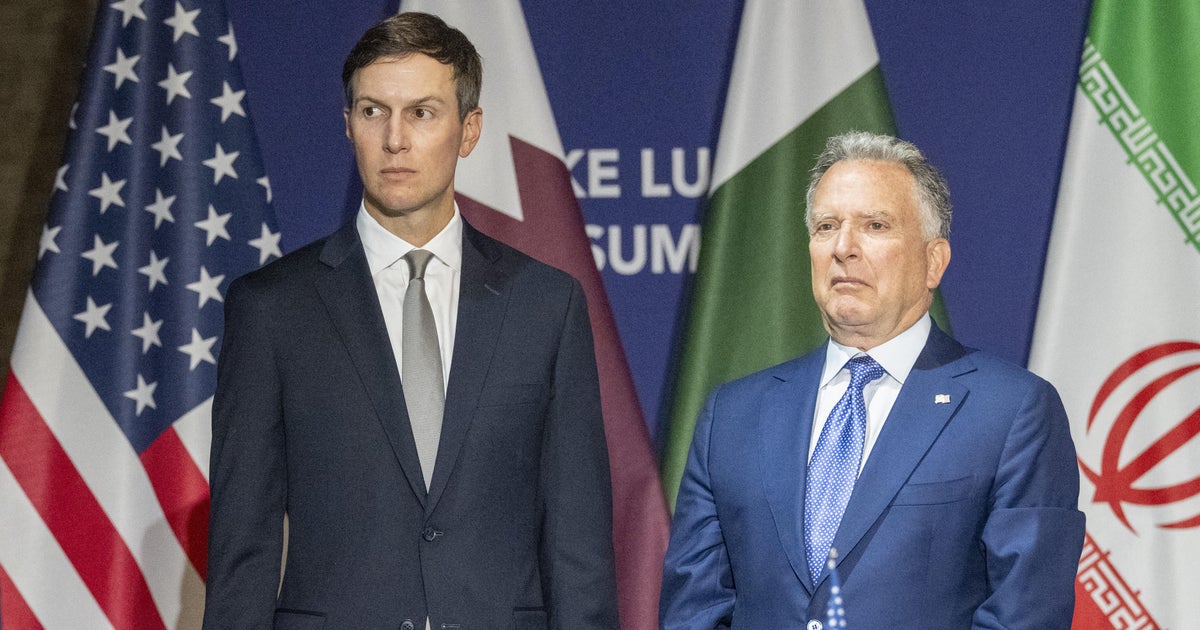
Source: CBS News World. Casualplayhub News adds summary, context, and editorial framing while linking back to the original report.
President Donald Trump has deployed two high-profile envoys, Steve Witkoff and Jared Kushner, to Moscow and Kyiv this weekend, carrying a fresh proposal to end the war in Ukraine. Trump told reporters on Friday that his team would present a plan to both sides, though he offered few details beyond describing it as a “framework for peace.” The initiative comes as the conflict, ignited by Russia’s full-scale invasion in February 2022, grinds into its third year with devastating human and economic costs.
Witkoff, a New York real estate developer and longtime Trump associate, has no formal diplomatic background but has been involved in informal negotiations during Trump’s presidency. Kushner, Trump’s son-in-law and former senior adviser, played a key role in the Abraham Accords that normalized relations between Israel and several Arab nations. Their selection signals Trump’s preference for unconventional, deal-making diplomacy over traditional statecraft.
The envoys are expected to meet separately with Russian and Ukrainian officials. In Moscow, they will likely face Kremlin leaders who have shown little willingness to compromise on territorial gains. In Kyiv, they will encounter a government that insists on restoring all occupied territories, including Crimea, which Russia annexed in 2014. The proposal’s contents remain tightly guarded, but analysts speculate it may include a cease-fire along current front lines, delayed NATO membership for Ukraine, and partial sanctions relief for Russia.
Trump’s announcement drew mixed reactions. Supporters applaud his effort to break the diplomatic stalemate, while critics argue that any deal favoring Russian territorial acquisitions would reward aggression. Ukrainian President Volodymyr Zelenskyy has repeatedly stated that peace cannot come at the cost of sovereignty. Russian President Vladimir Putin has signaled openness to negotiations but demands recognition of annexed regions.
The timing of the trip is notable. It coincides with heightened battlefield activity and Western aid packages flowing to Ukraine. The European Union and NATO have been cautious, urging any settlement to uphold international law. Trump’s envoys will need to navigate these complex dynamics, balancing the ambitions of two entrenched adversaries.
Whether Witkoff and Kushner can succeed where others have failed remains uncertain. The war has defied multiple mediation attempts, including from Turkey, Saudi Arabia, and the Vatican. Trump’s personal approach may inject fresh momentum, but the fundamental chasm between the warring parties suggests that a breakthrough, if it comes, will require immense concessions from both sides.
As the envoys prepare for their journey, the world watches closely. A diplomatic opening could reshape global security alignments, while failure would deepen the conflict’s toll. The stakes could not be higher.
Article commentary
The deployment of Steve Witkoff and Jared Kushner to Moscow and Kyiv is a classic Trump-era move: bypassing career diplomats in favor of loyalists with business acumen and personal rapport. It reflects a belief that the protracted Ukraine war can be resolved through high-level deal-making, reminiscent of the Abraham Accords. Yet the analogy is flawed. The Abraham Accords involved countries that were not at war; Ukraine and Russia are locked in a brutal, existential conflict with no clear off-ramp. Witkoff’s role is particularly puzzling. A real estate developer with no diplomatic or military expertise, he has been a close Trump confidant but lacks the credentials typically required for such sensitive negotiations. Kushner, while more experienced, primarily focused on Middle East peace, not European security. Their appointment suggests Trump prioritizes loyalty over expertise, a pattern seen during his presidency. The proposal’s secrecy fuels speculation. Any viable plan must address the core issues: territorial integrity, security guarantees, and sanctions relief. Ukraine’s position is that any negotiation must start from the 1991 borders, while Russia demands recognition of its annexed territories. Compromise seems impossible without one side backing down. Trump’s team may propose a frozen conflict, where fighting stops but territorial disputes remain unresolved, similar to the Korean Peninsula model. However, Ukraine’s Western allies, particularly NATO, oppose freezing the conflict as it would legitimize Russian aggression. Another critical factor is timing. The war is at a stalemate, with Russia making incremental gains and Ukraine facing ammunition shortages. A diplomatic push could be seen as opportunistic, especially if the proposal favors Russian positions. Trump’s past statements expressing admiration for Putin and skepticism toward NATO fuel concerns that he might pressure Ukraine into unfavorable terms. The international community’s reaction will be telling. Europe, which has borne the brunt of the war’s economic and refugee impacts, wants a just peace but fears a deal that emboldens Russia. China, which has positioned itself as a mediator, may view Trump’s initiative as competition. The lack of coordination with traditional allies could undermine the effort’s legitimacy. Ultimately, the success of Witkoff and Kushner’s mission hinges on whether they can convince both leaders to move beyond maximalist positions. Putin has little incentive to negotiate while his forces are advancing; Zelenskyy cannot accept a deal that sacrifices territory without risking domestic backlash. The envoys face a nearly impossible task. Yet diplomacy often requires improbable moves. If nothing else, the trip signals that Trump is serious about ending the war, even if his methods are unconventional. The world will soon learn whether his gambit offers a path to peace or merely another chapter in a tragic conflict.