U.S. Launches First Strikes on Iran in Weeks as Six-Month War Reignites in Strait of Hormuz
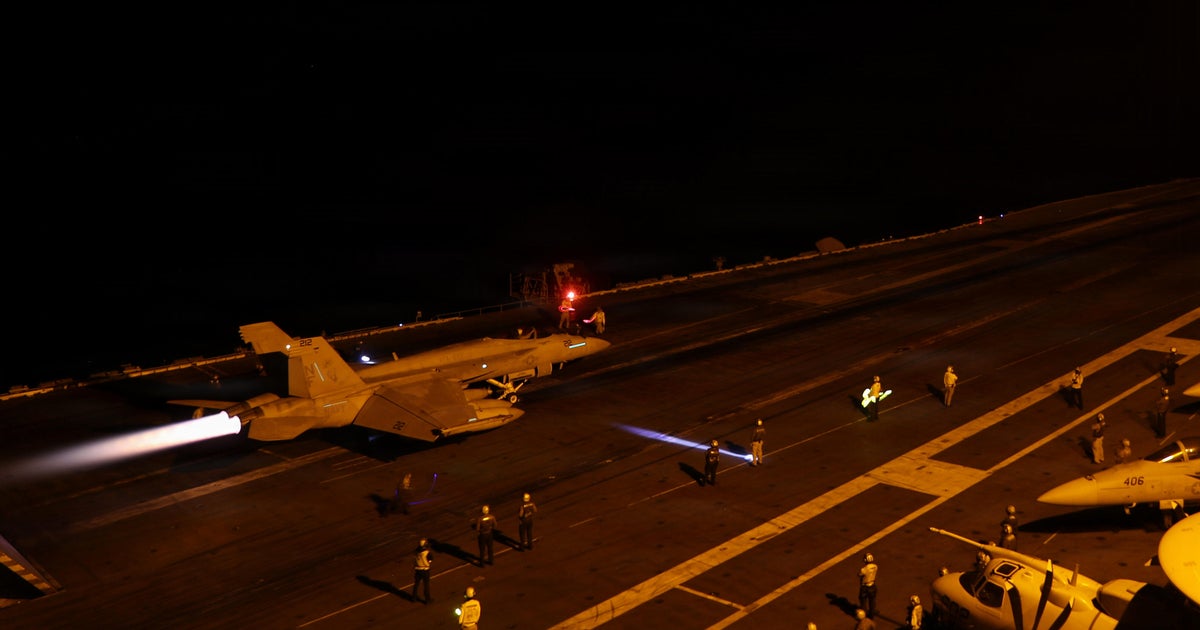
Source: CBS News World. Casualplayhub News adds summary, context, and editorial framing while linking back to the original report.
After weeks of relative quiet, the United States and Iran have once again exchanged direct fire, reigniting a six-month conflict that has centered on the strategic Strait of Hormuz. On Sunday, U.S. Central Command announced strikes against Iranian rocket launchers on Larak Island, a small but strategically important outpost in the strait. This marks the first American military action against Iran since a lull in hostilities that had raised hopes of de-escalation.
The strike came just hours after Iran's Revolutionary Guards Corps claimed responsibility for attacks on U.S. military bases in Jordan and the United Arab Emirates. In a statement, the Guards said the assaults were a direct retaliation for the latest American strikes on Iranian positions. The bases targeted in Jordan and the UAE are key logistical hubs for U.S. operations in the region, and the attacks underscore the widening theater of this conflict.
U.S. Central Command, in a brief statement, confirmed that its forces struck Iranian rocket launchers that were ready to fire and posed an imminent threat to both commercial shipping and U.S. naval vessels transiting the Strait of Hormuz. The statement did not specify the exact number of launchers destroyed or whether there were casualties, but described the operation as a precision strike aimed at neutralizing a clear danger.
Larak Island sits in the heart of the Strait of Hormuz, a narrow waterway that carries roughly one-fifth of the world's oil supply. Control over this passage has been a central bone of contention between Washington and Tehran for months. The six-month war, which began with a series of maritime incidents and escalated into direct air and missile strikes, has repeatedly threatened to disrupt global energy markets. Each flare-up sends oil prices fluctuating and prompts naval escorts to protect tankers.
The Revolutionary Guards' announcement of attacks on Jordan and the UAE marks a significant expansion of the battlefield. Previously, the conflict had been largely confined to the strait and nearby waters. By striking U.S. bases on land, Iran is signaling its willingness to take the fight beyond the maritime domain. Jordan and the UAE, both key U.S. allies, have been drawn into the conflict as logistical and staging grounds for American operations.
Pentagon officials have not commented on the extent of damage from the Iranian attacks on the bases, but sources indicate that early warning systems intercepted most of the incoming projectiles. No U.S. casualties have been reported so far, but the psychological impact on regional forces is considerable. The attacks also raise questions about the vulnerability of U.S. bases in the region to Iranian missile and drone strikes.
The tit-for-tat escalation has alarmed international observers. The United Nations called for an immediate ceasefire, while the European Union urged both sides to exercise restraint. However, neither Washington nor Tehran has shown willingness to back down. The U.S. administration has maintained that its strikes are defensive in nature, aimed at protecting freedom of navigation and deterring further aggression. Iran, for its part, frames its attacks as legitimate self-defense against what it calls American imperialism in the region.
Meanwhile, commercial shipping in the Strait of Hormuz has been severely disrupted. Several major shipping lines have suspended operations in the area, and insurance premiums for tankers have skyrocketed. Oil prices jumped more than three percent on the news of the latest strikes, with Brent crude trading above $90 a barrel. Analysts warn that prolonged conflict could push prices even higher, impacting global economic recovery.
As the sun set over the Gulf on Sunday, the skies above Larak Island were eerily quiet, but the electronic chatter of military communications suggested that both sides were preparing for the next round. The war, which has already lasted half a year, shows no signs of abating. With each new strike, the risk of a broader regional conflagration grows, drawing in not just local allies but also major powers with vested interests in the stability of the Middle East.
Article commentary
The latest exchange of fire between the United States and Iran marks a dangerous turning point in a conflict that has already exacted a heavy toll on regional stability. For weeks, a fragile calm had settled over the Strait of Hormuz, leading some analysts to speculate that both sides were seeking an off-ramp. Sunday's events shattered that illusion. The U.S. strike on Larak Island, while described as a defensive measure, is the first direct American attack on Iranian soil in weeks, and it has provoked a swift and multi-front retaliation from Tehran. What makes this escalation particularly concerning is the geographic expansion of the conflict. Iran's Revolutionary Guards did not merely respond in kind at sea; they struck U.S. bases in Jordan and the United Arab Emirates. This is a strategic shift. By targeting American ground forces, Tehran is signaling that it will not confine its retaliation to the maritime domain. The message is clear: any American strike on Iranian territory will be met with responses that threaten U.S. personnel and assets across the region. This blurs the line between a limited naval confrontation and a broader regional war. The timing of the strikes is also noteworthy. The United States has been engaged in extensive diplomatic efforts to stabilize the region, including talks with Gulf states and indirect negotiations with Iran through intermediaries. Sunday's events suggest that either those diplomatic channels have failed or that hardliners on both sides are determined to sabotage them. The six-month duration of the conflict indicates a deep-seated strategic rivalry that cannot be easily resolved through tactical strikes alone. Economic implications are immediate and severe. The Strait of Hormuz is the world's most critical oil chokepoint. Any sustained disruption to shipping there reverberates through global energy markets. The three percent spike in oil prices following the strikes is a reminder of how fragile the global supply chain remains. If the conflict escalates further, leading to a blockade or mining of the strait, the economic fallout could be catastrophic, potentially triggering a recession in oil-importing countries. Militarily, the U.S. strike on Larak Island demonstrates the continued American reliance on precision strikes to degrade Iranian capabilities without committing ground troops. However, Iran's ability to strike back at bases in Jordan and the UAE shows that the U.S. is not immune to retaliation. The Revolutionary Guards have invested heavily in drones, missiles, and proxy forces, giving them the capacity to hit targets across the region. This symmetry of risk means that neither side can achieve a decisive victory without incurring unacceptable costs. Looking ahead, the key question is whether both sides will step back from the brink or continue to escalate. The international community, particularly the United Nations and European Union, have called for restraint, but their influence is limited. The United States is unlikely to back down given its commitment to freedom of navigation and its alliances with Gulf states. Iran, driven by a mix of revolutionary ideology and strategic necessity, sees the conflict as a test of its resilience. The most likely scenario is a continuation of tit-for-tat strikes, punctuated by periodic crises, rather than a full-scale war. But each encounter raises the risk of a miscalculation that could spiral out of control. In the end, the Strait of Hormuz conflict is a reminder that in the modern era, even limited wars can have disproportionate consequences. The world watches nervously as two determined adversaries dance on the edge of a wider conflagration, hoping that the next strike will not be the one that sets the entire region ablaze.