First Road Bridge Connects Russia and North Korea Across Tumen River
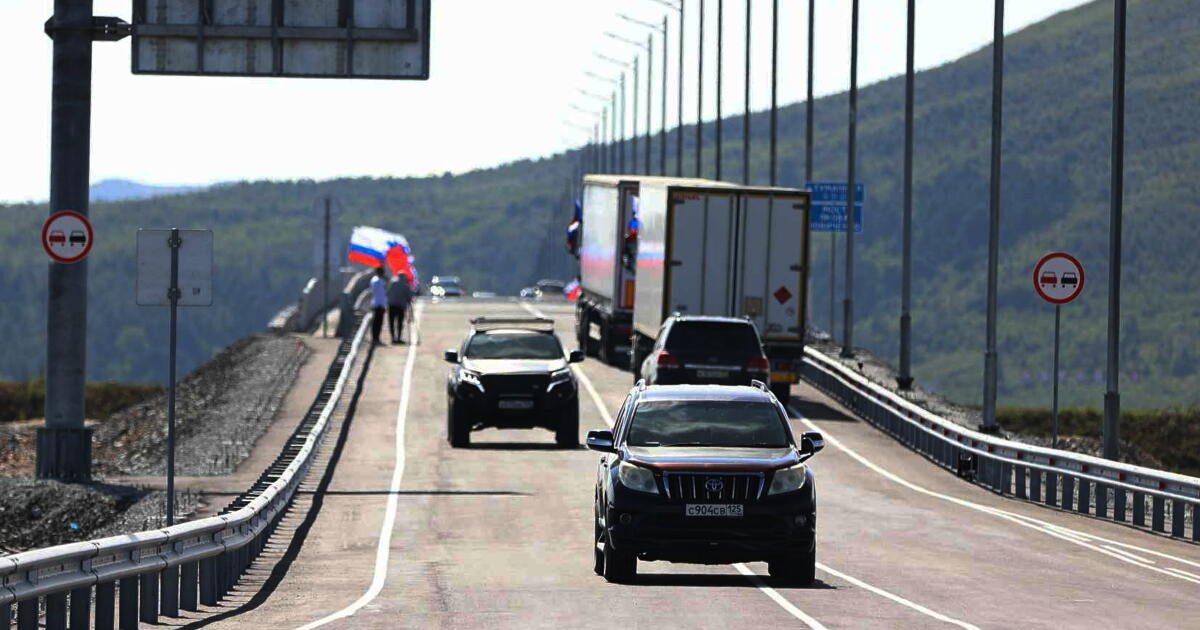
Source: Los Angeles Times World. Casualplayhub News adds summary, context, and editorial framing while linking back to the original report.
On Monday, Russia and North Korea officially opened the first road bridge connecting their two countries across the Tumen River, a development that Russian officials celebrated as a tangible symbol of their deepening relationship. The bridge, which measures six-tenths of a mile in length and features two lanes, now connects the Russian border region with North Korea’s northeastern territory, creating a direct land link where previously only a railway bridge existed.
The ceremony, held at the bridge site, drew delegations from both sides. Russian regional authorities described the infrastructure as a milestone for cross-border connectivity, emphasizing its potential to stimulate trade and economic exchange. The bridge is expected to handle both cargo and passenger traffic, though its immediate practical use may be limited by North Korea's stringent border controls and the broader network of sanctions targeting Pyongyang.
This new road link sits alongside an existing rail bridge that has been operational for decades, but the addition of a road route adds flexibility to bilateral logistics. The Tumen River marks a short but strategically significant stretch of border between Russia and North Korea—only about 12 miles in total—where the two countries share a land boundary. The river flows into the Sea of Japan, and the bridge lies near the city of Khasan on the Russian side and the North Korean town of Tumangan.
For Russia, the bridge dovetails with its broader ambitions in Asia. As Moscow faces heightened isolation from Western markets due to the war in Ukraine, it has accelerated efforts to strengthen ties with countries like China and North Korea. The opening of the road bridge aligns with these shifting geopolitical priorities, offering a new channel for economic engagement. Russian officials have framed the project as a boost for regional development, particularly for the Russian Far East, which has long struggled with underinvestment and sparse infrastructure.
From North Korea’s perspective, the bridge provides a rare physical connection to the outside world that does not pass through China. While Beijing remains Pyongyang’s largest trading partner and political ally, the new link diversifies North Korea’s limited options for land-based trade. It also serves as a visible sign of the Kim regime’s diplomatic outreach beyond China, even as United Nations sanctions limit many forms of economic activity.
The bridge‘s construction was completed in recent years, but the formal opening had been delayed due to pandemic-related border closures and other logistical hurdles. Now, with both countries eager to demonstrate their partnership, the ribbon was cut in a low-key but symbolically potent ceremony.
Local residents and businesses in Russia’s Primorsky Krai region have expressed cautious optimism about the potential for increased cross-border commerce. The road link could facilitate the export of Russian grain, fertilizers, and energy products to North Korea, while allowing for imports of North Korean labor or raw materials. However, experts caution that the bridge alone will not dramatically transform the economic landscape. North Korea remains one of the most isolated countries in the world, and its capacity to engage in sustained bilateral trade is constrained by international sanctions and its own domestic economic challenges.
Nevertheless, the opening of the bridge signals a steady deepening of Russia-North Korea relations at a time when both countries share a common interest in countering Western influence. In recent years, Moscow and Pyongyang have aligned their positions on several international issues, including opposition to U.S. military presence in the region. The road bridge adds a physical dimension to that political alignment, turning rhetoric into concrete infrastructure.
Moving forward, the bridge could serve as a demonstration project for further connectivity initiatives. Plans for a new railway bridge or expanded port facilities have been discussed, though none have advanced to construction. For now, the two-lane road bridge stands as a modest but noteworthy addition to the sparse network of border crossings in Northeast Asia.
Article commentary
The opening of the first road bridge between Russia and North Korea is more than a routine infrastructure milestone—it reflects the evolving geometry of geopolitics in a region often defined by rivalries and isolation. At first glance, a two-lane bridge spanning just over half a mile might seem insignificant given the scale of trade that flows through other regional corridors. Yet its symbolism outweighs its physical dimensions. For Moscow, this bridge is a practical expression of its pivot to Asia, a strategy that has gained urgency since Western sanctions began tightening after the invasion of Ukraine. Russia is actively seeking new economic partners and transit routes that bypass traditional West-dominated systems. North Korea, while a limited market, offers a loyal ally that shares Russia’s hostility toward U.S. leadership. The bridge cements that alignment in concrete and asphalt, creating a lasting link that could evolve into a more robust economic corridor if political conditions permit. For Pyongyang, the bridge represents a welcome alternative to its near-total dependence on China. While Beijing remains North Korea’s most critical patron, the Kim regime has historically sought to balance its relationships to avoid excessive leverage by any single country. A direct road to Russia gives North Korea greater flexibility in trade and diplomatic positioning. It also provides a visible symbol of cooperation that the regime can showcase domestically as proof of its international relevance, even under the weight of sanctions. That said, the bridge’s actual economic impact should not be overstated. North Korea’s economy remains severely constrained by United Nations sanctions, which prohibit trade in most manufactured goods, luxury items, and advanced technology. The types of trade that might realistically flow across the new bridge—basic commodities, raw materials, and perhaps labor—are not only limited in volume but also subject to careful monitoring by international bodies. Furthermore, North Korea’s infrastructure on the border side is underdeveloped, limiting the speed and efficiency of any movement. The timing of the opening is also notable. It comes as Russia struggles to maintain its logistics chains in the face of Western export controls. North Korea has its own resource constraints but could potentially supply Russia with certain goods, like construction materials or minerals, that Moscow now finds harder to obtain from Europe or North America. Whether such trade will materially alter Russia’s situation is doubtful, but the bridge offers a shady lane for any transactions that may occur. Looking ahead, the bridge is likely to remain a niche facility rather than a major gateway. Its full potential depends on a reduction in sanctions, which seems improbable in the near term. Yet even as a limited asset, it serves a strategic purpose: it deepens the interdependence between two states that share a common adversarial stance toward the United States and its allies. In that sense, the bridge is less about economics and more about alignment—a physical marker of a partnership that continues to strengthen amid global polarization. Observers should watch for follow-up projects. If Russia and North Korea proceed with additional cross-border infrastructure—such as a new railway or upgraded ports—the road bridge could become part of a larger network. For now, it stands as a modest but meaningful statement of intent, reminding the world that even the most isolated countries can find ways to connect when their political interests converge.