Iran Plans Exclusion Zone Near Strait of Hormuz as Oil Prices Surge
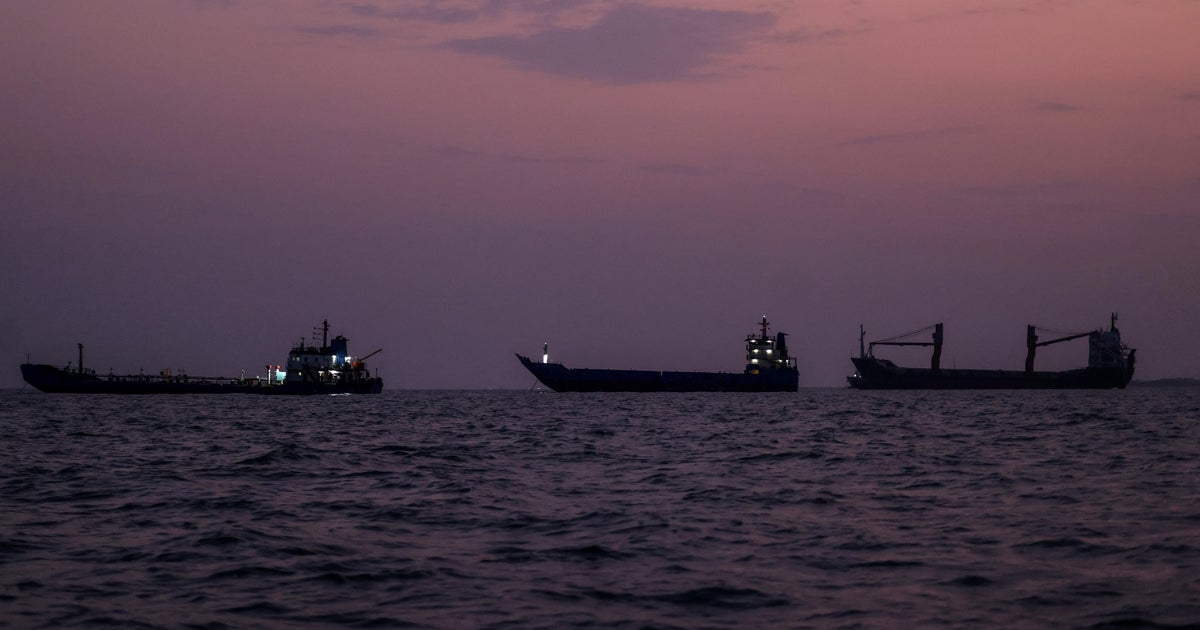
Source: CBS News World. Casualplayhub News adds summary, context, and editorial framing while linking back to the original report.
Ad eligibility review: sensitive-topic
Iran's newly appointed secretary of the Supreme National Security Council has signaled a dramatic escalation in the country's maritime posture, revealing plans to declare an “exclusion zone” outside the Strait of Hormuz. The zone is intended to stop vessels that Tehran believes are trying to transit the waterway without Iranian permission, effectively asserting unilateral control over one of the world’s most vital energy arteries. The announcement, made during a press briefing in Tehran, comes as global oil and natural gas prices continue their upward trajectory, driven by supply constraints and mounting geopolitical risks.
The Strait of Hormuz, a narrow passage between the Persian Gulf and the Gulf of Oman, is a critical route for crude oil and liquefied natural gas shipments. Roughly 20% of global petroleum transits these waters daily. Any disruption to traffic through the strait has immediate ripple effects on international energy markets. On Wednesday, Brent crude, the international benchmark, edged above $95 per barrel, marking its highest level in months. Analysts attribute the surge partly to fears that Iran’s latest move could lead to confrontations with naval forces from the United States and its allies, which patrol the region to ensure freedom of navigation.
The new security council chief, whose name was not disclosed in the original report, characterized the exclusion zone as a necessary step to protect Iran’s sovereign rights. “We will not allow any vessel to cross these waters without our explicit permission,” he stated. “The exclusion zone will safeguard our national security and deter illegal activities.” While he did not provide a specific timeline for implementation, Iranian state media suggested a formal announcement could come within days.
International reactions have been swift. The United States Navy’s Fifth Fleet, based in Bahrain, issued a statement reaffirming its commitment to keeping the strait open and warning against any unilateral actions that could escalate tensions. “The Strait of Hormuz is an international waterway,” the statement read. “Any attempt to restrict transit rights is a violation of international law.” European Union officials also expressed concern, urging Iran to exercise restraint and pursue diplomatic channels.
Oil markets are already bracing for potential supply disruptions. The price of natural gas, particularly in European markets, has also climbed as traders weigh the risk of Iranian blockades or retaliatory measures. Some analysts see parallels with the 2019 incidents when Iran seized several tankers in the region, briefly spiking crude prices. However, the scale of the current proposal—a declared exclusion zone backed by the Supreme National Security Council—suggests a more systematic approach.
Behind the scenes, diplomats from Oman and Qatar are reportedly trying to mediate, hoping to prevent a military confrontation. Iran’s leadership may be leveraging the threat to gain leverage in ongoing nuclear negotiations, which have stalled over issues of sanctions relief and uranium enrichment. The exclusion zone could be a bargaining chip, but it also risks triggering a cycle of escalation that neither side appears eager to enter.
The impact on shipping and insurance costs is already being felt. Several maritime insurers have raised premiums for vessels transiting the Persian Gulf, and some shipping companies have rerouted cargo through longer, more expensive alternatives. The cost of crude transportation has increased nearly 15% in the past week alone, according to industry data.
As oil and gas prices climb, the world watches with bated breath. The Strait of Hormuz remains the linchpin of global energy security, and any move to choke it off—even a partial one—could have profound economic consequences. For now, Tehran’s plan remains a declaration, not an enforcement. But the rhetoric alone is enough to keep markets on edge.
Article commentary
Iran’s planned exclusion zone near the Strait of Hormuz represents a calculated gambit in a high-stakes geopolitical chess match. By threatening to block a waterway through which roughly 20% of the world’s oil flows, Tehran is betting that economic pain will force the international community to offer concessions—most likely in the form of sanctions relief or nuclear deal flexibility. This is classic Iranian brinkmanship, honed over decades of confrontation with the West. Yet the move also carries significant risks for Iran itself. The United States has made clear it considers any interference with the strait a red line, and American naval assets in the region are ready to enforce freedom of navigation. A skirmish could quickly spiral into a broader conflict, one Iran is ill-equipped to win. Its economy is already battered by sanctions; a war would only deepen the misery. The exclusion zone thus serves as a double-edged sword: it projects strength but invites a forceful response. From an energy market perspective, the timing could not be worse. Oil and gas prices have been trending upward due to OPEC+ production cuts, recovering global demand, and geopolitical instability from Ukraine to the Middle East. Adding a threat to the Strait of Hormuz injects a fresh supply risk premium into prices. Brent crude hovering near $100 could soon breach that psychological barrier if Iran follows through. For consumers already grappling with high inflation, this is unwelcome news. Notably, Iran’s announcement comes as nuclear talks with the U.S. and European powers have hit another impasse. Tehran likely believes that creating leverage in the strait will improve its negotiating position. However, the tactic may backfire if it provokes punitive measures—like tighter sanctions or a multilateral naval escort operation—that isolate Iran further. The country’s reliance on oil exports for revenue means it cannot afford a prolonged disruption in the very waterway it is threatening. Another dimension is the role of regional players. Saudi Arabia and the United Arab Emirates, both rivals of Iran, have invested heavily in alternative pipeline routes that bypass the strait. But those options are limited and expensive. Oman and Iraq, which depend on the waterway for their own exports, may quietly pressure Tehran to avoid a crisis. China, a major buyer of Iranian oil, also has a vested interest in stability; Beijing has urged restraint but so far avoided taking sides. The underlying reality is that the Strait of Hormuz is too important to be monopolized by any single country. International law recognizes the right of innocent passage, and any attempt to subvert that principle will meet resistance. Iran’s exclusion zone, if implemented, would test that legal framework in a way not seen since the tanker wars of the 1980s. In the short term, markets will watch for concrete actions from Iran—deploying patrol boats, laying mines, or stopping vessels. Each step increases the risk of miscalculation. The most likely outcome is a prolonged standoff, with periodic incidents that spike prices before cooling down. But the longer the tension persists, the greater the chance of a spark igniting a larger fire. Ultimately, Iran’s exclusion zone threat is a reminder that energy security remains tightly intertwined with geopolitics. The world’s reliance on a single narrow chokepoint is a structural vulnerability that no amount of diplomacy can fully eliminate. Until alternative routes or energy sources become viable, the Strait of Hormuz will continue to be a flashpoint—and Iran will continue to wield the leverage it offers.