Drought-Driven Bears Invade Rockies Communities, Triggering Record Conflicts
Source: ABC News US. Casualplayhub News adds summary, context, and editorial framing while linking back to the original report.
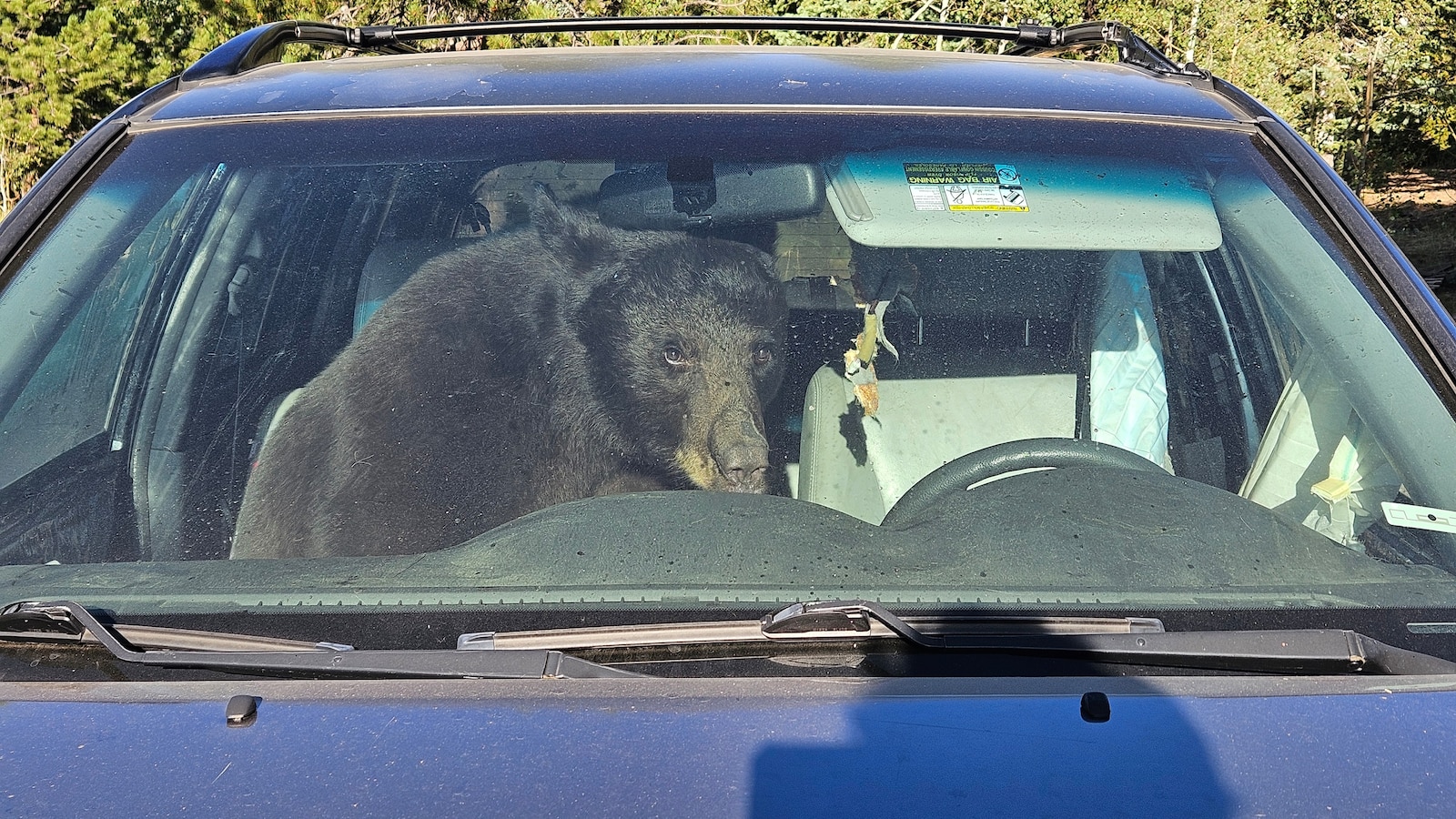
Patrick Sullivan was convinced a neighbor had lost their mind, blasting a car horn at three in the morning while he tended to his infant son. But when he looked outside his home in Gold Hill, Colorado, northwest of Denver, he found a different kind of neighbor—a black bear trapped inside a Toyota SUV. The animal, desperate to escape, had bumped the horn repeatedly as it shredded the vehicle’s interior. “It’s totaled. It’s unfit to drive,” Sullivan said of the car. His brother-in-law eventually freed the bear by tugging a rope tied to the door handle, sending the bear bolting into the woods.
This scene has played out hundreds of times across the Rocky Mountains this summer, where widespread drought has withered the nuts, berries, and plants that bears rely on. With natural food supplies dwindling, black bears have ventured far beyond their usual mountain habitats, wandering into towns, suburbs, and even onto the plains east of Colorado Springs. Colorado Parks and Wildlife reports double the typical number of bear sightings and human conflicts this year, including bears roaming in areas where they are rarely seen. In Denver, a bear was found up a tree and had to be tranquilized and relocated. At Colorado State University, a bear disrupted fall move-in day, requiring capture and release elsewhere. In Moab, Utah, wildlife authorities moved four bears from an orchard where they had been feasting.
Travis Sauder, a state wildlife officer in southeastern Colorado, noted that bears aren’t necessarily acting differently but are drastically increasing their search for food. “When they get that far east, there’s just zero natural food sources that they would be looking for, like oaks or chokecherries,” he said. The temptations around homes are plentiful: pet food in open garages, bird feeders, grease traps under grills, and unsecured trash bins—by far the biggest attractant behind the surge, according to Colorado Parks and Wildlife data.
While many bears are tranquilized and moved, those that associate humans with food often face euthanasia. “A fed bear is a dead bear,” remains the mantra among wildlife officials, who urge residents to stash away anything edible. Black bears, though typically reclusive and less dangerous than their grizzly cousins, can turn aggressive. In June, a black bear followed and attacked a hiker in Golden, Colorado. At least four more attacks have occurred statewide, including a bear that scratched a man leaving a laundry room near Vail on August 17, and one that tackled and bit a fisherman southwest of Denver five days later. That bear was tracked down and killed.
Across the Upper Colorado River Basin—spanning Wyoming, Colorado, Utah, and New Mexico—this year’s snowpack hit a record low, a trend scientists link to human-caused climate change. Samantha Miller, senior carnivore campaigner at the Center for Biological Diversity, explained, “Human-animal conflicts in the context of climate change haven’t really been fully researched yet. We’re still starting to tease out what this means for us and all the species we share the ecosystem with.” Record wildfires have also scorched vast areas of bear habitat, compounding the crisis.
Yet not every story ends in tragedy. Wildlife officials have rescued orphaned cubs, teaching them to survive without raiding human spaces. Sauder recalled, “We’ve got to rescue a lot of bear cubs out of trees, including standing on some pretty shaky ladders to pull a bear cub that’s sleeping in a tree.” In Steamboat Springs, Andy Kerrigan found a cub that had climbed into his truck through an open window, drawn by the smell of his lunch. “But it had found my lunch in the seat. And it was like, ‘I’m not going anywhere,’” Kerrigan said, eventually chasing it away with a piece of wood trim. And in Gold Hill, Sullivan’s brother-in-law’s simple solution—a rope tied to the door handle—gave the trapped bear a second chance. “It was just sitting there waiting for someone to help him, basically,” Sullivan said. “So I’m glad we could have done that for him.”
Article commentary
The surge in bear-human encounters across the Rocky Mountains this summer is a stark reminder of how climate change is reshaping wildlife behavior and challenging traditional coexistence. While bears have always wandered into towns during lean years, the scale of the current crisis is unprecedented—Colorado reports double the average conflicts, Utah has euthanized more bears than in the previous three years combined, and New Mexico’s kill count of 187 is the highest since 2011. These numbers reflect a deeper, systemic problem: drought, exacerbated by human-caused global warming, has stripped away natural food sources, forcing bears to seek calories in human environments. The narrative is not simply about hungry animals turning bold. As Travis Sauder points out, bears are not acting differently—they are simply expanding their search radius. The real shift is in the landscape itself. Record-low snowpack in the Upper Colorado River Basin, combined with record wildfires that have torched bear habitat, leaves bears with few options. This year’s crisis highlights a critical gap in research: as Samantha Miller notes, the intersection of climate change and human-wildlife conflict remains underexplored. Without a clearer understanding, wildlife managers are forced into reactive measures—tranquilizing, relocating, or euthanizing animals that pose risks. Public behavior is a major lever. The mantra “a fed bear is a dead bear” underscores the direct link between human carelessness and bear deaths. Unsecured trash, bird feeders, and pet food are the primary drivers of these conflicts. In many communities, enforcement of bear-proof container ordinances remains lax, and education campaigns often fail to reach seasonal residents or tourists. The economic cost—from damaged vehicles to lost livestock—is mounting, yet preventative measures are underfunded. Ethically, the situation forces uncomfortable choices. Euthanizing bears that have learned to associate humans with food may be necessary for public safety, but it treats a symptom rather than the cause. Relocation, while more humane, often fails if bears return or if new bears move into vacated territory. The heartwarming stories of orphaned cubs being rehabilitated offer a glimmer of hope, but they are exceptions, not the rule. Looking ahead, the Rocky Mountain region must adapt to a hotter, drier future. This means investing in bear-resistant infrastructure, expanding public education, and integrating climate projections into wildlife management plans. The bears are sending a clear signal—the ecosystem is out of balance. How we respond will determine whether future summers see more headlines like this, or a more sustainable coexistence between people and the wild neighbors they have inadvertently invited to their doorstep.