Trump administration shuts 110 trucking schools, cites California as problem state
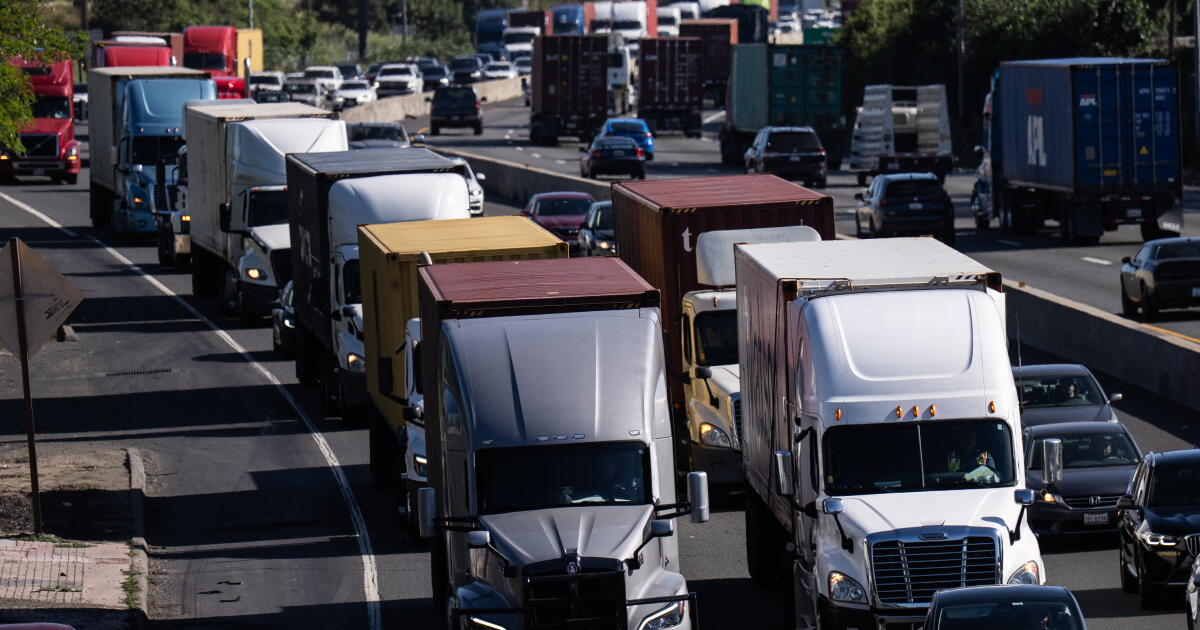
Source: Los Angeles Times World. Casualplayhub News adds summary, context, and editorial framing while linking back to the original report.
The Trump administration on Monday ordered the shuttering of 110 commercial trucking schools nationwide, with California singled out as a state where systemic failures on English language proficiency tests have allowed fraudulent licensing to flourish. The action, announced by the Department of Transportation, represents the largest single enforcement action against vocational training programs in recent memory. Officials say the schools were illegally issuing commercial driver’s licenses to students who could not demonstrate basic English reading and comprehension skills, a requirement for operating heavy vehicles on interstate highways.
“This is about public safety,” said a senior DOT official who spoke on condition of anonymity. “When you have drivers who can’t read road signs or understand safety instructions, you’re putting everyone at risk. California has been a particular problem, with dozens of schools that simply rubber-stamped licenses without proper testing.” The crackdown follows a two-year investigation that uncovered patterns of fraud, including bribery, falsified test scores, and the use of interpreters during exams. The schools targeted are located in 15 states, but more than half are in California, where the state’s large immigrant population has fueled demand for trucking jobs.
Among the closed schools is Golden State Trucking Academy in Los Angeles, which had enrolled over 1,200 students since 2023. Owner Maria Hernandez said the shutdown blindsided her. “We followed all the rules. Our students passed their tests. We are being unfairly targeted because of a few bad actors,” she told reporters. However, federal investigators allege that the school routinely provided answers to students during English exams and charged extra fees for guaranteed passing scores.
The closures take effect in 30 days, giving students and staff time to transition. The administration estimates that roughly 8,000 students are currently enrolled in these programs, many of whom have already paid tuition and were expecting to complete their training. The DOT has said it will work with state licensing agencies to help affected students transfer to accredited schools, though no details have been provided.
The trucking industry, which is already facing a shortage of roughly 60,000 drivers, has reacted with alarm. The American Trucking Associations warned that the closures could worsen the supply chain crisis, particularly in California, where ports rely heavily on truck transport. “This is a hammer where a scalpel was needed,” said ATA spokesperson Chris Spear. “We support safety, but shutting down schools without a transition plan will hurt the very people we need to hire.”
Immigrant rights groups have also criticized the move, arguing that English proficiency requirements have long been used as a barrier to entry for non-native speakers. “The real fraud is the system that refuses to recognize that many safe drivers come from non-English backgrounds,” said Laura Gomez of the National Immigration Law Center. “These schools were providing a pathway to the middle class. Now that pathway is blocked.”
The administration defends the action as necessary to uphold standards. “We are not opposed to immigrants pursuing careers in trucking,” said the DOT official. “But you have to be able to read English. It’s a non-negotiable safety requirement.” The schools have 30 days to appeal the decision, and several have already announced plans to challenge the shutdown in federal court, arguing that the DOT overstepped its authority.
Article commentary
The Trump administration’s decision to close 110 trucking schools, with a sharp focus on California, is a dramatic intervention that reveals deep tensions in American regulatory policy. On its face, the move is a legitimate crackdown on fraud. The evidence of widespread English proficiency test failures suggests systemic abuse that undermines public safety. No one disputes that drivers should be able to read road signs and understand safety instructions. The requirement is not arbitrary; it is embedded in federal law and common sense. Yet the scale of the closures—the largest such action in history—raises questions about proportionality and unintended consequences. The administration has effectively eliminated a significant portion of the nation’s trucking training infrastructure, targeting programs that served largely immigrant, lower-income populations. The timing is particularly problematic. The trucking industry is already struggling to fill positions, and the supply chain is still recovering from pandemic-era disruptions. Removing thousands of potential drivers from the pipeline will likely exacerbate delays in freight movement, raising costs for consumers and businesses alike. Critics have rightly pointed out that the crackdown may have a discriminatory impact. While the English proficiency requirement is facially neutral, its enforcement has historically been uneven. Schools in communities with high non-native English speaker populations are more likely to be scrutinized, and the closure list reflects that. The question is not whether safety standards should be enforced, but whether the enforcement mechanism is fair and whether a graduated approach—such as fines, probation, or corrective plans—could have achieved the same goal without the collateral damage. There is also a credibility gap. The administration has been criticized for lax enforcement in other areas of transportation safety, including pipeline inspections and airline maintenance. The sudden focus on trucking schools, especially in California, a state often at odds with the White House, fuels suspicion that the action is as much about political messaging as about safety. Looking ahead, the legal challenges are likely to slow or partially reverse the closures. But the broader issue remains unresolved: how to balance the need for a skilled, diverse workforce with the imperative of public safety. The answer is not to shut down every school with a problem, but to invest in better oversight, improved English language training programs, and alternative pathways for non-native speakers to demonstrate competency. The administration’s heavy-handed approach may satisfy short-term political goals, but it risks deepening the very problems it claims to solve.