Benches Clear as Orioles, Red Sox Clash Over Hard Slide
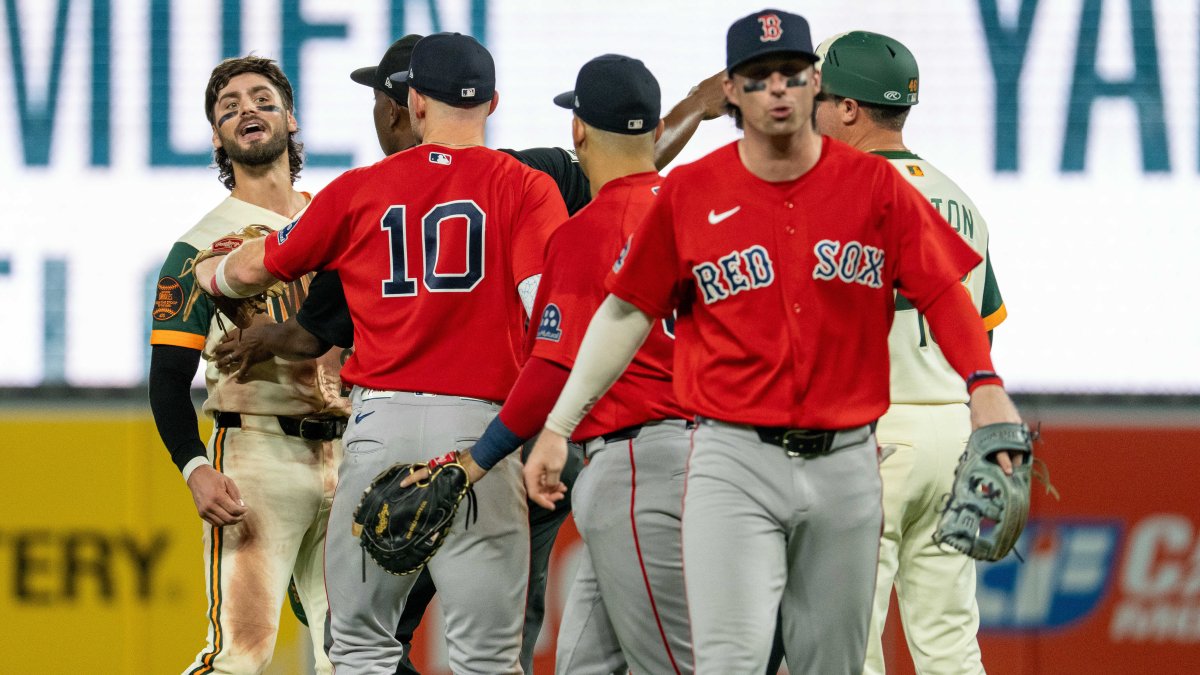
Source: NECN Providence. Casualplayhub News adds summary, context, and editorial framing while linking back to the original report.
The atmosphere at Oriole Park at Camden Yards turned electric Friday night, not from a game-winning hit, but from a heated exchange that emptied both dugouts and bullpens. With Boston holding a slim 1-0 lead in the top of the eighth inning, the Orioles mounted a potential rally. Blaze Alexander stood on first base when Luis Robert Jr. stepped to the plate. Robert grounded a sharp ball to Boston shortstop Trevor Story, who flipped to second baseman Nick Sogard for the first out. Sogard then fired to first, completing the double play and ending the inning.
But as Alexander, who had been running hard from first, slid into second base, the play took a tense turn. Replays showed Alexander sliding aggressively, his momentum carrying him past the bag after touching it. He did not seem to make contact with Sogard, but the moment was far from routine. Words were exchanged, and within seconds, players from both teams poured onto the field. Alexander waved his arms, gesturing to the crowd to amp up the noise, while Red Sox players surrounded him. No punches were thrown, and no one was ejected, but the tension lingered as the teams headed to their dugouts.
Alexander later explained his perspective: "I thought, clean slide into the bag, and just getting stared at. Wanted to know why I'm getting stared at. And yeah, that's really it." He insisted the slide was standard and that he was merely reacting to Sogard's prolonged look. Sogard, for his part, said he didn't have a problem with the slide itself. "He slid in pretty hard," Sogard acknowledged. "I didn't have a problem with his slide, but we turned the double play. I was just looking back to see how far he went. I don't know if he liked me looking back. But that was pretty much it."
Boston held on to the 1-0 lead as Aroldis Chapman took the mound in the ninth inning. Chapman needed just a handful of pitches to seal the win, notching his 399th career save. The victory extended Boston's momentum while Baltimore sank to its fourth straight defeat. The Orioles now sit three games behind Cleveland for the final American League wild-card spot, with Toronto and Texas also in the hunt.
Alexander admitted that the confrontation might have been a spark for his team. "Yeah, definitely," he said. "Obviously, Chapman is coming in, you know. Get the crowd going a little bit. You never know. You score two there, we win, and it looks real good. But it is what it is. Back to it tomorrow and we'll be ready to go." The Orioles will try to break their losing streak, but the memory of the tense eighth inning will linger as they head into the next game.
Article commentary
Friday night's benches-clearing incident between the Baltimore Orioles and Boston Red Sox serves as a microcosm of the ever-present tension in Major League Baseball—a game where unwritten rules, competitive fire, and raw emotion often collide. At its core, the dispute was trivial: a hard slide, a lingering stare, and a few heated words. Yet it ignited a full-scale confrontation that emptied both dugouts, a reminder that baseball's hidden codes of conduct are deeply ingrained and fiercely defended. Blaze Alexander's slide was aggressive but not illegal. He did not make contact with Nick Sogard, and the double play was cleanly executed. The flashpoint was Sogard's extended look in Alexander's direction after the play. In baseball's on-field etiquette, a prolonged stare after a routine double play can be read as a challenge—a subtle suggestion that the slide was too hard or that the runner was out of line. Alexander, a young player trying to assert himself, interpreted the look as provocation. His reaction, while understandable, escalated a non-event into a bench-clearing spectacle. These incidents are rarely about the actual slide. They are about respect, intimidation, and the boundaries of acceptable behavior. Alexander's comment that he wanted to know why he was being stared at reveals a player who felt disrespected. Sogard's explanation that he was merely checking the runner's position sounds reasonable, but in the heat of the moment, perception overrides intent. The fact that no one was ejected suggests the umpires recognized the situation was more about posturing than genuine hostility. From a strategic standpoint, the incident may have served a purpose for the Orioles. Trailing 1-0 in the eighth inning, with Aroldis Chapman looming in the ninth, the emotional jolt could have been a rallying cry. Alexander himself acknowledged that he hoped to get the crowd involved and spark a comeback. Teams often use such moments to rally, but the Orioles could not capitalize. Baltimore's fourth straight loss underscores a deeper issue: the team is struggling to close games. Falling three games behind Cleveland for the final wild-card spot, with Toronto and Texas also in the mix, the Orioles need more than emotional sparks—they need consistent execution. From a league-wide perspective, bench-clearing incidents are a double-edged sword. They generate excitement, highlight the passion of the game, and sometimes provide a turning point for a team. But they also carry risks: potential fines, suspensions, and the danger of physical harm. MLB has traditionally taken a hands-off approach, allowing players to police themselves, but the frequency of these incidents raises questions about whether the league should intervene more proactively. For now, Friday night's clash will be remembered as a brief flash of fire in a game defined by its quiet intensity, a reminder that even in a sport built on patience and precision, tempers can boil over in an instant.