Three-Vehicle Crash in Lawrence Leaves Minor Injuries as Police Respond to Call
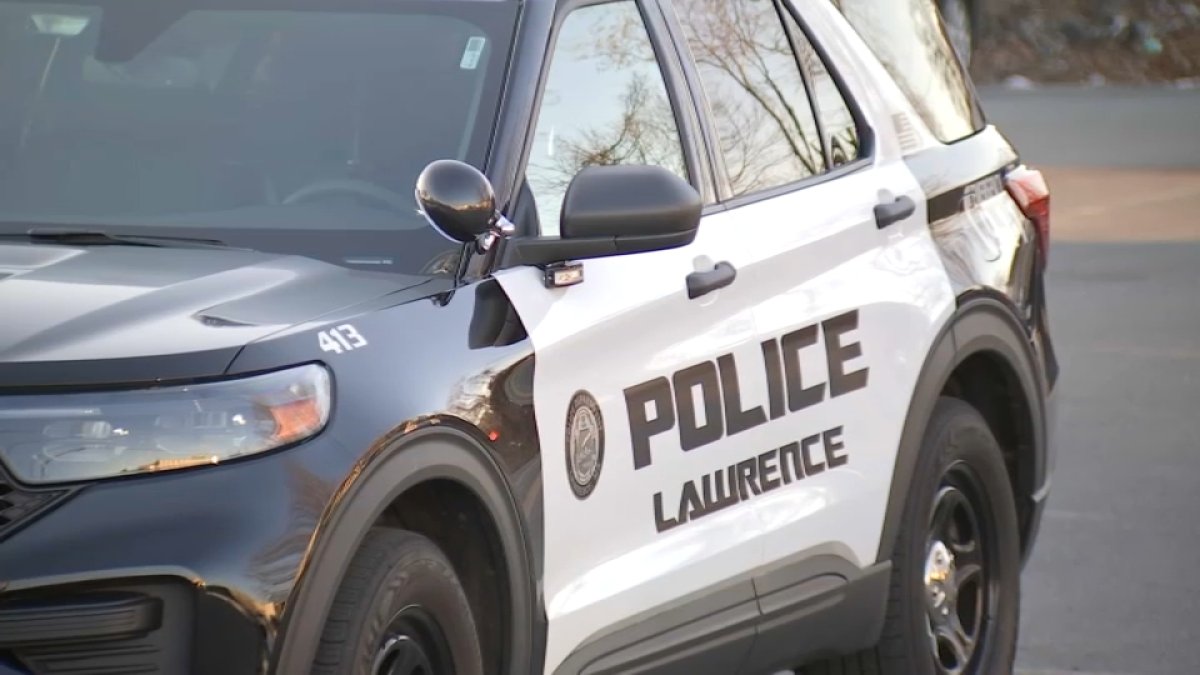
Source: NECN Providence. Casualplayhub News adds summary, context, and editorial framing while linking back to the original report.
A Sunday morning crash involving two Lawrence police cruisers and a civilian vehicle has brought renewed attention to intersection safety and emergency response protocols. Authorities confirmed that the incident occurred shortly before 11:25 a.m. when the officers, responding to a call for assistance, collided with a car that was stopped at a traffic signal. The initial impact sent both cruisers and the civilian vehicle into a tangled scene, but remarkably, all parties sustained only minor injuries. Paramedics transported everyone involved to a local hospital for evaluation and treatment, and they were later released or remained under observation, according to police.
The civilian vehicle had been stationary in its travel lane, waiting for the light to change, when the police cruisers approached. How the cruisers ended up striking the stopped car remains under active investigation. The Lawrence Police Department has not disclosed whether the cruisers had lights and sirens activated or which specific intersection was involved. Witnesses in the area described a sudden, jarring sound followed by the sight of police cars crumpled against a sedan.
Emergency services arrived within minutes, cordoning off the scene to allow for medical response and crash reconstruction. The officers, whose names have not been released, were taken alongside the civilian driver for checkups as a precaution. All are expected to recover fully.
This incident is unusual because it involves two police vehicles simultaneously crashing into a third party. Typically, patrol cars are involved in single-vehicle accidents or collisions with other motorists during pursuits. Here, both cruisers were part of the same response call, raising questions about coordination and approach patterns. The department has launched an internal review alongside the formal crash investigation.
Traffic in the area was rerouted for several hours while investigators photographed the scene and collected data. The civilian driver has been cooperating with authorities, officials said. No charges have been filed, and the investigation is ongoing.
The Lawrence Police Department emphasized that the call to which the officers were responding was not an emergency high-priority call but rather an assistance request, though the exact nature remains confidential pending the inquiry. The department intends to release a more detailed statement once the preliminary findings are complete.
Community members expressed concern on social media about the safety of intersections near the police station and the speed of emergency vehicles in residential zones. Local traffic engineers may review the intersection's design if the investigation reveals contributing factors.
While minor injuries are fortunate, the crash serves as a stark reminder that even routine response driving carries inherent risks. The Massachusetts Department of Transportation has recently been promoting a "Move Over" law requiring drivers to yield to emergency vehicles, but this scenario involved a stopped civilian vehicle that likely had no opportunity to avoid the collision.
The Lawrence Police Department asks anyone with dashcam footage or additional information to contact the traffic division. The investigation is expected to conclude within the next two weeks.
Article commentary
This relatively minor crash in Lawrence, Massachusetts, involving two police cruisers and a stopped civilian vehicle, might seem like a routine traffic incident at first glance. But its deeper implications ripple out to several critical aspects of public safety and emergency response. First, it underscores the inherent tension between the urgency of police responses and road safety. Officers must often navigate congested streets at speed, relying on lights and sirens to clear a path. Yet even with those tools, intersections – especially those with stopped traffic – remain danger zones. The fact that both cruisers struck the same stationary car suggests a possible breakdown in communication or spatial awareness among the responding units. Could better coordination or a different approach pattern have prevented this? Second, the incident highlights the vulnerability of civilian drivers stopped at traffic lights. They are often the most defenseless participants in emergency vehicle collisions because they have no ability to evade an approaching cruiser from behind. While laws require drivers to yield and pull over, a stopped vehicle has no maneuverability. This raises questions about whether emergency vehicle drivers should be trained to anticipate that a stationary vehicle in a travel lane might not be able to move, and whether additional signaling or deceleration protocols are needed. Third, the response call itself was for assistance, not a high-priority emergency. That distinction matters: it suggests the crash occurred during a routine response, not a life-or-death chase. That should prompt a broader discussion about when officers should use lights and sirens. If the call was non-critical, were the cruisers justified in proceeding through an intersection at speed? Many departments already have tiered response policies, but this crash indicates that even within those tiers, driver judgment can falter. From a public trust perspective, transparency will be key. The Lawrence Police Department has been tight-lipped, releasing only basic facts. While that is typical early in an investigation, a delay in detailed information can erode community confidence, especially in an era of heightened scrutiny of law enforcement. The department should aim to release findings promptly, including whether the cruisers had emergency equipment active and whether any policy violations occurred. Finally, this crash serves as a microcosm of a larger national issue: intersection safety for emergency vehicles. Data from the National Highway Traffic Safety Administration shows that emergency vehicle-involved crashes, while not extraordinarily common, are disproportionately severe due to speed differentials. The fact that only minor injuries occurred here is fortunate, but it should not normalize the risk. Local traffic engineers might consider installing preemptive traffic signal preemption systems that give emergency vehicles a green light while warning other drivers with flashing signs. In the end, this incident is a wake-up call, not a crisis. It reminds us that even the most routine response can turn dangerous in a split second. The silver lining is that no one was seriously hurt, and the lesson can be learned without tragedy. What matters now is how thoroughly the investigation examines the human, procedural, and environmental factors – and what changes follow.