Billionaire Wealth Reaches $15.1 Trillion, Nearly Half US Economy
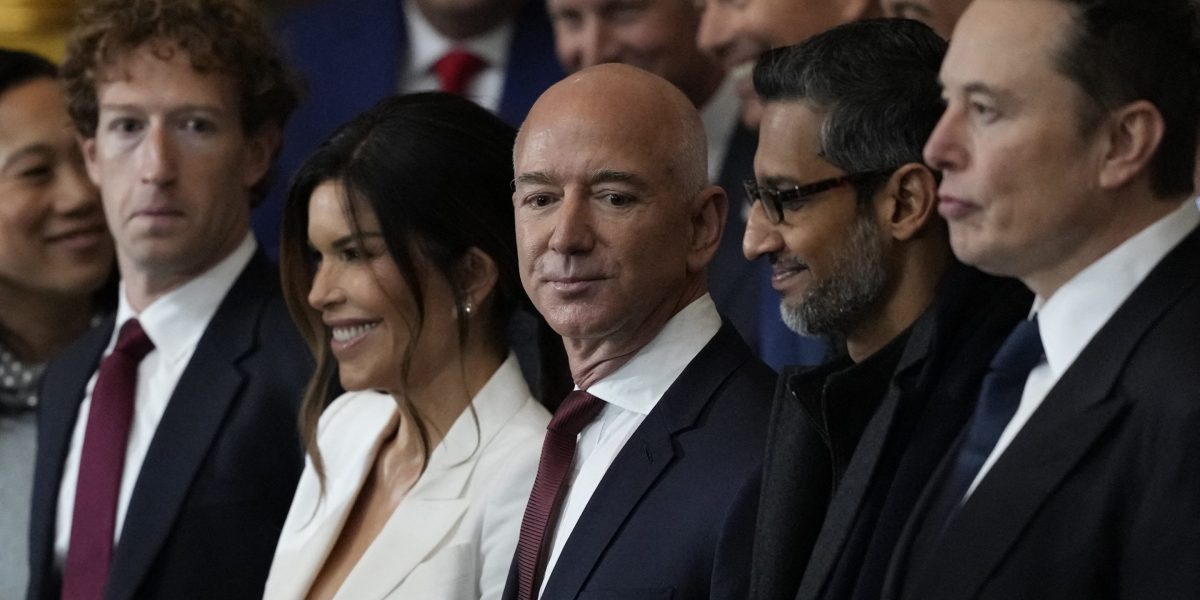
Source: Fortune. Casualplayhub News adds summary, context, and editorial framing while linking back to the original report.
How many students were in your college class? Chances are it was around 4,000—roughly the same number as the entire global billionaire population. That tiny group, fewer than 3,800 people, could fit into just one-fifth of Madison Square Garden, a tenth of Yankee Stadium, or the population of a small New England town. Out of more than 8 billion people on Earth, they represent about 0.00005%—one in every two million. And yet, that sliver holds a record $15.1 trillion, according to Altrata’s Billionaire Census 2026. That sum is nearly half the U.S. economy, which stands at $32.5 trillion, and close to 30% of the combined GDP of the G7 nations.
The billionaire ranks swelled 8.2% in 2025, the fastest growth in five years, but the spoils are far from evenly shared. Twenty-nine people now hold fortunes exceeding $50 billion, a group Altrata dubs superbillionaires. Together, they control $4.1 trillion—27.2% of all billionaire wealth. Less than a decade ago, only 10 individuals held that status, commanding just 7.2% of the total. Most of this surge has happened in the last two years; as recently as 2023, the superbillionaire share stood at 16.3%. Public rankings point to the usual names: Elon Musk, Larry Page, Sergey Brin, Jeff Bezos, Larry Ellison, Mark Zuckerberg, Jensen Huang, and Warren Buffett.
Maeen Shaban, Altrata’s director of research and a lead author of the report, points to one dominant factor: artificial intelligence. The firm identified the 150 public companies with the most billionaire wealth, then split them into two groups—those that made meaningful AI investments since 2023 and those that did not. The AI investors beat the rest by 23% in combined market cap growth over 2024 and 2025. “Hundreds of billions have been injected into that space,” Shaban told Fortune. Still, he warned against treating the number as exact, since some billionaires built AI companies from scratch while others used it simply to cut costs. “It’s a very, very complicated thing to do,” he said.
Geography also divides the billionaire class. New York gained 12 in 2025, reaching 164, while Singapore and San Francisco grew just as rapidly. Hong Kong and London were the only two of the top 15 cities to lose billionaires. But Shaban cautioned against reading too much into these shifts. “With these really small populations, it’s very hard to call it a trend,” he said. He noted the pull of U.S. AI investment, but also a counter-pull as some wealthy individuals have moved back toward the Middle East amid regional conflicts. “Mobility for them is not a luxury, it’s a need,” he added.
The San Francisco Bay Area alone is home to six of the world’s richest people, including Musk, Zuckerberg, Ellison, Page, Brin, and Huang. Meanwhile, Germany, with the world’s third-largest nominal GDP, has no city in the top 15 because, Shaban explained, its wealthy are more evenly distributed across the country, unlike the U.K. where 60% cluster in London. About one-fifth of billionaires were born outside their country of residence—Musk is a clear example—and that share exceeds half in Singapore and London.
Just as the Great Wealth Transfer is reshaping finances for all socioeconomic levels, the billionaire class will also see a massive handover. Altrata expects billionaires to pass $6.6 trillion to spouses and children over the next decade, split among roughly 5,000 people, including about 2,000 spouses. “In 10 years, that could be double that,” Shaban said, but he emphasized that even with new entrants from inheritance, the majority will remain self-made. “More than 60, 70% are going to be self-made,” he added. “The main contributor to future growth, in our opinion, is not inheritance. It’s more like entrepreneurship.”
Shaban reminded that billionaires are a tiny population. “It’s like a needle in a haystack.” Even the broader $30 million-plus tier holds only about half a million people worldwide. But technology, shifting regulations, and wider entrepreneurial opportunity have made reaching millionaire status more attainable than a generation ago. Since 2005, the ultra-wealthy population has grown roughly seven times faster than the world’s adult population. Altrata’s internal estimate, not yet published, projects that by 2040 about 70% of today’s ultra-wealthy will no longer be in that tier. “That’s just 15 years away,” Shaban said. “If you’ve got banks that are 300 years old, 15 years is nothing.”
Article commentary
The Altrata Billionaire Census 2026 paints a vivid picture of extreme wealth concentration at a time of rapid technological and economic change. The headline figure—$15.1 trillion held by fewer than 4,000 individuals—underscores how a microscopic fraction of humanity commands resources equivalent to nearly half the U.S. economy. This is not merely a statistical curiosity; it raises profound questions about economic power, political influence, and social cohesion. Perhaps the most striking trend is the accelerated rise of superbillionaires. In just two years, the share of wealth held by those with fortunes above $50 billion jumped from 16.3% to 27.2%. This suggests that the very top of the wealth pyramid is pulling away even from other billionaires. The list of names—Musk, Zuckerberg, Huang, Bezos—points directly to the technology sector, and specifically to artificial intelligence, as the primary engine. Altrata’s data on market cap growth among AI-investing companies provides empirical backing: the AI boom is not just hype but a real wealth creator. However, the fact that the benefits are so concentrated raises concerns about winner-take-all dynamics in the tech economy. If AI continues to reshape industries, the gap between the super-wealthy and everyone else may widen further. Geographic mobility of billionaires offers another lens. While New York, Singapore, and San Francisco gain, Hong Kong and London lose. This reflects shifting geopolitical and regulatory landscapes. Hong Kong’s decline may be linked to political uncertainty and China’s crackdown, while London faces Brexit and tax changes. Yet Shaban’s caution about calling these trends definitive is wise; with such small populations, individual moves can skew the data. The observation that billionaires view mobility as a necessity rather than a luxury hints at how fluid global capital has become. Countries competing to attract the ultra-wealthy may offer tax breaks and special visas, potentially eroding progressive taxation. The impending Great Wealth Transfer of $6.6 trillion over a decade introduces another layer. Inheritance may create a new cohort of billionaires, but Altrata’s projection that 60-70% of future billionaires will be self-made is telling. It suggests that entrepreneurship, particularly in technology and AI, will remain the primary route to extreme wealth. This could perpetuate the cycle: those who succeed in the next wave of innovation will dominate, while inherited wealth, though substantial, may be less dynamic. The prediction that 70% of today’s ultra-wealthy will be replaced by 2040 signals a churn that could reshape philanthropy, investment, and political donations. From an analytical perspective, the report’s methodology is robust but not without caveats. Altrata’s focus on public companies may undercount wealth held in private assets, and attributing market cap differences solely to AI investment is tricky—many factors affect stock prices. Still, the pattern is compelling. The absence of a major German city from the top 15 highlights how wealth distribution varies by national context, with implications for local economies and tax bases. Objectively, the concentration of wealth at this scale has both positive and negative potential. On one hand, billionaire-funded philanthropy and investment can fuel innovation and public goods. On the other, such concentration can undermine democratic equality, as political influence often correlates with financial resources. The report does not prescribe policy, but it provides a factual basis for debates on wealth taxation, antitrust enforcement, and the social contract. As AI continues to transform the economy, the billionaire class may become even more distinct, making these data points essential for informed discourse.