French Quarter Gets First Cannabis Dispensary on Bourbon Street
Source: Nola Business. Casualplayhub News adds summary, context, and editorial framing while linking back to the original report.
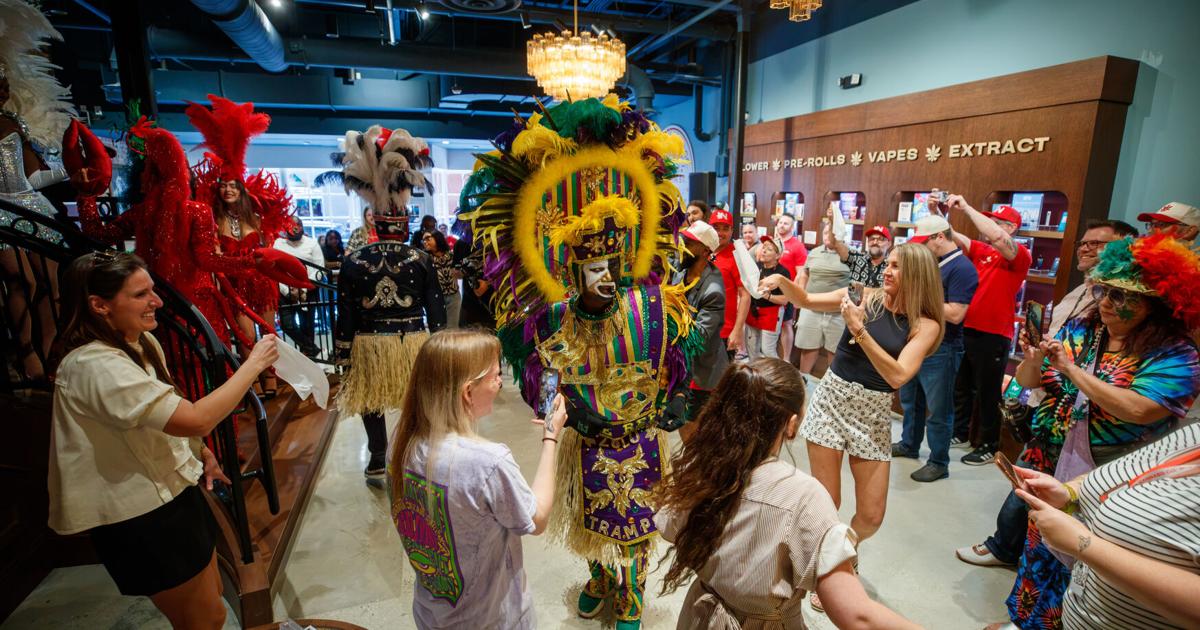
The French Quarter welcomed a new kind of party on Wednesday morning. Instead of neon cocktails and daiquiri cups, the crowd on Bourbon Street gathered for cannabis. NOLA Cannabis Co., the historic district's first marijuana dispensary, opened on September 9, 2026, inside a century-old building at 433 Bourbon Street. A brass band led the procession, followed by showgirls in feathered headdresses and Mardi Gras Indians draped in intricate beadwork. The energy was familiar, but the occasion was unprecedented.
The three-story dispensary is designed to blend retail with education. The first floor features touch-screen kiosks where customers can browse a lengthy menu of edibles, vapes, and cannabis flower. Staff members are stationed throughout to guide visitors. On the second floor, a "new patient center" offers free consultations with telehealth clinicians. Those without a prescription can secure a medical recommendation on-site in about ten minutes, and out-of-state medical cards are accepted. Emily Diament, public relations coordinator for NOLA Cannabis Co., noted that between 80 and 100 people work at this location.
The third floor serves as an education hub, with virtual "budtenders" demonstrating different consumption methods and a looping documentary on the history of cannabis in Louisiana. A museum-like gallery traces cannabis legislation from the 1600s to modern legalization, featuring photographs of early farmers and advocacy groups from the 1970s. Co-owner Captain Lee Jackson explained that the team aims to go beyond sales. "Everything about this store, from the first level to the third, we can provide product to patients. But we want to educate them on the product, make sure they understand what they are consuming." He mentioned hearing positive feedback from families with special needs and elderly patients.
Christian Durns, a server who works in the French Quarter, stopped by during his lunch break. "It's definitely a step up from other locations. It's more of an experience, more welcoming. Some other places have a pharmacy vibe. This seems like a fun place to pop in," he said.
Erin Holmes, executive director of Vieux Carre Property Owners, Residents, and Associates, expressed cautious optimism. "I think if the city and state harness a better return from this industry, it could be reinvested in schools, infrastructure, and other needs. The market is there. Why can't we make it work for the communities?" She noted that Bourbon Street's adult-oriented atmosphere makes it a suitable location compared to residential parts of the Quarter.
NOLA Cannabis Co. is the sixth dispensary under the brand, with other locations in Kenner, Metairie, the West Bank, Uptown, and the Lower Garden District. The chain is managed by an arm of Good Day Farms, one of Louisiana's two licensed marijuana growers. John Davis, president of Good Day Farm, recalled starting the effort in 2017. "I never imagined the Legislature would create a program that would allow this. I am floored, really. I'm speechless." Council member Freddie King III, who represents the French Quarter, also toured the facility.
Louisiana's medical cannabis program allows both residents and out-of-state visitors to purchase products after a telehealth consultation. This flexibility sets the state apart from many others. The dispensary's Bourbon Street location is a strategic choice, placing cannabis alongside the district's traditional nightlife. The opening signals a shift in how New Orleans integrates cannabis into its culture—less like a pharmacy and more like a destination.
Article commentary
The opening of NOLA Cannabis Co. on Bourbon Street represents more than a new retail outlet—it marks a cultural and regulatory shift for New Orleans. The French Quarter, long synonymous with alcohol-fueled revelry, now hosts a legal cannabis dispensary. This blending of old and new raises important questions about tourism, public health, and economic equity. From a tourism perspective, the location is brilliant. Bourbon Street attracts millions of visitors annually, many of whom already seek cannabis. By allowing out-of-state medical cards and same-day telehealth approvals, Louisiana has positioned itself as a welcoming destination for cannabis consumers. This could boost local spending, especially if visitors frequent nearby hotels, restaurants, and bars. However, there is a risk of reinforcing stereotypes of New Orleans as a place of unchecked indulgence. The dispensary's emphasis on education—with a museum, virtual tutorials, and staff guidance—attempts to shift the narrative toward responsible use. Economic benefits are a key theme in local reactions. Erin Holmes's call for reinvestment into schools and infrastructure highlights a common tension: while cannabis generates tax revenue, the community that hosts the industry often bears the costs—increased traffic, zoning changes, and potential public nuisance. Louisiana's medical-only program limits the customer base compared to recreational states, but the high tourist volume could still make this dispensary profitable. The question is whether the city will capture enough of that revenue to address neighborhood concerns. Public health considerations are also significant. The ability for tourists to get a medical recommendation in ten minutes raises questions about the rigor of the evaluation process. While the dispensary requires a clinician's approval, the speed suggests a streamlined, low-barrier system. Critics worry this could encourage casual use under the guise of medical need. Supporters counter that it reduces the black market, where product safety and age verification are unchecked. Louisiana's requirement that only state-licensed dispensaries sell cannabis helps ensure quality control. The involvement of Good Day Farms, one of only two licensed growers, indicates a vertically integrated market that limits competition. This has sparked debate about whether the system favors large players over small businesses. For now, the French Quarter dispensary is a flagship that may set the standard for future locations. Its success will depend on balancing tourist appeal with community responsibility. Finally, the celebration itself—with brass bands and Mardi Gras Indians—shows how deeply cannabis is being woven into the city's cultural fabric. New Orleans has long had a complex relationship with drugs, from the jazz-era marijuana culture to modern decriminalization efforts. This dispensary is not an anomaly; it is the latest chapter in a story of gradual legalization. The challenge moving forward will be ensuring that the benefits are shared widely, not just concentrated on Bourbon Street.