Tennessee LB Arion Carter Donates $427 per Tackle After Suspension
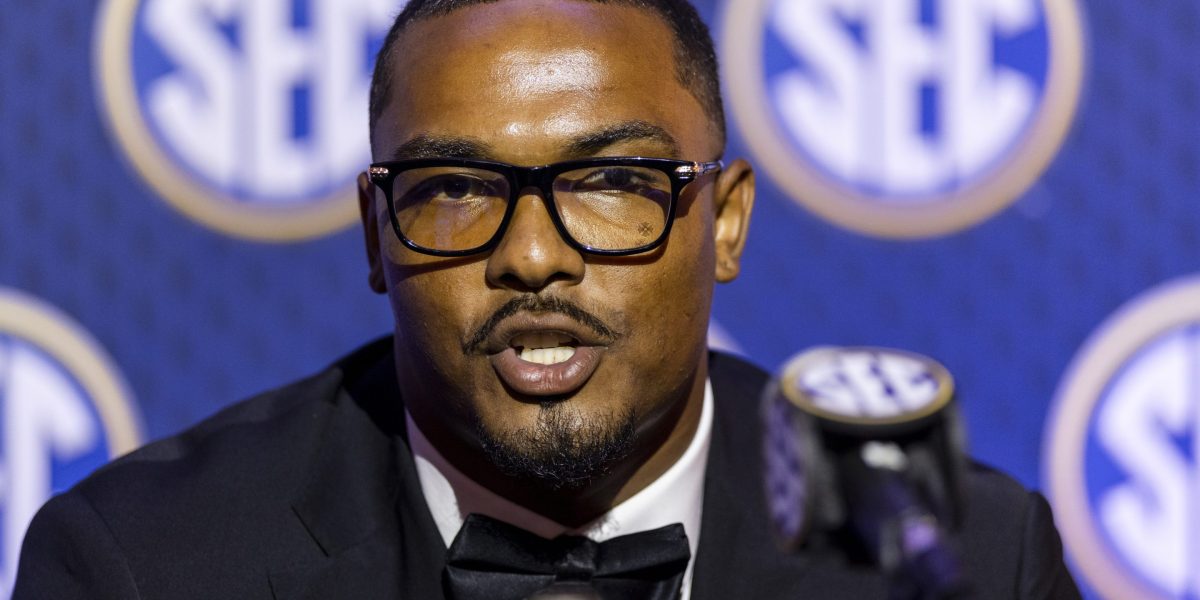
Source: Fortune. Casualplayhub News adds summary, context, and editorial framing while linking back to the original report.
A college football player found an inventive way to transform a suspension into a force for good. Tennessee Volunteers linebacker Arion Carter, penalized by the NCAA for accepting a flight worth $427 from an agent, decided to flip the punishment into a season-long charitable drive.
The trouble began after Carter declared for the 2025 NFL draft. During that process, he took a flight arranged by an agent, a move that violated NCAA rules. But Carter’s journey took an unexpected turn. He had been playing through a foot injury during the 2025 season, which worsened, requiring surgery. That forced him to withdraw from the draft and return to Tennessee for another year. The NCAA initially suspended him for two games, but reduced it to one. Still, that meant Carter sat out the Vols’ season opener against Furman on September 5. He will return to the field when Tennessee faces Georgia Tech on September 12.
Even before the suspension was announced, Carter had tried to make things right. He cut ties with the agent and repaid the flight cost in January. Yet the NCAA penalty stood. Rather than stew in frustration, Carter channeled his energy into a bold initiative. On Monday, he unveiled a pay-per-stat donation plan. For each tackle he makes this season, Carter will donate $427—a pointed nod to the exact amount that got him suspended. Sacks bring $500, interceptions or forced fumbles $1,000, and defensive touchdowns $5,000.
The cause is deeply personal. Earlier this summer, Carter cut his hair to honor his girlfriend, Mariah Bryant, who is fighting breast cancer. He told Volquest that he dedicates his senior season to her, with donations directed to Nashville-area cancer treatments at Sisters Network Nashville and toward Bryant’s medical bills. “I want to raise awareness and build a foundation that’s able to give back to people in need and people who are going through tough times like my girlfriend,” he said.
Carter’s NIL deals are estimated at $775,000, according to The NIL Standard—a substantial sum for a college athlete, though dwarfed by top earners like Texas quarterback Arch Manning, whose NIL value exceeds $6.8 million. Still, Carter’s pledge is notable not just for its scale but for its structure. While many players make lump-sum charitable donations—Manning auctioned a trading card for $102,500 to benefit Ronald McDonald House; former Iowa offensive lineman Tyler Linderbaum gave $30,000 to a children’s hospital; Missouri linebacker Damon Wilson pledged $10,000 to youth football—Carter’s stat-by-stat model is rare. Even more ambitious was former Ohio State lineman Harry Miller, who planned to donate all his NIL earnings to humanitarian efforts in Nicaragua.
Projections based on Carter’s 2024 stats, calculated by the Chattanooga Times Free Press, suggest his donations could total more than $42,000. That figure could climb if he matches or exceeds previous performance. Carter’s approach turns every tackle into a statement—a reminder that even a suspension can spark something positive.
Article commentary
Arion Carter’s decision to tie his on-field performance directly to charitable giving is more than a clever PR move; it’s a pointed commentary on the NCAA’s often baffling regulatory framework. The original infraction—accepting a $427 flight from an agent while exploring draft options—seems trivial against the background of a multi-billion-dollar college sports industry. Yet the NCAA penalized Carter, who had already repaid the cost and severed ties. The suspension cost him a game, but Carter transformed the dollar amount into a recurring donation symbol. This story highlights the tension between NCAA rules and the realities of modern college athletics. Players like Carter, who once had no access to compensation, now navigate Name, Image, and Likeness deals worth hundreds of thousands of dollars. Yet archaic rules about agent contact remain. The flight incident happened when Carter was technically a professional prospect, not a student-athlete benefiting from NIL. The NCAA’s inconsistency—allowing million-dollar endorsement deals while punishing a cheap flight—invites ridicule. Carter’s charitable response subtly calls out that hypocrisy. Beyond the institutional critique, the personal element gives the story weight. Carter’s girlfriend, Mariah Bryant, is battling breast cancer. His decision to donate to Nashville-area cancer treatment centers and to help cover her medical bills is a raw, human act amid the regulatory drama. By dedicating his senior season to her, he shifts the narrative from punishment to purpose. Carter’s approach also represents a new frontier in athlete philanthropy. Most college players who give to charity do so in lump sums, often from NIL deals or endorsements. Carter’s per-stat model gamifies giving, making every defensive play meaningful beyond the scoreboard. It engages fans, generates media attention, and creates a direct link between performance and social impact. If successful, it could inspire other athletes to adopt similar models. However, the sustainability of such pledges depends on Carter’s health and playing time. He missed a game due to suspension and has a history of foot injuries. Last season’s stats may not be repeatable. Yet even a partial payout would make a difference. The projected $42,000 is modest compared to top NIL earners but meaningful for a local charity. Ultimately, Carter’s initiative is a masterclass in turning adversity into advantage. He has used a suspension to amplify his platform, honor a loved one, and challenge the NCAA’s priorities. In a sport often dominated by headlines about transfers, scandals, and NIL bidding wars, Carter’s story stands out as one of resilience and generosity.