Synchrony and OpenAI Confirm Partnership, Correcting Earlier Misreporting
Source: CNBC Business. Casualplayhub News adds summary, context, and editorial framing while linking back to the original report.
Synchrony Financial, a leading issuer of store-branded credit cards, has officially partnered with OpenAI, the creator of ChatGPT, in a move that signals the banking sector's deepening embrace of generative artificial intelligence. The partnership was first reported earlier this week, but the initial story contained inaccuracies that prompted a correction. The original version, citing a Synchrony executive, mischaracterized the nature of the collaboration. Consequently, all details, quotes, and characterizations attributed to both Synchrony and the executive have been removed from the corrected report.
What remains is a straightforward confirmation: Synchrony and OpenAI are working together, though the exact scope of the arrangement has not been fully disclosed. Industry insiders suggest the partnership will likely focus on deploying OpenAI's large language models to improve customer service interactions, streamline credit risk assessments, and personalize marketing offers. Synchrony, which manages over 100 million credit card accounts across retail partners like Amazon, Walmart, and Lowe's, has been exploring AI-driven solutions for years. In recent earnings calls, executives hinted at using machine learning to detect fraud and optimize reward programs. The new collaboration with OpenAI is expected to accelerate these efforts.
OpenAI, for its part, has been expanding its enterprise footprint beyond tech startups. The lab's ChatGPT Enterprise product, launched in 2023, offers enhanced security and data privacy features tailored for regulated industries like finance. Synchrony's adoption of OpenAI's technology could serve as a test case for other banks considering similar integrations. However, the corrected report underscores the sensitivity of such announcements. The original mischaracterization—whether it overstated the integration depth or misattributed strategic intent—serves as a reminder that corporate partnerships are often negotiated under confidentiality agreements, leaving room for reporter error.
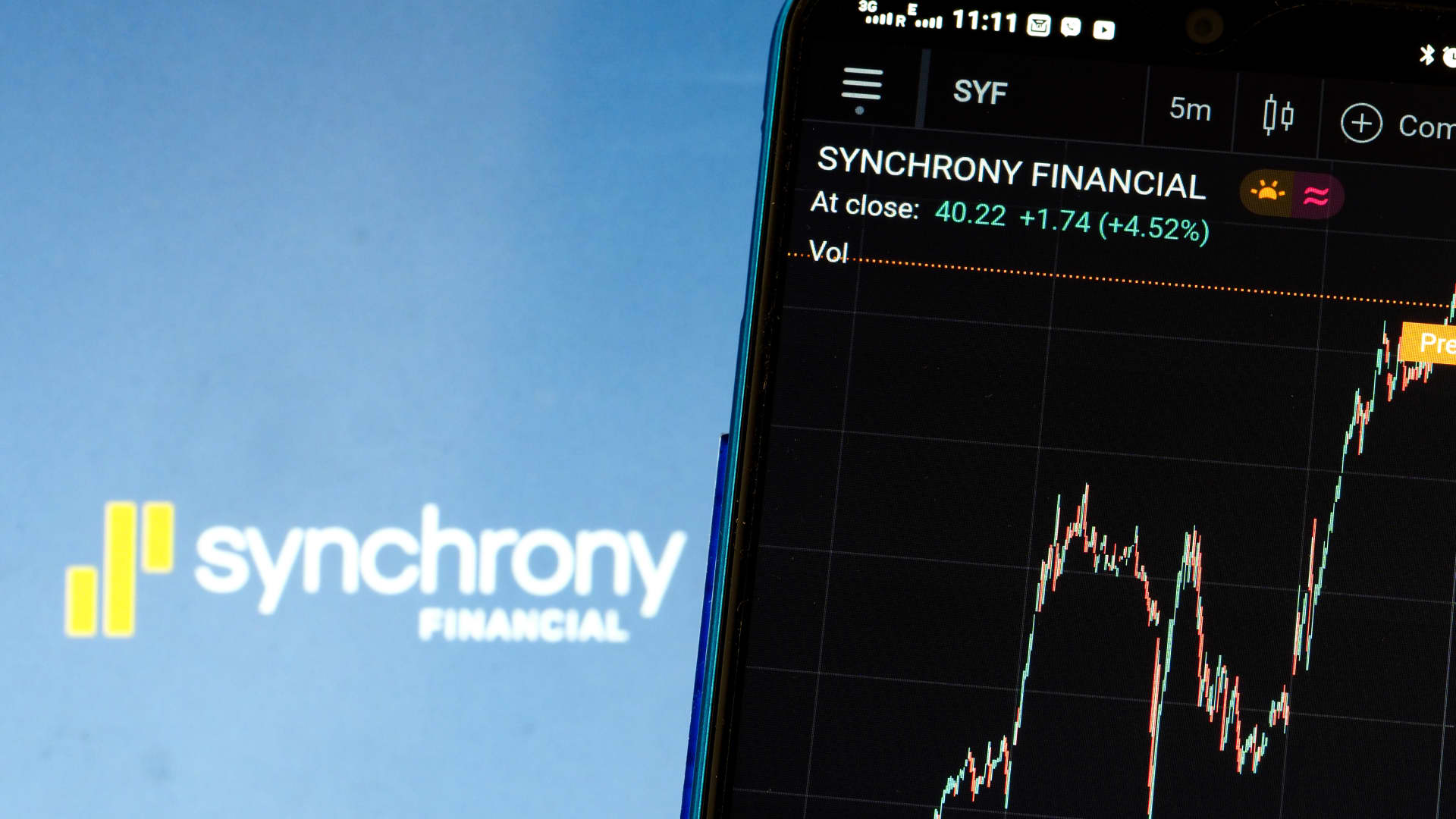
Synchrony's stock (NYSE: SYF) traded relatively flat following the news, suggesting that investors had already priced in some AI-related initiatives. The company's market capitalization stands at approximately $20 billion, and its share price has risen 15% over the past year, partly driven by cost-cutting measures and digital transformation. Analysts at JPMorgan and Morgan Stanley have maintained neutral ratings, noting that while AI offers long-term potential, near-term earnings impact remains uncertain.
The correction process itself is notable. The initial story was published with a clear attribution to a Synchrony executive, but after review, the editor determined that the information was misleading. The revised version stripped out all direct quotes and specific claims, leaving only the partnership announcement. This editorial decision reflects a commitment to accuracy, even at the cost of narrative depth. For readers, it means that the full strategic rationale behind the Synchrony-OpenAI deal remains opaque—at least for now.
In the broader context, Synchrony's move aligns with a trend. Major banks like JPMorgan Chase, Goldman Sachs, and Morgan Stanley have all announced partnerships or internal development of generative AI tools. However, the financial industry faces unique challenges: regulatory scrutiny, data privacy concerns, and the need for explainability in AI-driven decisions. Synchrony, which specializes in consumer lending and retail credit, must navigate these hurdles carefully. The partnership with OpenAI, which has faced its own controversies over data usage and bias, will be closely watched.
Despite the correction, the core fact remains: Synchrony and OpenAI are collaborating. How this partnership evolves will depend on the outcomes of pilot projects, regulatory feedback, and market reception. For now, both companies are likely benefiting from the press attention, even if the initial coverage was flawed. The episode also highlights the importance of rigorous fact-checking in financial journalism, where a single misquoted line can sway investor sentiment.
Article commentary
The correction of the Synchrony-OpenAI story offers a valuable case study in the friction between breaking news and corporate communications. On one hand, the initial report captured a genuine development—a major credit card issuer tying up with the world's most prominent AI lab. On the other hand, the mischaracterization—whether it was a simple misunderstanding or a deliberate overstatement by the executive—forced a retraction that left the public with less information than before. This is not an isolated incident. In the rush to cover emerging technologies, journalists often rely on executive soundbites that may be aspirational rather than factual. The Synchrony case is a reminder that even well-sourced quotes can be misleading if the context is not fully understood. From a business perspective, the partnership itself is a logical step. Synchrony's core business—providing credit to retail customers—is highly data-intensive. AI can help analyze spending patterns, predict defaults, and tailor offers in real time. OpenAI's models, particularly GPT-4, are well-suited for such tasks. However, the financial sector is notoriously risk-averse. Regulators, including the Federal Reserve and the Consumer Financial Protection Bureau, have issued warnings about AI use in lending, especially regarding fair lending laws and algorithmic bias. Synchrony's partnership must therefore be implemented with caution. The corrected report may have inadvertently downplayed these risks by focusing on the technology's potential rather than its limitations. Another angle is the role of the media in shaping investor expectations. The initial, uncorrected story likely caused a brief spike in Synchrony's stock or at least generated buzz. The correction, while necessary, may have dampened enthusiasm. This dynamic suggests that companies and their PR teams need to be more precise in their language when speaking to journalists. A single offhand remark—like 'we are integrating ChatGPT into our core systems'—can be interpreted as a fully deployed solution when it is actually a small pilot. Synchrony's executive should have been more specific, and the journalist should have pressed for concrete details. The fact that the editor later removed the quotes indicates that the information was deemed unreliable, but the damage to credibility—both for the news outlet and for Synchrony—is done. Looking ahead, the Synchrony-OpenAI deal will likely be followed by similar announcements from other mid-tier financial institutions. The big banks have already staked their claims, but regional lenders and credit card issuers are now racing to catch up. The key differentiator will be execution: can Synchrony actually deploy AI in a way that improves customer satisfaction without violating privacy norms? The corrected report robs us of the detailed roadmap, but it also protects the companies from premature scrutiny. In the long run, the partnership's success will be measured by tangible metrics—lower charge-off rates, higher customer retention, or faster loan approvals—not by press releases. Finally, the incident underscores the importance of editorial oversight in financial journalism. The decision to remove all attributed quotes and start fresh is a tough but ethical choice. It prioritizes truth over scoops. However, it also leaves a vacuum: readers are left with a headline but no substance. The challenge for news organizations is to balance speed with accuracy. In the case of emerging tech partnerships, where the details are often proprietary, a better approach might be to delay publication until both sides provide written confirmation. Synchrony and OpenAI might have benefited from a joint press release rather than a leak or an interview. As AI continues to reshape industries, the relationship between corporate communications and the press will only grow more complex. The Synchrony correction is a small but instructive chapter in that ongoing story.