Europe's Fifth Summer Heatwave Roasts France, Sparks Wildfire
Source: Press of Alantic City Business. Casualplayhub News adds summary, context, and editorial framing while linking back to the original report.
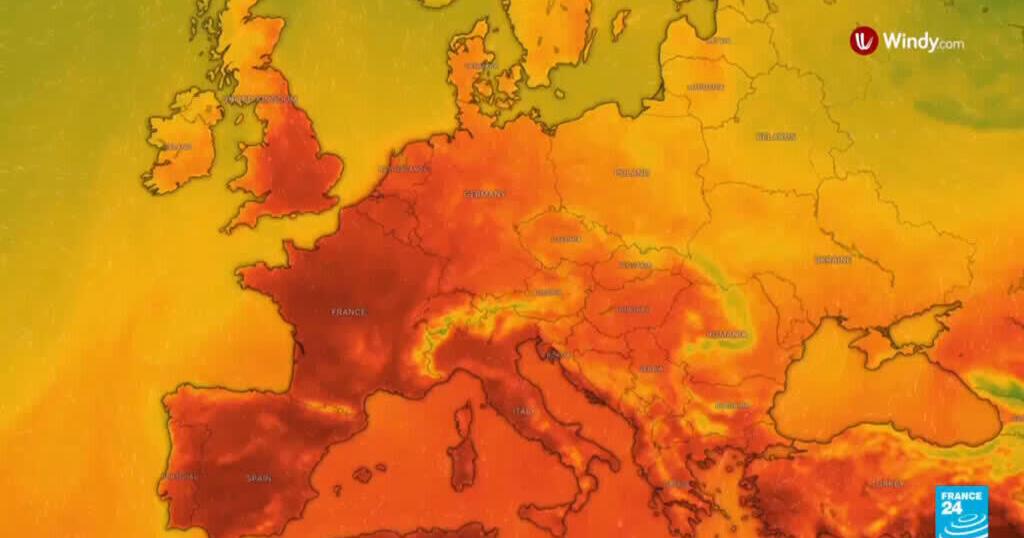
Europe is in the grip of its fifth heatwave of the summer, a relentless spell of scorching temperatures that shows no signs of easing. France, one of the hardest-hit countries, has seen thermometers climb to 40 degrees Celsius in parts of the nation, triggering a wildfire in the southwest that has already consumed large swaths of forest and prompted emergency evacuations. Monte Francis reports from the scene.
The extreme heat, which began building earlier this week, is the result of a stagnant high-pressure system that has locked hot air over much of Western Europe. Meteorologists describe it as a heat dome, a phenomenon that traps heat near the ground and prevents cooler air from moving in. In France, the national weather service Météo-France has placed multiple departments under orange alert, the second-highest warning level, as temperatures in cities like Bordeaux, Toulouse, and Lyon have surged past 38 degrees Celsius. Rural areas, particularly in the southwest, have recorded even higher readings, with some villages reporting 40 degrees Celsius in the shade.
The wildfire, which erupted on Wednesday afternoon near the town of Landiras in the Gironde region, has already burned over 1,500 hectares of pine forest. Firefighters, numbering more than 400, are battling the flames with the help of water-bombing aircraft. Local authorities have ordered the evacuation of several hamlets and have set up emergency shelters for displaced residents. The fire is moving rapidly due to strong winds and dry vegetation, conditions that have turned the region into a tinderbox after months of below-average rainfall. Officials say no casualties have been reported so far, but the situation remains critical.
Across the border in Spain, similar heatwave conditions have caused temperatures to exceed 40 degrees Celsius in the southern provinces of Seville and Cordoba. The Spanish government has activated its national heat plan, opening cooling centers and distributing water to homeless populations. In Italy, the health ministry has issued red alerts for 12 cities, including Rome, Florence, and Bologna, where temperatures are expected to reach 38 degrees Celsius in the coming days. The heat has also strained energy grids, with air conditioning usage driving up electricity demand to near-record levels.
The health impacts of this prolonged heatwave are already being felt. French hospitals report a surge in heat-related emergencies, including heatstroke, dehydration, and exacerbation of chronic conditions. The elderly, children, and those with pre-existing illnesses are particularly vulnerable. Public health officials are urging people to stay indoors during the hottest hours, drink plenty of water, and check on neighbors who live alone. In some areas, local governments have extended the hours of public swimming pools and air-conditioned public buildings to offer respite.
This fifth heatwave of the summer follows a pattern of increasingly frequent and intense heat events across Europe. Scientists point to climate change as a key driver, noting that the continent's average temperature has risen by more than 2 degrees Celsius since the industrial era, nearly double the global average. The heatwave has also worsened drought conditions, with the French government imposing water restrictions in 56 of its 96 departments. Farmers are struggling as crops wither, and river levels are dropping, affecting transport and energy production.
As the heatwave persists, emergency services remain on high alert. The French interior minister has pledged additional resources to combat the wildfire, including reinforcements from neighboring regions. For now, residents and firefighters alike are bracing for what could be a long, hot weekend ahead.
Article commentary
The latest heatwave gripping Europe is not just another weather event; it is a stark reminder of the accelerating impacts of climate change on a continent that is warming faster than almost any other region on Earth. While the immediate focus is on the wildfire in southwestern France and the dangerous temperatures in cities across the continent, the broader context reveals a troubling trend. Europe has experienced five distinct heatwaves in a single summer, a frequency that was once considered exceptional but is now becoming the new normal. This pattern aligns with scientific projections that predict more frequent, longer, and more intense heat events as global average temperatures rise. What makes this particular heatwave stand out is its persistence and geographical reach. Unlike previous heatwaves that might have been confined to a specific region, this one has stretched from the Iberian Peninsula to the British Isles, affecting millions of people. The fact that France, Spain, and Italy are all seeing temperatures above 40 degrees Celsius simultaneously underscores the large-scale nature of the event. The high-pressure system responsible for this heat dome is not expected to break down for at least another week, meaning that the health and environmental risks will continue to mount. The alert systems in place across Europe are a testament to lessons learned from past deadly heatwaves, such as the 2003 event that killed an estimated 70,000 people. Today, governments are far more proactive in issuing warnings, opening cooling centers, and mobilizing emergency services. Yet, the vulnerability of certain populations remains a concern. The elderly, particularly those living alone in urban areas, are often the hardest hit, and social isolation can compound the danger. The pandemic has also left many people with weakened social networks, making it harder for neighbors and family to check in on them. Another critical dimension is the strain on infrastructure. Power grids are under pressure as air conditioning usage spikes, and water supplies are dwindling in regions already facing drought. The wildfire in France is a direct consequence of the combination of extreme heat and dry conditions, a trend that is likely to worsen as the climate continues to warm. Fire seasons are starting earlier and lasting longer, and the intensity of fires is increasing. This puts enormous pressure on firefighting resources, which are often shared across borders. From a policy perspective, this heatwave should serve as a catalyst for more aggressive climate adaptation and mitigation measures. While the European Union has set ambitious emission reduction targets, implementation remains uneven. The agricultural sector, in particular, needs to adapt to a hotter, drier climate, with investment in drought-resistant crops and more efficient irrigation systems. Urban planning must also evolve to incorporate green spaces, reflective surfaces, and better building insulation to reduce the urban heat island effect. In the end, the heatwave is a preview of what is to come if global temperatures continue to rise. Each record-breaking event becomes a reference point for the next, and the margin for error shrinks. The response from authorities in France and other European countries has been commendable, but the underlying problem requires a global solution. The task now is to translate the urgency of the moment into sustained action that can protect lives, livelihoods, and ecosystems from the heat that is only going to intensify.