Beef Price Surge Finally Breaks Consumer Resistance
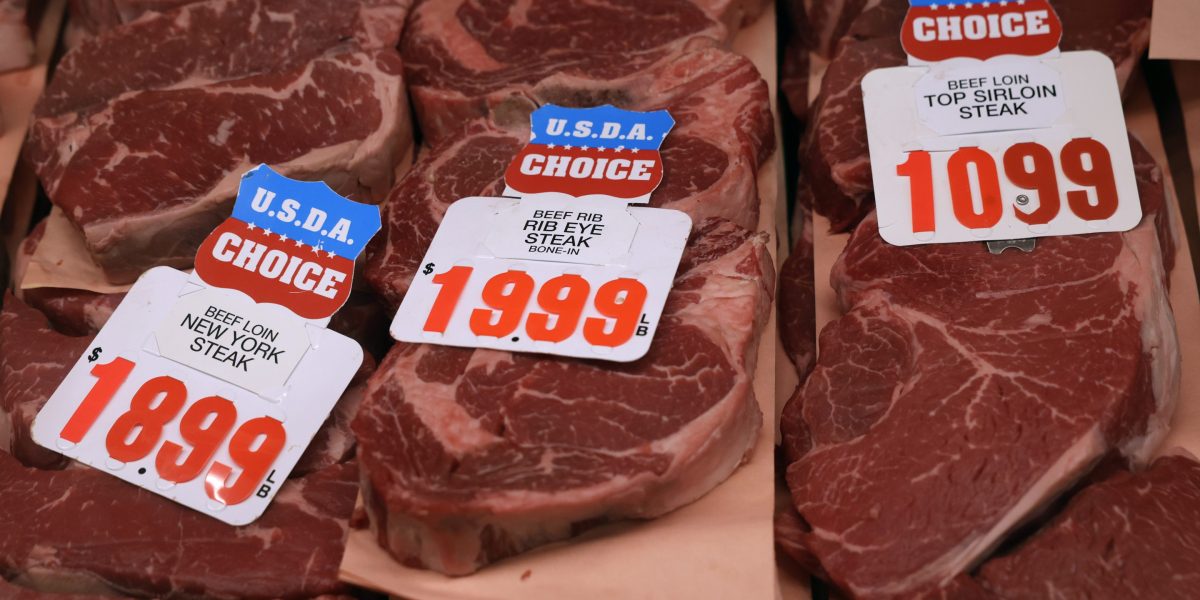
Source: Fortune. Casualplayhub News adds summary, context, and editorial framing while linking back to the original report.
Aaron Kaufman used to rely on ground beef to hit his daily protein target — a gram for every pound of his body weight. Then this spring, the 32-year-old moved from Brooklyn to Manhattan. To balance the higher rent, he shifted more of his spending to groceries instead of dining out. But on his first trip to the local supermarket, he was shocked to find ground beef at $8 a pound, up from $6 in Brooklyn. He quickly switched to cheaper proteins like chicken, though he still prefers the taste of beef. "Every once in a while, I'll treat myself if it's on sale," Kaufman said.
He is not alone. After absorbing nearly two years of surging beef prices, Americans are finally showing signs of hitting their limit. This marks a notable shift in a market where a shrinking U.S. cattle herd repeatedly pushed prices to records, yet consumers kept buying enough to support even higher prices. But now, that resilience is cracking — and at a time of year when demand should be strongest. Beef sales volumes in the 13 weeks ending mid-July, a crucial period that includes Memorial Day and July Fourth, fell 0.3% from a year earlier, according to research firm Circana. In the same stretch in 2024 and 2023, volumes grew about 5%. Chicken, meanwhile, continues to see rising consumption, with ample supplies keeping prices under pressure.
The shift suggests there may be a ceiling on what Americans are willing to pay for beef, one of the biggest drivers of food inflation. Consumers who had responded to higher prices by cooking at home or buying cheaper cuts are now pulling back entirely or switching to other proteins. "Consumers are stretched," said Chris DuBois, an executive vice president at Circana. "It's not always just about the price of food, there's the price of life that hits, so that puts some of the pressure on total volume in the store."
The steep run-up in beef prices has become a major concern for the Trump administration ahead of the midterm elections, as costs of staples like eggs, ground beef, and gasoline play an outsize role in consumer perceptions of inflation. The U.S. has sought to ease the pressure by importing more meat from countries including Argentina and moving to resume live cattle shipments from Mexico. Beef processors, squeezed by rising cattle costs, have closed plants to reduce competition for scarce animals — including a move announced Thursday by Tyson Foods Inc. But these measures can only do so much: The domestic herd remains near the lowest level in more than five decades, keeping beef supplies tight.
Average consumer ground beef prices were flat in July, which includes Independence Day, a sign that retailers and consumers resisted further increases. A pound averaged $7.116, the U.S. Bureau of Labor Statistics said Wednesday. While still near a record high, the 9.4% increase from July 2025 marks the most modest year-over-year jump in 17 months.
To be sure, demand hasn't disappeared. Even as roughly 40% of beef buyers say they are purchasing the protein less frequently, a dedicated subset of younger, protein-obsessed shoppers continue to pay up, said Duncan Angove, CEO of supply chain management firm Blue Yonder. But the weaker volumes are especially notable during the summer grilling season, when beef demand should be strongest. "Seasonal demand is typically one of the strongest supports for beef prices," said Shawn Sparks, a managing director at protein sourcing firm The Sparks Group Inc. "When demand begins to soften during peak grilling season, it suggests affordability is becoming a more important factor." While sales should still be boosted by Labor Day, the improvement will be "somewhat more measured than in previous years," Sparks added.
Weaker demand signals helped drive a steep slide in wholesale beef prices and live cattle futures starting in late June. Futures in Chicago touched the lowest price since December in late July, as the USDA decided to resume cattle imports from Mexico later this month, after a more than yearlong ban to prevent the spread of the deadly screwworm parasite. The market set a fresh nine-month low Friday after Tyson announced its latest plant closures. "It's been a chain of events that we've seen on the demand side that has led to this point," Abby Greiman, a livestock market adviser at Ever.Ag Insights, said of the selloff. "It feels a lot softer than it has for a long time."
The U.S.'s 250th anniversary and the World Cup already helped extend consumption, but "the market I think has been looking for an opportunity to catch its breath, because it's been dealing with high prices for so long now," said Michael Di Sabato, founder of HighLine Consulting Group. "This was the first opportunity for consumption to push back a little bit."
Fast-food companies have already noted the trend. Michelle Hook, CFO of Shake Shack Inc., said on a call with investors this month that beef inflation in the second half of the year will be "a little bit less pronounced." Burger King owner Restaurant Brands International Inc. said it expects some relief, though "a lot more of that" will come in early 2027. Still, consumers shouldn't expect much immediate reprieve. The first port reopening for live cattle shipments from Mexico isn't the U.S.'s biggest, and those animals also need to be raised for several months before slaughter. Meanwhile, the U.S. cattle herd as of July 1 still remains near its lowest levels in about five decades. Lower prices wouldn't flow through until the end of the third quarter at the earliest, due to leftover inventories and hedging programs, George Paleologou, CEO of Premium Brands Holdings Corp., said on a recent earnings call. "As they come down, we'll pass those on. But similar to the delays on the way up, there'll be delays on the way down."
Article commentary
The recent pullback in beef demand marks a pivotal moment for the U.S. meat industry, where a perfect storm of shrinking cattle herds, persistent inflation, and shifting consumer behavior has finally cracked the resilience that defined the market for nearly two years. The data from Circana — a 0.3% drop in sales volumes during the peak summer grilling season, compared with 5% growth in each of the prior two years — is more than a seasonal blip; it signals a fundamental change in how Americans view beef as a staple protein. At the heart of this shift is the affordability squeeze. Consumers like Aaron Kaufman are not just trading down from expensive cuts to cheaper ones; they are leaving the beef category entirely for chicken or other proteins. This is a significant behavioral change, and it reflects the broader economic reality that households are being pinched by multiple cost pressures — rent, utilities, gasoline — not just food. As Chris DuBois of Circana noted, 'the price of life' is eroding the willingness to pay premium prices for beef. The fact that ground beef prices, while still near record highs, saw their smallest year-over-year increase in 17 months suggests that even retailers and processors are hitting a wall. The supply side tells a complex story. The U.S. cattle herd is at its lowest level in over 50 years, a structural constraint that won't be solved quickly. While the government's moves to import meat from Argentina and resume Mexican cattle shipments are pragmatic, they are unlikely to provide immediate relief. The first port reopening for Mexican cattle is not the largest, and the animals need months to be fattened. Meanwhile, plant closures by Tyson and others are reducing competition for scarce animals, but they also signal that processors are struggling with high input costs. The result is a market where wholesale prices have tumbled, but retail prices may only slowly follow. This situation has political implications. With midterm elections approaching, the Trump administration is acutely aware that food inflation — especially for staples like ground beef — shapes voter sentiment. The modest easing in beef price increases may offer a talking point, but it is unlikely to be enough to offset broader inflationary pressures. The challenge for policymakers is that the root cause — a depleted cattle herd — is a long-term supply issue that cannot be fixed by short-term import measures. Looking ahead, the outlook is cautiously bearish for beef prices. Fast-food chains are already hedging their expectations, with Shake Shack and Burger King predicting less pronounced inflation into 2027. But the lag in passing lower wholesale prices to consumers means grocery shoppers may not see meaningful relief until late 2026 or early 2027. The key wildcard is consumer demand. If the protein-obsessed younger cohort continues to pay up, as noted by Duncan Angove, beef could retain a premium niche. But the broader market appears to be shifting toward a more price-sensitive equilibrium, one where beef may no longer command the same loyalty it once did. This could be the beginning of a structural change in American eating habits, with chicken and other alternatives gaining permanent ground.