Ex-Ukraine Defense Minister Fedorov Calls for Elections Amid War
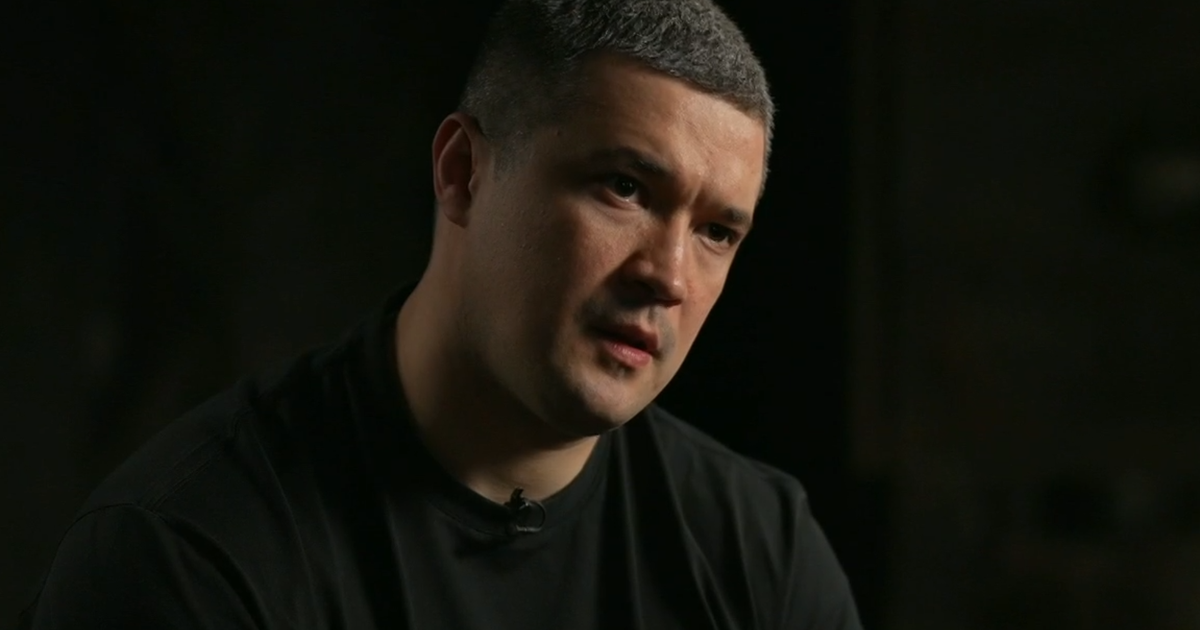
Source: CBS News World. Casualplayhub News adds summary, context, and editorial framing while linking back to the original report.
Ukraine's former defense minister Mykhailo Fedorov has thrown down the gauntlet to President Volodymyr Zelenskyy, demanding that national elections be held despite the country's grinding war with Russia. The call, made publicly on Tuesday, represents the most direct challenge to Zelenskyy's grip on power since the Russian invasion began in February 2022. Since the war started, Zelenskyy has imposed martial law, a legal framework that suspends the holding of any elections. The move was widely seen as necessary to ensure stability and unity in the face of an existential threat. But Fedorov, who was dismissed from his post earlier this year, now argues that the continuation of martial law without a clear electoral path undermines Ukraine's democratic foundations. "We cannot allow the war to become an excuse for indefinite postponement of the people's will," Fedorov said in a statement. "Democracy must be defended even as we defend our territory." His remarks land at a delicate moment. Ukraine is locked in a grinding counteroffensive that has made slow but steady progress against entrenched Russian positions. At the same time, the country has faced intense aerial bombardments, including a recent wave of drone attacks on Moscow that Ukraine has claimed responsibility for. The timing of Fedorov's call has raised eyebrows. Some political observers see it as a calculated move to position himself as a potential alternative to Zelenskyy, especially as the president's popularity, while still high, has shown signs of wear after more than 18 months of war. Others, however, argue that the demand is a legitimate expression of democratic principle. "Elections are the lifeblood of any democracy, and war does not change that fundamental truth," said Olena Prokopenko, a political analyst at the Kyiv-based Democratic Initiatives Foundation. "But the practical realities of holding a vote while Russian missiles are falling are immense." Indeed, the logistical challenges are staggering. Millions of Ukrainians are displaced, both internally and abroad. Large swathes of the country remain under Russian occupation or are subject to constant shelling. The electoral infrastructure—polling stations, voter rolls, security arrangements—would need to be rebuilt from scratch under fire. Zelenskyy's administration has so far shown no signs of relenting. In a televised address on Monday, the president reiterated that martial law would remain in place until the war ends. "Every decision we make is about survival," Zelenskyy said. "We cannot afford political games when the enemy is at the gate." But Fedorov's challenge is not the first crack in the united front Ukraine has presented to the world. In recent months, there have been growing murmurs of discontent among some political figures and civil society groups about the concentration of power in the president's office. Some have called for greater transparency in military decisions and the use of international aid. The debate over elections is likely to intensify as the war grinds on. Ukraine's allies, particularly the United States and European Union, have been careful not to publicly pressure Zelenskyy on the issue, but behind the scenes, there is concern about the long-term democratic health of the country. The United States, which has provided billions of dollars in military and economic aid, has consistently emphasized the importance of democratic institutions. For now, the ball remains in Zelenskyy's court. Whether he chooses to engage with Fedorov's demand or dismiss it outright will signal how he intends to navigate the tension between war-time necessity and democratic accountability. The coming weeks will likely reveal whether this is a fleeting political spat or the beginning of a deeper reckoning within Ukraine's leadership. As the drones continue to fly and the front lines remain fluid, the question of who speaks for the Ukrainian people—and how that voice is heard—has never been more urgent.
Article commentary
Mykhailo Fedorov's call for elections in the midst of a brutal war is a moment that forces Ukraine to confront a difficult question: can democracy survive the very conditions that are meant to protect it? On its face, the demand is a standard political move—a dismissed official seeking to regain relevance by challenging the incumbent. But the context makes it far more significant. Ukraine is fighting for its existence as a sovereign state. The Russian invasion has killed thousands, displaced millions, and devastated the economy. In such a setting, most countries would suspend normal political processes. Zelenskyy's martial law decree was widely supported, both domestically and internationally, as a necessary measure to concentrate decision-making and avoid the chaos of a campaign season. Yet Fedorov's argument has a compelling logic. Democracy is not just about elections; it is about the legitimacy that elections confer. If the war drags on for years, does Ukraine risk becoming a de facto one-party state, where the president rules by decree and any opposition is branded as unpatriotic? That is a real danger. Already, the Ukrainian government has cracked down on what it calls Russian propaganda, but civil liberties groups have warned that some measures go too far. The balance between security and freedom is notoriously delicate, and in wartime, the pendulum tends to swing toward security. Fedorov's challenge may be opportunistic, but it also serves as a pressure valve, forcing a public debate that might otherwise be stifled. The timing, however, is almost certainly designed to maximize political impact. With the counteroffensive making only incremental gains, and with winter approaching, Zelenskyy's war narrative is becoming harder to sustain. The Ukrainian public, while resilient, is weary. The danger for Zelenskyy is that by refusing to even consider elections, he may feed the perception that he is more interested in holding onto power than in democratic process. But the counterargument is equally powerful. Holding an election during a war would be a logistical nightmare, and it would create a massive security risk. Russian forces could target polling stations, disrupt voter turnout in occupied areas, and exploit the electoral period to launch offensives. Moreover, millions of Ukrainians are abroad, and their voting rights would be a legal and administrative quagmire. The international community would be watching closely. Ukraine's Western allies have been careful not to meddle in its internal affairs, but they are also invested in the country's democratic trajectory. The European Union, which granted Ukraine candidate status, has made rule of law and democratic governance key conditions for eventual membership. If Ukraine appears to be backsliding, even for the best of reasons, it could complicate its path to accession. In the end, Fedorov's call is less about the immediate possibility of elections and more about setting a marker. It is a reminder that the war will eventually end, and when it does, the political landscape will need to be rebuilt. The question is whether that rebuilding can begin before the guns fall silent, or whether it must wait. For now, Zelenskyy holds all the cards. But the debate Fedorov has ignited will not simply disappear. It will simmer, and it may return with greater force if the war continues without a clear end in sight. The Ukrainian people have shown extraordinary courage on the battlefield. The challenge now is to show equal courage in the political arena, by finding a way to reconcile the demands of war with the principles of democracy.