Miami Heat's Backcourt Showdown: Who Starts?
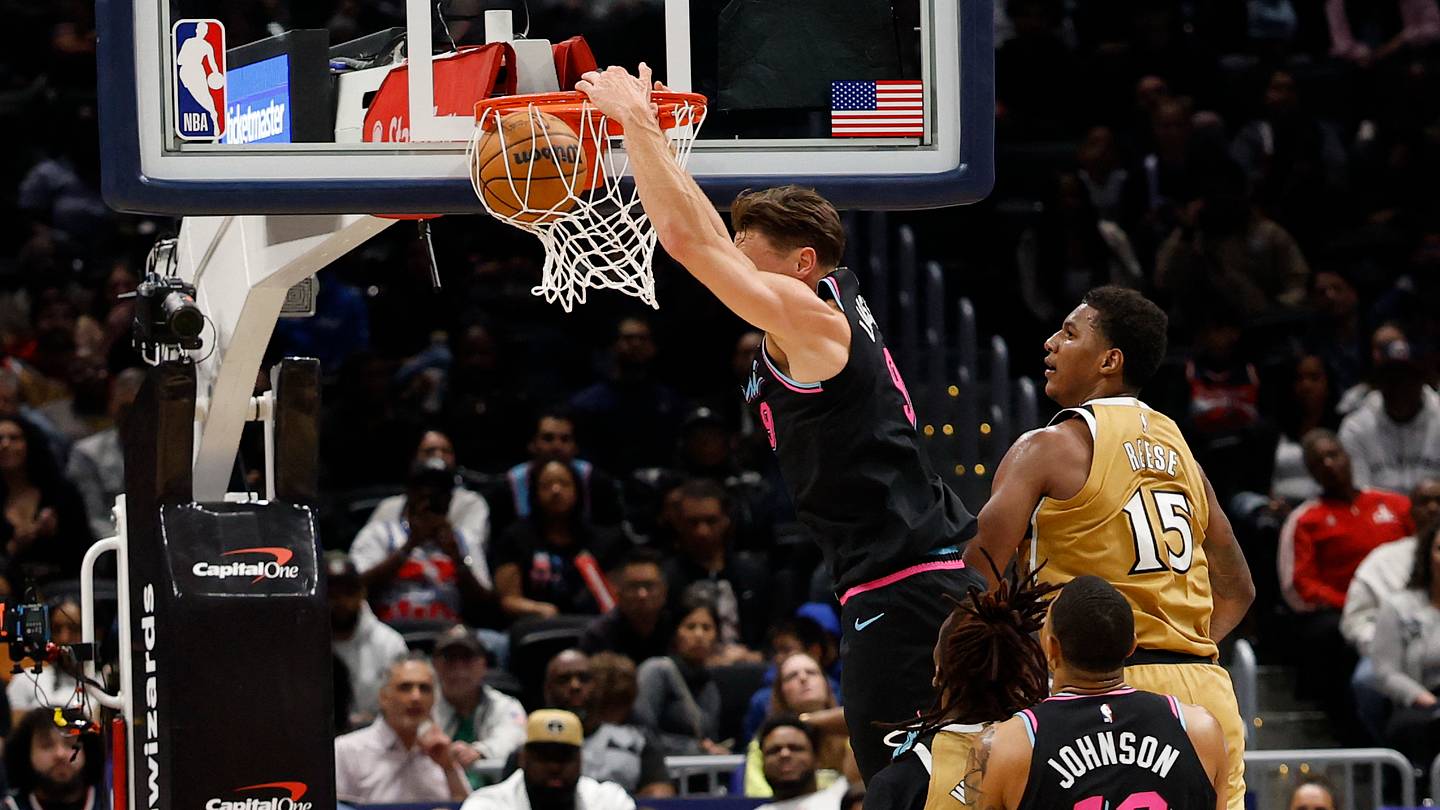
Source: SI NBA. Casualplayhub News adds summary, context, and editorial framing while linking back to the original report.
Ad eligibility review: sensitive-topic
For the Miami Heat, the path to a championship begins with a nearly settled starting five. Three familiar faces are guaranteed: Davion Mitchell, Andrew Wiggins, and Bam Adebayo. The fourth spot belongs to Giannis Antetokounmpo, the franchise-altering acquisition from a blockbuster trade. That leaves one position open, the shooting guard slot. On the roster, two highly capable options stand ready: Pelle Larsson and Tim Hardaway Jr. Each brings a different style, and the choice is as much about philosophy as it is about production.
Larsson, entering his third season, has become a favorite among Heat fans. His per-36 numbers from last season are striking: 15.6 points, 4.8 rebounds, 4.6 assists, 1 steal, and 2 turnovers, with shooting splits of 49% from the field, 32% from three, and 80% from the free-throw line. Those stats suggest a player who contributes across the board, not just scoring. A recent social media post from the account BeyondTheHeat captured the sentiment: "I know, everyone wants to sleep on Pelle Larsson... And he's only going to get better + he plays defense STOP SLEEPING ON PELLE LARSSON." The post included those exact per-36 numbers and a call for wider recognition.
Larsson's supporters argue that his adaptability is his greatest asset. He can slide into any role, defend multiple positions, and make winning plays that don't always show up in the box score. His energy is infectious, and his basketball IQ, combined with grit, makes him the archetype of a championship role player. Sharing the floor with Giannis Antetokounmpo could elevate his game even further, as the Greek superstar's gravity opens up lanes and creates opportunities for cutters and spot-up shooters.
On the other side, Tim Hardaway Jr. offers a proven scoring threat. At 34, he remains a dangerous catch-and-shoot weapon, having excelled in that role last season with Denver. His shooting forces defenses to stay honest, providing the spacing the Heat need to open games. As one analyst, Major Passons, put it: "When evaluating who should start next to Mitchell you first have to look at the roster. Currently there are two options, Pelle Larsson and Tim Hardaway Jr. Out of those two options I would pick Larsson. Though there is an argument that Hardaway Jr. is the better fit due to his shooting, I think everything else favors Larsson." Passons emphasized Larsson's ability to morph his game to the matchup nightly, his team-first mentality, and the grit he brings to the starting lineup. He noted that if Klay Thompson eventually joins, the question might be revisited.
Ethan J. Skolnick offered a more nuanced take. "This isn't about who is the best player, it's about who is the best fit for the current lineup construction. And it's also about preserving a player for the playoffs," Skolnick wrote. He acknowledged that Larsson is likely the best all-around two-guard option this season, given the Heat prioritized keeping him out of any trade and his drastic improvement last season. Larsson will likely close most games, with Erik Spoelstra trusting him as a defender. However, Skolnick argued that starting Hardaway Jr. might be the smarter move to provide spacing from the opening tip. Hardaway, though youngish at 34, can handle extra minutes. That becomes relevant because if 37-year-old Klay Thompson joins the team, as expected, the Heat will want to preserve him for the postseason, limiting his minutes to around 20 per night. Thompson could slide into the lineup later, but for the start of the season, Skolnick's recommendation was to go with Tim Hardaway Jr.
The debate isn't just about who starts, but about how the Heat manage their rotation. Starting Larsson would allow Hardaway to anchor the bench unit, providing much-needed scoring off the pine. Starting Hardaway would give the first unit more shooting, while Larsson could still close games in crunch time. Both approaches have merit, and Spoelstra's flexibility will be critical. The Heat's front office has built a roster with multiple paths to success, but the decision on the backcourt starter will set the tone for the season.
Ultimately, the choice reflects a broader tension: the need for immediate offensive firepower versus the desire for defensive versatility and long-term development. Larsson represents the future, a player who has already shown he can contribute to winning basketball. Hardaway represents the present, a veteran whose skills are proven. The Heat's coaching staff will have to weigh these factors carefully, knowing that the wrong choice could disrupt chemistry, while the right one could unlock a championship run.
Article commentary
The Miami Heat's backcourt decision is a classic case of championship roster construction, where talent and fit often pull in different directions. Pelle Larsson and Tim Hardaway Jr. occupy two distinct archetypes, and the choice between them reveals how the Heat plan to use their new superstar, Giannis Antetokounmpo. Larsson's appeal is rooted in versatility and defensive tenacity. His per-36 numbers paint a picture of a player who does a little bit of everything, and his defensive abilities make him the kind of two-way guard that Erik Spoelstra trusts in high-leverage moments. The fact that the Heat prioritized keeping him out of any trade talks suggests the organization values his trajectory. Starting Larsson would allow the Heat to field a defensive-minded lineup with Mitchell, Wiggins, and Adebayo, giving Giannis ample support on the perimeter. However, the concern is spacing. Larsson shot only 32% from three last season, which could allow opposing defenses to sag off him and clog the paint for Giannis. That's a risk for a team that relies on driving lanes. Hardaway Jr., on the other hand, is a proven catch-and-shoot threat. Last season with Denver, he was elite in that role, and his presence on the floor would force defenders to stay attached, creating more room for Giannis to operate. The Heat's offense could benefit from that immediate spacing, especially in the first quarter when the game is still being established. Hardaway's ability to hit threes off movement and from the corners is a weapon that fits any system. The downside is his defense. At 34, he is not the same defender he once was, and opponents could target him in pick-and-roll actions. That might force the Heat to hide him on weaker offensive players, which limits defensive flexibility. Another layer to this debate is the potential arrival of Klay Thompson. If Thompson joins the Heat, as expected, he would likely assume a significant role, but one that requires careful minute management. Starting Hardaway now would allow Thompson to ease into the rotation, perhaps coming off the bench initially, before eventually sliding into the starting lineup later in the season. Starting Larsson could create a situation where the Heat have to adjust their rotation twice, once when Thompson is ready and again for the playoffs. That could disrupt chemistry. On the other hand, Larsson's youth and adaptability mean he could seamlessly move to the bench, just as Hardaway could. Spoelstra's track record suggests he will prioritize fit and defensive versatility. He has often leaned on players who can execute multiple roles and defend at a high level, even if they lack elite shooting. That history favors Larsson. But the Giannis acquisition changes the calculus. The Greek Freak's game thrives with space, and the Heat's front office likely wants to maximize that advantage from the opening tip. If the goal is to surround Giannis with shooters, Hardaway is the better choice. Ultimately, the decision may come down to Spoelstra's belief in Larsson's jump shot progression. If Larsson can improve his three-point percentage to 36% or higher, he becomes the ideal two-way starter. If not, the Heat might need Hardaway's shooting to keep defenses honest. The team's preseason performance will provide clues, but the real test comes when the games matter. Regardless of who starts, both players will have important roles, and the Heat's depth at the guard position is a luxury. The ability to adapt is what separates contenders from pretenders, and Miami has the pieces to make either choice work. The only question is which path leads to the championship.