OKC Thunder: Early Growing Pains Shouldn't Worry Fans
Source: SI NBA. Casualplayhub News adds summary, context, and editorial framing while linking back to the original report.
Ad eligibility review: sensitive-topic
The Oklahoma City Thunder are poised to contend for the NBA title next season, but the road ahead will not be a smooth continuation of last year's success. A roster reshuffle has sent three familiar faces to new teams, leaving holes that the organization believes can be filled from within. Yet, as the team integrates new pieces and adjusts to shifting responsibilities, early-season stumbles are almost inevitable—and that is perfectly fine.
Lu Dort, the Thunder's defensive anchor in the backcourt, has moved on. His role as a physical, smothering perimeter defender will likely fall to Cason Wallace, who is expected to step into the starting lineup. Wallace brings a different dimension: he can add offensive firepower that Dort sometimes lacked last season. Additionally, rookie Otega Oweh could see minutes off the bench, providing similar hustle and on-ball pressure when called up during the season.
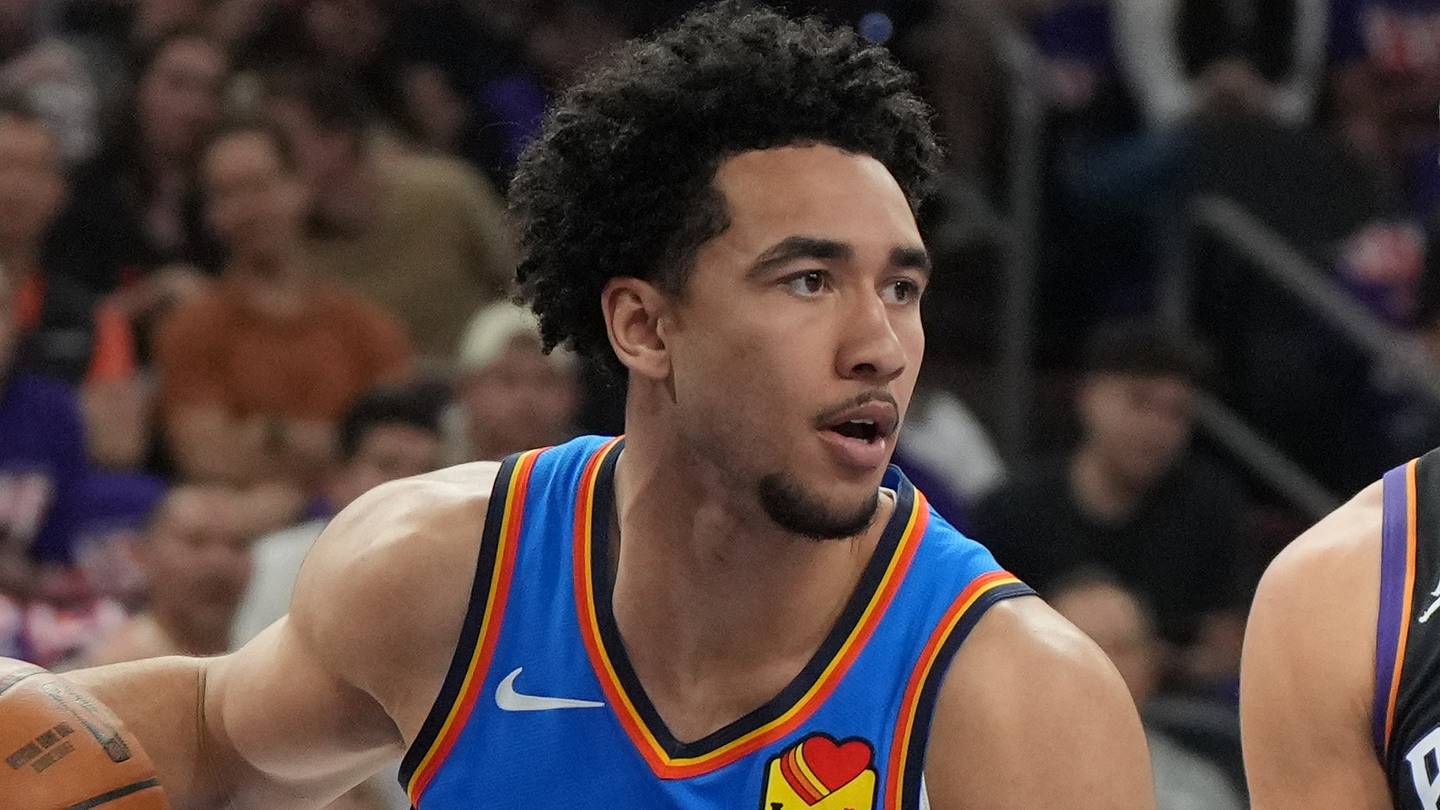
Isaiah Joe's sharpshooting was a vital weapon for OKC. His departure leaves a void on the wing, but the Thunder have tabbed a combination of youngsters to fill it. Jared McCain, the team's recent draft pick, will carry the bulk of the scoring load, while fellow rookie Bennett Stirtz, a guard from Iowa, will chip in as he adjusts to the NBA pace. The two will share floor-spacing duties, though their integration will require patience as they develop chemistry with the core.
Aaron Wiggins' versatile contributions are set to be replaced by the return of Jalen Williams and the continued growth of Ajay Mitchell. Williams, who missed time last season, is expected to regain his role as a multi-positional playmaker, while Mitchell's development in the offseason should provide a steady hand off the bench. Together, they can replicate Wiggins' energy and two-way impact.
Beyond these individual transitions, the Thunder are also introducing two big men to the rotation this season: Aday Mara and Thomas Sorber. Their debut adds another layer of experimentation, as lineups with two traditional centers could alter spacing and defensive schemes. Coach Mark Daigneault will have to balance these new looks with the team's established identity of speed and ball movement.
With so many players moving into unfamiliar roles, the Thunder cannot expect to pick up exactly where they left off at the peak of last season. Rookies need time to learn the league's speed and physicality. Veterans need time to adjust to new responsibilities. The result will likely be a small regression in the early months—a few ugly losses, some disjointed offensive sets, and defensive miscommunications. But for a team built on youth and long-term projection, these growing pains are part of the blueprint.
The front office, led by Sam Presti, has consistently emphasized patience and development. The Thunder's depth is not just about numbers; it is about creating a system where internal competition accelerates growth. If the team can absorb these early stumbles and refine its chemistry, the payoff could be a stronger, more complete unit by the time the playoffs arrive. The message from Oklahoma City is clear: do not panic. The season will start with a step back, but it is a step toward a bigger leap forward.
Article commentary
The Oklahoma City Thunder's approach to the upcoming season reflects a mature understanding of team building in a modern NBA landscape. Rather than chasing immediate perfection, the organization is betting on internal development and the long-term ceiling of its young core. This strategy, while sound, invites scrutiny in a league where patience is often in short supply. Let's examine the key departures. Lu Dort, Isaiah Joe, and Aaron Wiggins each played distinct roles: Dort as a defensive stopper, Joe as a floor spacer, and Wiggins as a versatile glue guy. Replacing them with unproven rookies or players stepping into expanded roles creates obvious risk. Cason Wallace, for example, has shown flashes of being a two-way guard, but his consistency on both ends remains unproven over a full season. Jared McCain and Bennett Stirtz are raw prospects who will need time to adjust to NBA shooting ranges and defensive rotations. Jalen Williams' return is promising, but he himself is coming off an injury that could affect his early-season rhythm. Yet the Thunder's front office has earned the benefit of the doubt. Sam Presti's track record of drafting and developing talent—from Kevin Durant to Shai Gilgeous-Alexander—suggests that the organization can identify players who fit its system. The team's culture, built on selflessness and defensive accountability, should help new additions integrate faster than they might elsewhere. Moreover, the Western Conference is as competitive as ever, with powerhouses like the Denver Nuggets, Minnesota Timberwolves, and Dallas Mavericks all vying for supremacy. A slow start could cost Oklahoma City precious seeding, but the team's true championship window remains open for years to come. What makes this situation particularly interesting is the balance between short-term regression and long-term growth. The Thunder are not a veteran-laden squad trying to win now; they are a young team with a growing core. A few early-season losses are not a disaster—they are data points. They will reveal which lineup combinations work, which players are ready for bigger roles, and where adjustments are needed. The team's flexibility, with multiple draft picks and cap space, also allows for mid-season trades if necessary. There is also the psychological factor. NBA teams that experience early success often become complacent, while those that face adversity early can develop resilience. The Thunder's past season saw them exceed expectations, but that success might have masked some underlying issues. The roster shake-up forces the team to rebuild its identity, which could ultimately make them more dangerous in the playoffs. In conclusion, the Thunder's cautious outlook is not a sign of weakness but a strategic calculation. They are willing to absorb a few bumps now to build a smoother road later. For fans and analysts, the key is to avoid overreacting to November losses. The real measure of this team will come in April and May, when the rookies have become veterans and the systems have had time to solidify. The Thunder should not worry about early-season growing pains—they should embrace them as part of the journey.