Arsenal's Repeat Bid, Man City's Rebuild: Premier League 2026-27
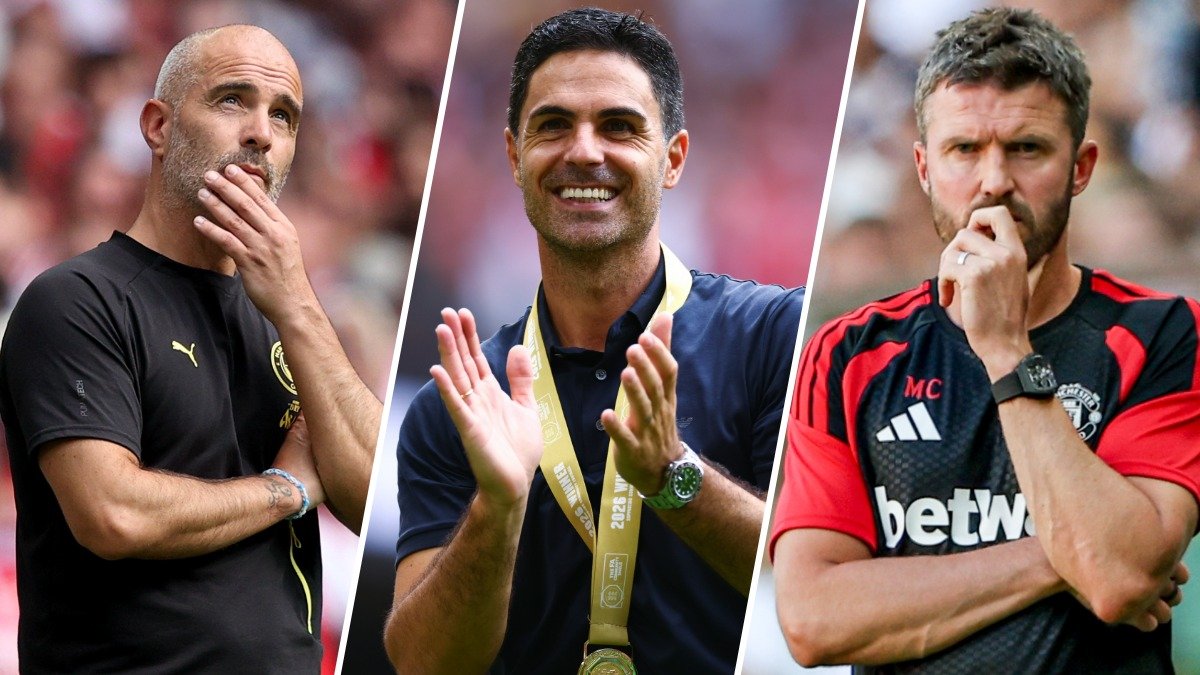
Source: NBC Connecticut Sports. Casualplayhub News adds summary, context, and editorial framing while linking back to the original report.
Ad eligibility review: sensitive-topic
The 2026-27 Premier League season is shaping up to be one of the most unpredictable in recent memory, even if a few storylines feel almost predetermined. Arsenal, the reigning champions, are the overwhelming favorites to retain the title—a feat they last accomplished in 1935, when they went on to secure a three-peat. Mikel Arteta's side boasts the best blend of depth and quality in the league, along with the longest-serving manager (six years) and a core of players entering their prime. With less uncertainty surrounding their squad compared to the chasing pack, the Gunners have a golden window to etch their names into history again.
But the season is not just about Arsenal. The league's competitive balance has shifted dramatically. Manchester City, the dominant force of the past decade, have lost their spine: manager Pep Guardiola, midfield linchpins Rodri and Bernardo Silva, and the aura of invincibility that once terrified opponents. Enzo Maresca, a former Guardiola assistant who previously managed Chelsea, takes over a side that now relies heavily on Erling Haaland, the last superstar from a roster that once sparkled with depth. The Citizens' fear factor—their biggest weapon—is gone, and a defining year awaits.
Elsewhere, five of the traditional 'Big 6' clubs are navigating transitions. Liverpool, Chelsea, and Tottenham have all installed new managers, while Manchester United face the unfamiliar task of balancing league and Champions League commitments after years of European absence. Roberto De Zerbi started at Tottenham late last season, but his first full campaign will test his ability to instill consistency. These clubs are likely to produce erratic results, especially in the early months, opening the door for ambitious teams outside the elite to capitalize.
Relegation battles could be equally dramatic. Newcastle and Aston Villa, high-end mid-table clubs, have lost several key players this window without adequate replacements—a dangerous gamble in a league where quality punishes even minor missteps. Sunderland, despite a European campaign last season, have failed to strengthen their squad sufficiently. The three promoted teams—Coventry City, Ipswich Town, and Hull City—are small-market clubs fighting against the odds. Coventry and Ipswich have each spent over £100 million on new signings, while Hull has invested over £70 million. History shows that spending wisely matters more than spending big, as Sunderland proved last season. Even if all three go straight back down, they could fetch handsome resale fees for their investments.
Arsenal's repeat bid is the headline storyline, but it is not the only one. The relegation zone could feature a shock candidate—Leicester City fell into that trap a few years ago, and West Ham and Wolverhampton followed last season. This year, Newcastle, Aston Villa, or Sunderland could slide into danger, mirroring Tottenham's back-to-back 17th-place finishes. The transfer window is still open, but the warning signs are clear.
As the season unfolds, the races for European qualification will add another layer of intrigue. With the top teams in flux, mid-table clubs have a rare chance to break into the top six. The battle for Champions League, Europa League, and Conference League spots will be fiercely contested, rewarding those who find consistency early.
Ultimately, the 2026-27 campaign promises to be a season of transition, opportunity, and potential shocks. Arsenal's pursuit of history, Manchester City's rebuild, the promoted teams' fight for survival, and the reconfiguration of the traditional hierarchy all combine to create a narrative-rich nine months. The only certainty is uncertainty.
Article commentary
The 2026-27 Premier League season arrives at a fascinating inflection point. For the first time in years, the league's hierarchy appears genuinely porous. Arsenal's dominance—built on continuity, tactical sophistication, and a deep squad—positions them as the clear favorite, but the gap between them and the rest is not as wide as it might seem. The Gunners have the best chance to repeat since their 1930s heyday, yet history shows that even the strongest teams stumble. The pressure of defending a title, coupled with the inevitable injury crises, could test Arteta's squad depth in ways last season did not. Manchester City's decline is the most talked-about story, and rightly so. The departure of Guardiola, Rodri, and Bernardo Silva strips the club of its tactical identity and emotional core. Enzo Maresca inherits a team that is still talented but no longer fearsome. The psychological edge that City once held—the belief that they would find a way to win—has evaporated. Rebuilding that aura will take time, and in the interim, they are vulnerable. This opens the door for Liverpool, Chelsea, and Tottenham to reassert themselves, but each of those clubs faces its own challenges. New managers need time to implement systems, and the early-season jitters could be costly. The promoted teams' situation deserves scrutiny. Coventry City, Ipswich Town, and Hull City have all spent heavily, but spending alone does not guarantee survival. The Premier League's financial disparity means that even a £100 million outlay is a drop in the ocean compared to the top clubs. Yet, these teams have a blueprint: invest wisely, buy players who fit the system, and hope to build a platform for future seasons. The resale value of their signings provides a safety net, but the immediate goal is to avoid the trap of becoming a yo-yo club. The example of Sunderland, who survived last season despite modest spending, shows that smart recruitment can level the playing field. Relegation candidates like Newcastle and Aston Villa highlight the volatility of the mid-table. Both clubs have enjoyed recent success, but losing key players without adequate replacements is a recipe for disaster. The Premier League's depth means that even a slight drop in quality can result in a 17th-place finish. Tottenham's back-to-back bottom-half finishes serve as a cautionary tale. Overall, the season is a test of adaptability. The 'Big 6' are no longer guaranteed top-six finishes, and the middle class of the league has never been stronger. European qualification will be a scramble, with several clubs—including Brighton, West Ham, and possibly Sunderland—looking to break into the elite. The narrative arcs are rich: Arsenal's historic quest, Manchester City's soul-searching, and the promoted teams' fight for survival. The 2026-27 campaign may not have a single dominant storyline, but its collective unpredictability makes it one of the most intriguing in years.