Holmdel Data Center Proposal Filed Just Days After Ban Vote
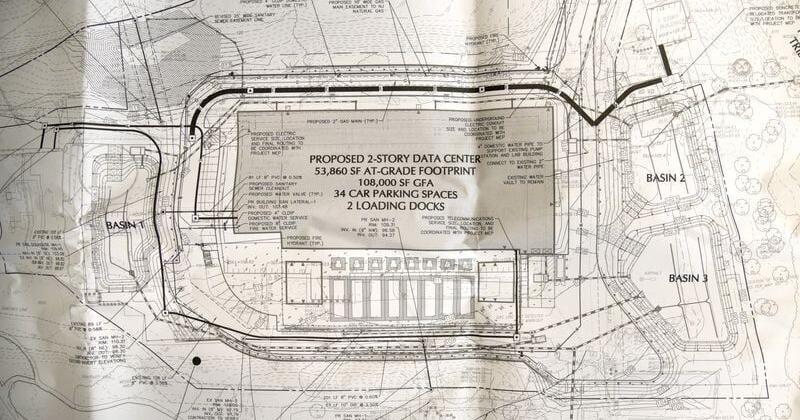
Source: Press of Alantic City Business. Casualplayhub News adds summary, context, and editorial framing while linking back to the original report.
Holmdel’s push to ban data centers took an unexpected turn when, just three days after the township introduced its proposed ordinance, the owners of Bell Works submitted formal plans for a new data center on the property. The timing has raised eyebrows among residents and officials alike, though the application remains legally viable because the ban has not yet taken effect.
Township attorney Michael Collins clarified during a committee meeting that Somerset Development’s site plan application “will have the benefit of zoning prior to consideration of this ordinance based upon the law.” The final vote on the ban is scheduled for August 11, leaving a narrow window for the proposal to be reviewed under existing rules.
According to plans filed July 24, the data center would be a two-story, 40-megawatt facility covering 108,000 square feet. It is designed to fit within the footprint of an existing two-story building located southwest of the main Bell Works structure. That building is currently closed to the public, and its present use remains unclear. The plans include 34 parking spaces and two loading docks—far fewer than the 72 spaces required by local ordinances, prompting the developer to seek a variance. Terna Infrastructure USA, Inc. is listed as a co-applicant on the project.
Bell Works and the surrounding land fall within the Alcatel-Lucent Redevelopment Area, where a 2014 redevelopment agreement specifically listed data centers as a permitted use. The developer’s submission states the plans are “in full conformance with the Redevelopment Plan.”
Committee members expressed mixed feelings. Gregory Buontempo, who voted in favor of the ban, noted that when the redevelopment agreement was signed, the township was seeking revenue and cooperation with developers. “Data centers have changed in the last decade. So, I don’t think anybody saw this coming,” he said. “There’s a reason why towns are banning these things. There’s a reason why. We’re not the only one.”
Holmdel is indeed not alone. In June, Asbury Park called for a statewide and citywide pause on new data center construction. In mid-August, Manchester Mayor Joseph Hankins voiced opposition after hundreds of residents protested a potential rezoning for a data center.
Residents who favor the ban cited concerns over water consumption, electric power demand, and noise. Francine Campus recalled that a data center was once proposed for the former Vonage building, about three miles southwest of Bell Works, but that plan fell through due to its high electricity consumption. That building has since been approved for senior housing under the name Azura at Holmdel. “The optics here does not look good,” said resident Kin Gee, referring to the timing of the application.
A handful of residents spoke against the ban, arguing that data centers represent an important and growing technology sector. Mayor Rocco Impreveduto struck a cautious tone, stating the ordinance is not permanent. “If issues or concerns get remedied a year from now or two years from now, we can change the ordinance,” he said. “This is a, ‘We don’t want it; there’s too many unknowns; there’s things that we can’t control or fully understand right now.’ … This isn’t something that can’t be undone if in fact we learn more and we determine that they’re of beneficial use.”
The application now heads to the Holmdel Planning Board, where the parking variance and other details will be debated. The outcome could set a precedent for how the township—and others in the region—balance economic development with environmental and community concerns.
Article commentary
The timing of Somerset Development’s data center application—submitted just three days after Holmdel Township introduced a ban—is a classic example of the tension between municipal regulatory action and developer strategy. By filing before the ordinance takes effect, the developer secures a legal path under existing zoning, a move that township attorney Michael Collins acknowledged as valid. This tactic is not uncommon in land-use disputes, but it underscores the urgency with which both sides are approaching the data center boom. Holmdel’s proposed ban reflects a growing backlash against large-scale data centers across New Jersey. Asbury Park called for a moratorium; Manchester residents protested potential rezoning. The concerns are real: data centers are voracious consumers of electricity and water, and their noise can disrupt residential neighborhoods. The 40-megawatt facility proposed for Bell Works may seem modest compared to the 300-megawatt behemoth rising in Vineland, but it still represents a significant local impact. The developer’s request for only 34 parking spaces—less than half the required number—suggests a lean operational model, but also raises questions about whether the facility will generate enough jobs or tax revenue to offset its demands. What makes this case particularly interesting is the legal context. The 2014 redevelopment agreement for the Alcatel-Lucent site explicitly allowed data centers, a decision that now appears shortsighted. Back then, the technology was less energy-intensive, and municipalities were eager to repurpose vacant office parks. Today, the arithmetic has changed. The township’s rush to ban data centers suggests a recognition that the 2014 framework is no longer adequate. Yet the developer’s application is a reminder that past agreements carry legal weight, and that zoning changes cannot retroactively undo approved uses. Mayor Impreveduto’s comments about the ordinance being reversible are pragmatic, but they also highlight the difficulty of crafting policy in a rapidly evolving industry. If data centers become cleaner or more efficient, the ban could be lifted. But the uncertainty is precisely what worries residents: once a data center is built, it is there for decades. The noise, the water use, and the strain on the grid are not easily undone. From a broader perspective, the Holmdel case illustrates a classic planning dilemma: how to balance the need for digital infrastructure with the quality of life for local communities. Data centers are essential for cloud computing, AI, and streaming services, but they are not always welcome neighbors. Municipalities are scrambling to catch up with a technology that has outpaced existing regulations. The outcome of the Holmdel Planning Board review will be watched closely by other towns facing similar decisions. Whether the developer’s legal timing ultimately prevails or the ban forces a rethink, this episode is a clear signal that the era of unchecked data center expansion is drawing to a close in parts of New Jersey.