2026-27 Premier League: Key Storylines to Watch
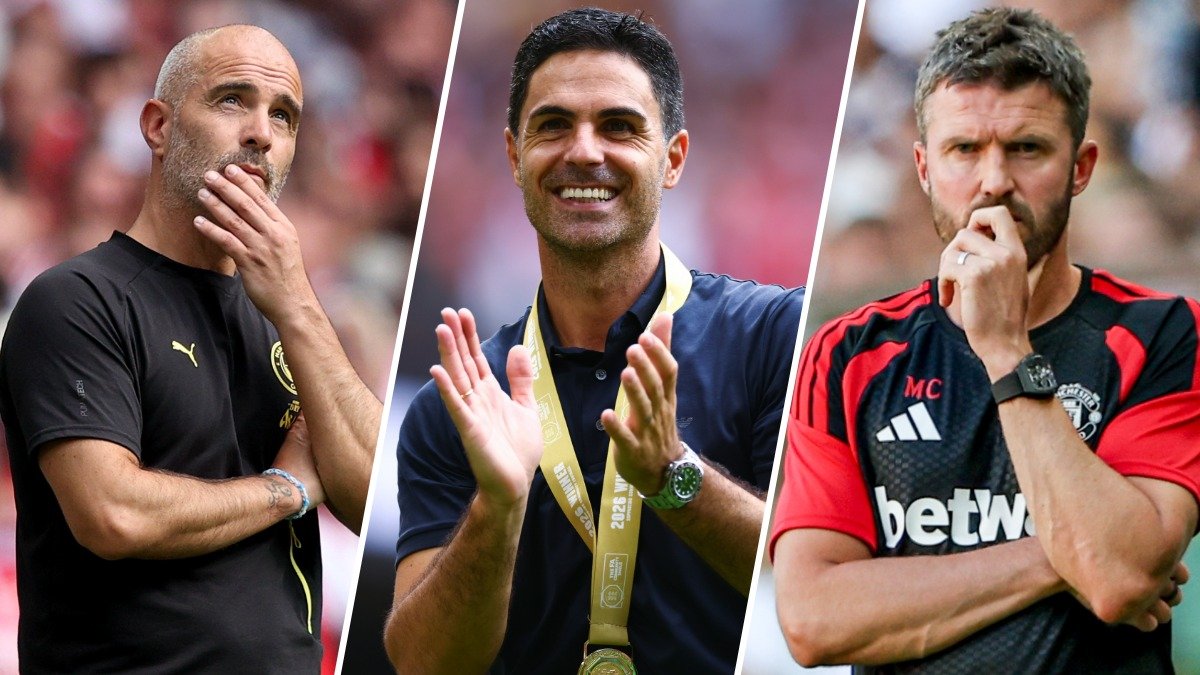
Source: NBC 5 Dallas-Fort Worth Sports. Casualplayhub News adds summary, context, and editorial framing while linking back to the original report.
Ad eligibility review: sensitive-topic
The 2026-27 Premier League season is not quite the wild west, but it carries a similar spirit of unpredictability. Parity is rising across the league, though a few positions remain locked in. The summit features a clear favorite, while the three promoted teams are widely expected to tumble straight back into the EFL Championship. Races for European spots should be compelling, and the broader question of which clubs are on the right trajectory will keep fans guessing until the final day.
Ahead of the new campaign, let's break down the top storylines to follow until a champion is crowned next May.
**Will there be a shock relegation candidate?**
Leicester City surprised everyone a few years ago, and more recently West Ham and Wolverhampton found themselves in the conversation. The transfer window is still open, but early signs point toward Newcastle, Aston Villa, and Sunderland as potential strugglers—similar to Tottenham's back-to-back 17th-place finishes. Newcastle and Aston Villa are high-end mid-table clubs that have lost several key players this window and have yet to find adequate replacements. In a league that keeps getting deeper, that can be punished. Sunderland, despite reaching Europe after promotion, have not strengthened their squad enough.
Coventry City, Ipswich Town, and Hull City are the newly promoted sides. Each must battle upward despite being small-market clubs. Coventry and Ipswich have already spent well over £100 million on new signings to aid their survival fight, while Hull has crossed £70 million. New teams cannot survive without spending like the giants, but how the money is used matters most. Sunderland proved that last season. Even if all three go back down, they could fetch strong resale fees for their players.
**Five 'Big 6' clubs enter a new era**
Manchester City, Liverpool, Chelsea, and Tottenham (Roberto De Zerbi started late last season) all have new managers. Manchester United, meanwhile, must balance the league and Champions League for the first time in a few years. Do not be surprised if these clubs struggle to produce consistent stretches of results, especially in the early months. But as the season winds down and races heat up, signs will emerge about which teams have brighter long-term outlooks. Teams outside the 'Big 6' must capitalize on this instability.
**Arsenal aims to repeat – and make history**
Arsenal finally ended a 22-year league title wait last season. Now the Gunners enter 2026-27 as the clear favorites to repeat. Repeating is no easy task; the last time Arsenal did so in English football was 1935. They went on to three-peat, the first team ever to achieve that at the time. Mikel Arteta's side has plenty of optimism. They boast the best mix of depth and quality in the league, the longest-reigning manager (six years), and less uncertainty than the chasing pack. This is the perfect moment for the club to make history, as windows do not get any more open than this.
**What can be bigger than a repeat champion?**
Seeing how the most dominant team of the past decade fares without its spine. Pep Guardiola, Rodri, and Bernardo Silva are the latest high-profile exits from a side that won six league titles in ten years. Their fear factor was their biggest selling point—and just like that, it is gone. Enzo Maresca, a former Guardiola assistant who managed Chelsea for a brief period, is the next man up. He will face immense pressure to live up to Guardiola's legacy, especially with only Erling Haaland left from the once superstar-filled roster. A defining year awaits.
**Five things to know about Bukayo Saka, forward for Arsenal and the English national team.**
(Note: The original article included a brief aside about Saka; we retain the factual reference but do not expand as it was not part of the main narrative.)
**Five things to know about Erling Haaland, Norwegian striker for Manchester City.**
(Similarly, a brief reference to Haaland is retained.)
The 2026-27 Premier League season is packed with storylines that could reshape the English football landscape. From the battle at the top to the scramble at the bottom, every match carries weight. The only certainty is that uncertainty will reign.
Article commentary
The 2026-27 Premier League season presents a fascinating paradox: a league that is simultaneously more competitive and more predictable. The clear favorite at the top—Arsenal—contrasts with the widespread expectation that the three promoted teams will immediately return to the Championship. This duality reflects the structural challenges of English football, where financial muscle and institutional stability often trump short-term spending. Arsenal's position as favorites is well-earned. They have retained their core, added depth, and benefited from the chaos surrounding their rivals. The fact that five of the traditional 'Big 6' clubs are undergoing managerial transitions—including Manchester City, which lost its architect Pep Guardiola—creates a rare window of opportunity. Mikel Arteta's longevity and coherent system give Arsenal a significant edge. However, the weight of history is real: no Arsenal side has repeated as champions since the 1930s. The psychological burden of defending a title, especially after a 22-year drought, cannot be underestimated. If the Gunners stumble early, the chasing pack—though unsettled—could pounce. Manchester City's decline is the most dramatic storyline. Losing Guardiola, Rodri, and Bernardo Silva in one window strips the club of its identity. Enzo Maresca inherits a squad that still contains Erling Haaland but lacks the tactical discipline and midfield control that defined City's dominance. The fear factor that once intimidated opponents is gone. City's rebuilding process could take multiple seasons, and their Champions League participation may be a double-edged sword, stretching a thin squad. Rivals like Liverpool (under new management) and Chelsea (also in transition) are similarly vulnerable, making the league's top four race wide open. The relegation battle is equally intriguing. The promoted teams have spent aggressively, but spending alone does not guarantee survival, as Sunderland proved last season. Coventry and Ipswich, in particular, have invested heavily, yet they face the brutal reality of a league where even mid-table clubs like Newcastle and Aston Villa are struggling to keep pace. Newcastle and Villa have lost key players and failed to replace them adequately; their slide could drag them into the relegation conversation. Meanwhile, Sunderland's failure to strengthen after a European campaign is a cautionary tale. The gap between the Championship and Premier League continues to widen, and the promoted clubs are essentially gambling on resale value if they go down. From a broader perspective, this season may mark a shift in the Premier League's power structure. The 'Big 6' concept is already fraying, with clubs like Aston Villa, Newcastle, and even Sunderland pushing for European spots. The uncertainty around the traditional giants gives smaller clubs a chance to establish themselves. However, the financial disparity remains immense. The promoted teams may end up as 'yo-yo clubs,' but their spending suggests a willingness to invest in the long term. Ultimately, the 2026-27 season is a tale of transition. Arsenal has the clearest path to glory, but football rarely follows a script. The unpredictability of new managers, the pressure of expectations, and the sheer depth of talent across the league ensure that no outcome is guaranteed. Fans should buckle up for a campaign that could redefine the English football landscape for years to come.