Lewandowski penalty seals Chicago Fire win over Orlando City
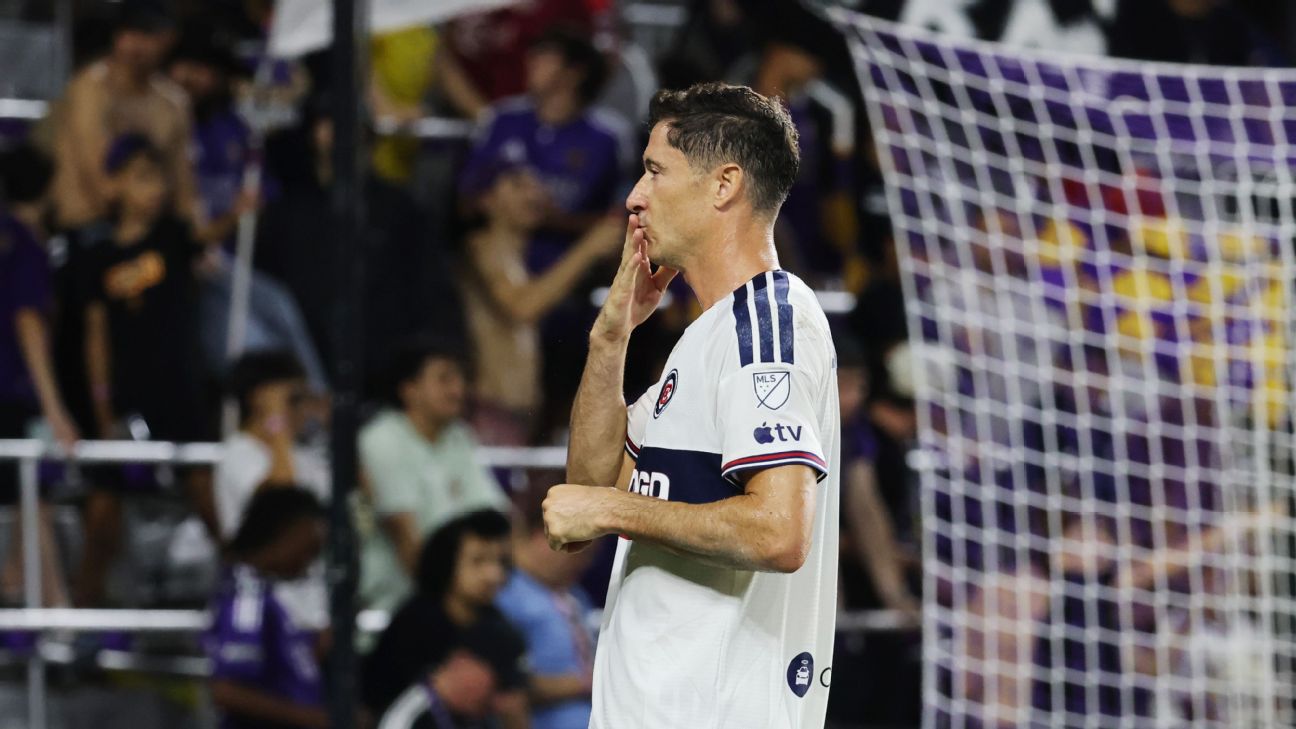
Source: ABC 7 Chicago Sports. Casualplayhub News adds summary, context, and editorial framing while linking back to the original report.
A stormy Florida night turned into a showcase of resilience for the Chicago Fire, who weathered a 90-minute lightning delay and a spirited Orlando City comeback to claim a 2-1 victory at Exploria Stadium on Wednesday. The match, originally scheduled for a 7:30 p.m. kickoff, was halted in the 44th minute as thunder and lightning rolled across the region, forcing both teams to retreat to their locker rooms. When play finally resumed, the Fire proved sharper in the decisive moments, with Robert Lewandowski and Puso Dithejane delivering the goals that pushed Chicago to its third straight win.
Dithejane wasted no time making an impact. In the fourth minute, the South African midfielder collected a pass near the top of the box, took a touch to set himself, and unleashed a curling shot that beat Orlando goalkeeper Pedro Gallese inside the far post. The early strike gave Chicago a cushion and quieted the home crowd, but the Fire could not extend their advantage before the weather intervened. As the first half wound down, dark clouds gathered and lightning flashed dangerously close to the stadium. The referee blew his whistle in the 44th minute, sending players off the field as the skies opened up.
For nearly 90 minutes, fans waited under cover while the storm passed. Ground crews worked to clear standing water from the pitch, and both teams used the break to adjust tactics. When the match restarted, Orlando emerged with renewed energy. Antoine Griezmann, the French World Cup winner who has been a creative force for the Lions, began to dictate play from the left flank. In the 52nd minute, his corner kick found David Brekalo at the near post. The Slovenian defender rose above his marker and directed a glancing header past Chris Brady, leveling the score at 1-1.
Orlando’s joy was short-lived. The Fire responded with patience, working the ball through midfield and probing for gaps. Lewandowski, the Polish superstar who joined Chicago this season, became the focal point. In the 68th minute, he collected a pass on the edge of the area and turned toward goal. Robin Jansson, the Orlando center-back, lunged in an attempt to dispossess him but caught Lewandowski’s leg, sending him tumbling. The referee pointed to the spot without hesitation. Lewandowski stepped up and sent Gallese the wrong way, rolling the ball into the bottom left corner to restore Chicago’s lead.
From there, the Fire tightened their defensive shape. Brady was called into action only once more in the final minutes, a routine save on a long-range effort from Facundo Torres. Orlando pushed forward but could not find a second equalizer, as Chicago’s backline held firm. The final whistle confirmed a hard-fought road win for the Fire, who now sit sixth in the Eastern Conference with 35 points from 21 games. Orlando, meanwhile, remains in 13th place with 21 points, their playoff hopes fading.
The victory also maintained Chicago’s strong recent form. After a midseason slump, the Fire have won three consecutive matches, each with a different hero. Dithejane’s early goal was his third of the season, while Lewandowski’s penalty was his 12th in MLS this year, keeping him in the Golden Boot conversation. For Orlando, the loss was particularly frustrating given the circumstances. The lightning delay disrupted their momentum, and they struggled to replicate the intensity they showed in the second half’s opening minutes.
“We had to stay focused during the break,” Fire head coach Frank Klopas said after the match. “It’s not easy to sit for an hour and a half and then come back out. But the guys handled it well.” Orlando City coach Oscar Pareja lamented the defensive lapse that led to the penalty. “We cannot give away cheap fouls in the box, especially against a player of Lewandowski’s quality,” he said. “It’s a lesson we have to learn.”
The series history now favors Chicago slightly, with the Fire leading 9-8-8 overall and 5-4-3 in Orlando. The two teams will meet again in September in Chicago, a game that could have playoff implications for both sides.
Article commentary
Wednesday night’s clash between Chicago Fire and Orlando City encapsulated the unpredictability of Major League Soccer, where weather, individual brilliance, and tactical discipline often decide the outcome. The 90-minute lightning delay tested both teams’ mental fortitude, and Chicago’s ability to regain composure after the stoppage speaks volumes about their growing maturity under Frank Klopas. While Orlando showed flashes of quality, particularly through Antoine Griezmann’s set-piece delivery, the Lions’ inability to capitalize on momentum remains a recurring issue. Robert Lewandowski’s performance continues to validate Chicago’s investment in the Polish striker. His penalty—earned through clever movement and a quick turn—was a textbook example of how world-class players draw fouls under pressure. At 36, Lewandowski has adapted seamlessly to MLS, using his experience rather than raw pace to influence games. His 12 goals this season place him among the league’s elite, and his leadership has galvanized a Fire squad that often lacked a cutting edge in previous years. Orlando’s struggles, conversely, are rooted in inconsistency. The team boasts attacking talent in Griezmann, Facundo Torres, and Duncan McGuire, but defensive lapses have undermined their campaigns. Robin Jansson’s foul on Lewandowski was a moment of rashness from an otherwise reliable center-back. For a team that sits 13th in the East, such errors are costly. The Lions’ record of 6-11-3 is a far cry from the playoff aspirations they held at the start of the season. The loss of key players to injury and the slow integration of Griezmann—who joined mid-season—have disrupted chemistry. From a tactical perspective, the match highlighted the importance of set pieces. David Brekalo’s goal from a corner was Orlando’s best route back into the game, and it underscored Chicago’s occasional vulnerability from dead-ball situations. The Fire, however, showed resilience in open play, with Puso Dithejane’s early strike providing a blueprint for how to break down compact defenses. His ability to score from distance adds a new dimension to Chicago’s attack, which previously relied heavily on Lewandowski and the creativity of Xherdan Shaqiri. The weather delay also raises questions about player safety and scheduling. While MLS has protocols for lightning stoppages, the 90-minute pause disrupted the game’s flow and could have influenced the result. Both teams handled the break professionally, but the physical toll of waiting and then restarting is significant. As the league expands into markets with unpredictable climates, such incidents may become more common, requiring clubs to develop better contingency plans. Looking ahead, Chicago’s winning streak positions them as a dark horse in the Eastern Conference playoff race. With a solid defense and a proven goalscorer, they have the tools to make a deep run. Orlando, on the other hand, faces a daunting path. They need to string together victories quickly, but their defensive frailties and lack of depth suggest another season of disappointment may be looming. The return fixture in Chicago on September 15 could be a pivotal moment for both teams—a chance for the Fire to solidify their status or for Orlando to salvage some pride. Ultimately, this match was a microcosm of MLS’s competitive balance. Any team can beat any other on a given night, but the margins remain razor-thin. Chicago’s discipline in the face of adversity and Lewandowski’s coolness under pressure made the difference. For neutral observers, it was a reminder that the league’s appeal lies in its unpredictability and the narratives that emerge from stormy, chaotic nights like this one.