Justice Hughes Under Fire in Advocate Defamation Trial
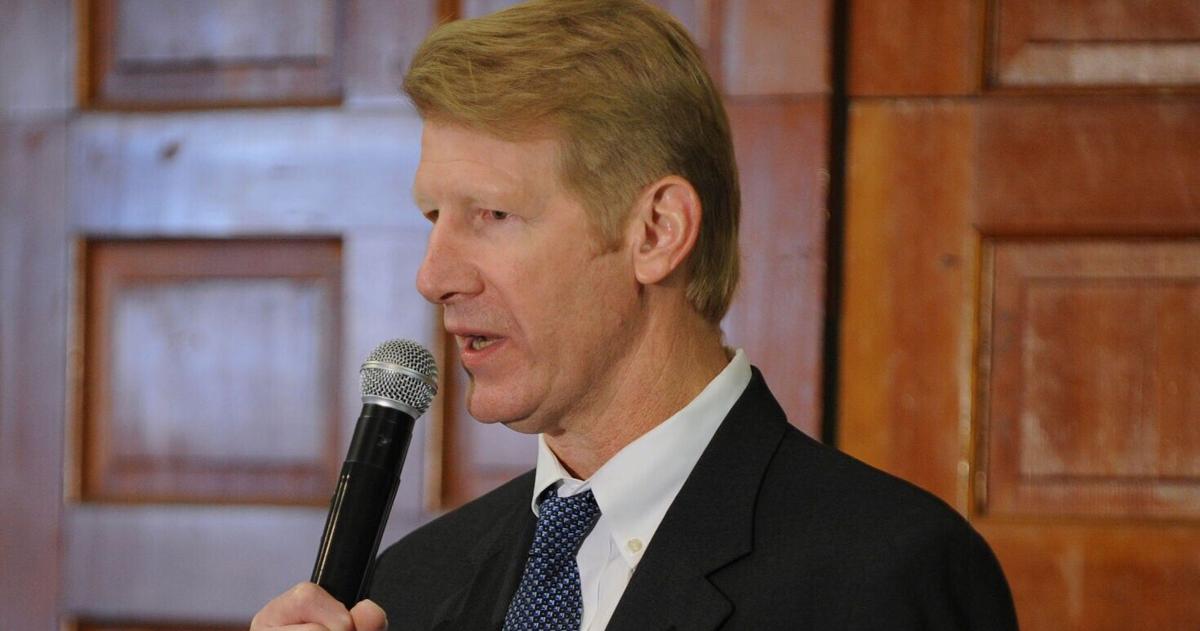
Source: Nola Business. Casualplayhub News adds summary, context, and editorial framing while linking back to the original report.
Louisiana Supreme Court Justice Jeff Hughes III returned to the witness stand Thursday for a second day of grueling cross-examination in his defamation lawsuit against The Advocate, a case that has drawn attention to the intersection of judicial ethics, press freedom, and personal reputation. Hughes, who is seeking $10 million in damages, alleges that a 2019 editorial and related news articles falsely portrayed his conduct in a child custody case from the late 1990s, when he served as a district judge in Livingston Parish.
The trial, presided over by 18th Judicial District Judge Kevin Kimball, has been limited to a single editorial published on June 25, 2019, though other stories and columns have been allowed into evidence to support Hughes' claim that the newspaper refused to correct alleged errors. The dispute centers on Hughes' relationship with Berkley Durbin, an attorney who represented the mother in a custody battle over a 5-year-old boy. At the time, the boy's grandmother, Brenda Nicholson, was fighting to prevent the mother from gaining custody. The case triggered an FBI probe and an investigation by the Judiciary Commission, the state's judicial disciplinary body.
Under questioning by The Advocate's attorneys, Hughes denied ever ruling on any of Durbin's cases while they were dating, which he says began after she left the Nicholson case in August 1998. However, court minutes from July 6, 1999, show Durbin was present in Hughes' courtroom for a case—a date when Hughes acknowledges the relationship was ongoing. Hughes explained that while a document outlining the judgment listed a different lawyer as signing the order, it was not uncommon for one attorney to appear at a hearing while another signed the final paperwork.
Hughes also testified about three apology letters he wrote in 2004 to former child custody litigants in two separate cases. He described these letters as part of an effort to resolve an unspecified investigation into his conduct that ran parallel to the FBI probe. In the letters, Hughes apologized for the harm his actions—which he did not detail—may have caused. At least one of those cases had been investigated by the Judiciary Commission. Hughes said the FBI probe ended in 2004 after the five-year statute of limitations expired, and that the agency found no wrongdoing, though agents continued to investigate, even tracking his flower purchases from a local florist.
Another significant line of questioning focused on Hughes' use of campaign funds to finance his defamation lawsuits. Suzy Montero, an attorney for The Advocate, argued that state law and ethical rules prohibit using campaign dollars for personal expenses. Hughes countered that he had obtained a legal opinion from an ethics attorney permitting such spending because the cases arose from his public office. In 2020, Hughes filed a defamation suit against Lana Venable, a legal system critic who had written a letter to the editor published by The Advocate. Venable's letter argued that the ethics case against Hughes underscored the need for greater transparency in judicial discipline. Hughes made a $25,000 settlement offer to Venable, which she rejected. Venable's attorney is expected to testify later in the trial.
Montero also pressed Hughes on whether he had advance knowledge of a 2021 state supreme court ruling that upheld a favorable early decision from Judge Kimball in his case against The Advocate. She suggested Hughes used that information to pressure Venable's attorney into settling. Hughes denied the accusation, calling it a simple settlement offer, not a shakedown.
Additionally, Hughes was questioned about why he told Advocate reporter Andrea Gallo in a 2019 meeting that he was unaware of any other apology letters besides the one sent to Nicholson. Hughes testified that he had simply forgotten about the two other letters, which were dated the same day as the Nicholson letter.
Hughes' legal team has called several character witnesses to testify to his integrity and the impact of the newspaper's reporting on his reputation. One such witness, former Livingston Parish Schools Superintendent Warren Curtis, who has known Hughes since childhood, recalled hearing people discuss the articles. Curtis shared a piece of advice his father gave him after college graduation: "Be sure of your facts before you brand the cow because the mark remains." The trial is expected to continue with additional testimony from both sides.
Article commentary
The defamation trial of Louisiana Supreme Court Justice Jeff Hughes III against The Advocate is more than a legal dispute over a single editorial; it is a case that tests the boundaries of press freedom, judicial accountability, and the use of public office for personal legal battles. At its core, the lawsuit challenges the media's ability to scrutinize the conduct of elected officials, especially when those officials hold powerful positions on the state's highest court. Hughes' claim for $10 million in damages underscores the high stakes for both sides. For The Advocate, a victory would affirm the right of newspapers to publish critical editorials based on factual reporting, even when those editorials are deeply uncomfortable for public figures. For Hughes, a win would signal that judges can successfully defend their reputations against what they perceive as defamatory coverage, potentially chilling future investigative journalism. One of the most troubling aspects of the case is Hughes' use of campaign funds to finance his defamation lawsuits. While he obtained a legal opinion that allowed such spending, the practice raises serious ethical questions. Campaign funds are intended for political activities, not for personal litigation, even if the lawsuits arise from public office. If judges can use donor money to sue their critics, it creates a dangerous precedent: critics may be silenced not by the merits of the case, but by the financial firepower of the official they criticize. This could have a chilling effect on public discourse, especially in a state like Louisiana, where judicial elections are already heavily politicized. Hughes' testimony about the 2004 apology letters is also noteworthy. He wrote these letters to resolve an unspecified investigation into his conduct, suggesting that he was aware of problems with his handling of custody cases long before the 2019 editorial. The fact that he could not recall writing two of the three letters when questioned by The Advocate in 2019 raises questions about his candor and memory. While forgetting is human, for a judge accused of ethical lapses, such lapses in memory can appear evasive. The debate over whether Hughes ruled on Durbin's cases during their relationship is central to the case. The evidence is not clear-cut: court minutes show Durbin was present in his courtroom, but the final orders were signed by another attorney. This ambiguity is typical of many judicial ethics cases, where the boundaries between personal and professional relationships can blur. Hughes maintains that he never ruled on a case involving Durbin, but the appearance of impropriety is what the editorial focused on. In the world of judicial ethics, appearances matter as much as actual misconduct. From a broader perspective, this trial highlights the tension between a judge's right to protect his reputation and the public's right to know about potential misconduct. The Advocate's editorial was a strong opinion piece, but it was based on news articles that reported on an FBI investigation and a Judiciary Commission inquiry. The question is whether the editorial crossed the line from opinion to defamation, or whether it was a legitimate exercise of the newspaper's role as a watchdog. Hughes' character witnesses, including former school Superintendent Warren Curtis, have painted a picture of a man whose reputation has been unfairly tarnished. Curtis' anecdote about branding cows—"be sure of your facts before you brand the cow because the mark remains"—is a poignant reminder that once a reputation is damaged, it is hard to repair. However, public officials are held to a higher standard, and they must accept that their actions will be scrutinized. As the trial continues, the jury will have to weigh the evidence carefully. The outcome will not only decide Hughes' financial compensation but also send a signal about the power of the press to hold judges accountable—and the limits of that power when a judge fights back. Regardless of the verdict, this case is a reminder that in a democracy, no one is above scrutiny, not even those who sit on the highest court.