Global Fan Petition Demands FIFA Chief Infantino's Resignation
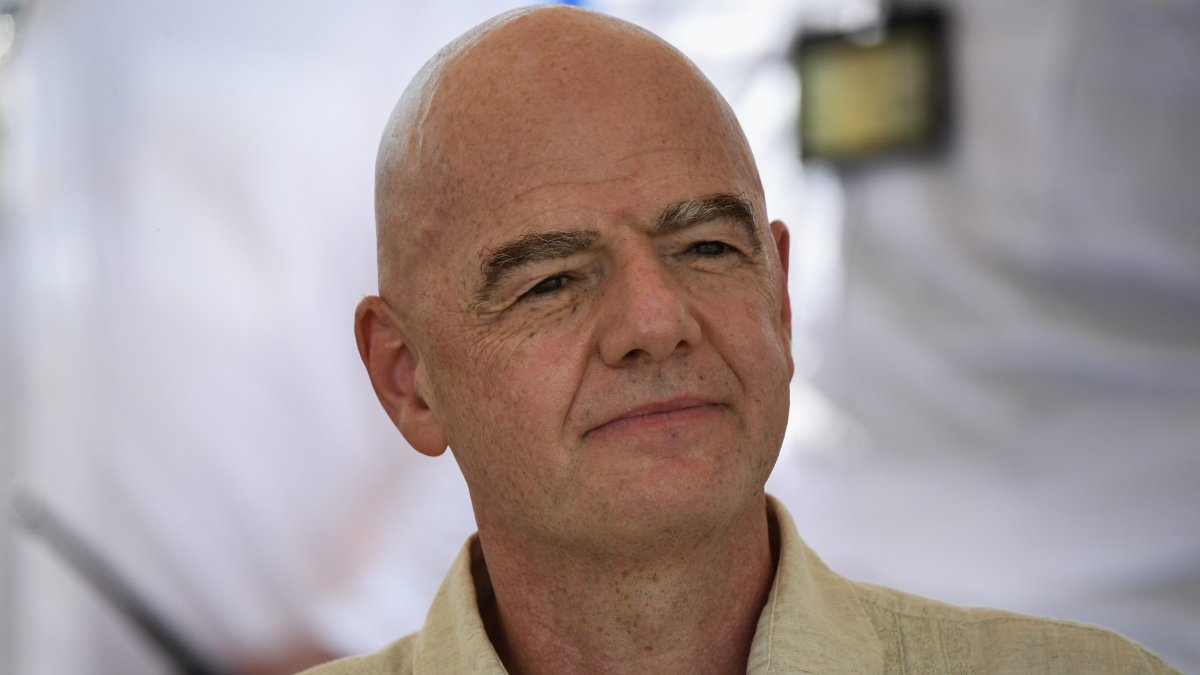
Source: NBC Chicago Sports. Casualplayhub News adds summary, context, and editorial framing while linking back to the original report.
A worldwide coalition of soccer fan groups has united to demand the resignation of FIFA President Gianni Infantino, launching a petition on Thursday that sharply criticizes his leadership. The petition, organized under the hashtag #InfantinOut, follows Infantino's controversial attempt to sell off future World Cup revenues to private investors—a plan he abandoned after a furious backlash from across the football community.
The fan groups behind the initiative include Football Supporters Europe, Football Supporters Africa, the Independent Supporters Council in North America, and roughly 40 national fan organizations. Their statement calls for FIFA to be fundamentally restructured, arguing that the current governance model has allowed a single individual to put the sport's integrity at risk. “The shameful attempt by one individual—the FIFA President himself—to sell off the World Cup to private investors exposed a betrayal football will never forget,” the petition reads.
Infantino has faced mounting opposition from some of the sport's most powerful bodies. European soccer's governing body, UEFA, has publicly stated it has no confidence in him. Leaders of North America's CONCACAF and the Asian Football Confederation have also voiced strong criticism. Yet, Infantino has resisted all calls to step down, maintaining support from a number of FIFA's 211 member federations. Among those backing him are Morocco, a co-host of the 2030 World Cup; Qatar, where he lived before the 2022 tournament; and Lebanon, which granted him citizenship this year. Saudi Arabia, set to host the 2034 World Cup, has not publicly endorsed Infantino, despite his close political ties to the kingdom.
The petition goes beyond the recent investment debacle, listing several other grievances. It highlights Infantino's past support for the ill-fated European Super League, his push to hold World Cups every two years (which was strongly resisted), and what it calls the “extortionate ticketing policy” for the 2026 World Cup. For the 104-game tournament to be held in the United States, Canada, and Mexico, FIFA set record ticket prices without consulting fan groups. The backlash forced FIFA to offer some tickets at $60 specifically for the most loyal supporters of each of the 48 participating teams.
“Gianni Infantino has demonstrated a profound failure of leadership, incompatible with democratic governance,” the petition states. “The concentration of power around the FIFA Presidency, combined with opaque decision-making, personality cult clientelism, and zero accountability has destroyed any remaining trust in the world governing body. For the credibility of FIFA—and for the future of the game—he must resign.”
Football Supporters Europe, which serves as the official liaison with UEFA and advises on ticket pricing for European Championships and Champions League finals, has been instrumental in organizing the petition. FIFA was approached for comment but has not yet responded. The growing rebellion underscores a deepening crisis of confidence in Infantino's leadership, as fans demand accountability and a return to transparent governance in world football's governing body.
Article commentary
The petition demanding Gianni Infantino's resignation marks a rare moment of global fan unity against FIFA's leadership, but its impact may be limited by the organization's entrenched power structures. Infantino's attempt to sell future World Cup profits to private investors was swiftly abandoned, yet the episode revealed a pattern of decision-making that prioritizes financial gain over the sport's long-term health. Critics argue that the FIFA president has concentrated authority around his office, fostering a culture of opacity and personal loyalty that undermines democratic governance. The support Infantino retains from key member federations—Morocco, Qatar, Lebanon, and tacitly Saudi Arabia—highlights the geopolitical dynamics at play. These nations benefit from FIFA's patronage, whether through hosting rights or political ties, making them unlikely to turn against a leader who has championed their interests. Meanwhile, European and North American bodies, which have been more vocal in their criticism, represent a smaller share of FIFA's voting power. This imbalance suggests that even widespread fan discontent may not translate into institutional change. Beyond the immediate crisis, the petition taps into deeper frustrations. The biennial World Cup proposal, the European Super League endorsement, and the ticket pricing controversy for the 2026 tournament all reflect a disconnect between FIFA's leadership and the grassroots. The fan groups' call for a rebuilt FIFA—one with checks and balances—echoes demands that have surfaced repeatedly since the corruption scandals of the 2010s. Yet, reform has been slow, and Infantino's tenure has seen the consolidation rather than dispersal of power. For the global game, the stakes are high. If FIFA continues to sideline fan voices, the sport risks alienating its most passionate supporters. The petition's strong language—accusing Infantino of a “profound failure of leadership”—may resonate with millions, but it remains to be seen whether the 211 member federations will prioritize accountability over political and financial expediency. The outcome of this confrontation could shape the governance of world football for years to come, determining whether the beautiful game truly serves its fans or remains a tool for a powerful few.