Peyton Watson: Cleveland's Most Impactful Small Forward Since LeBron
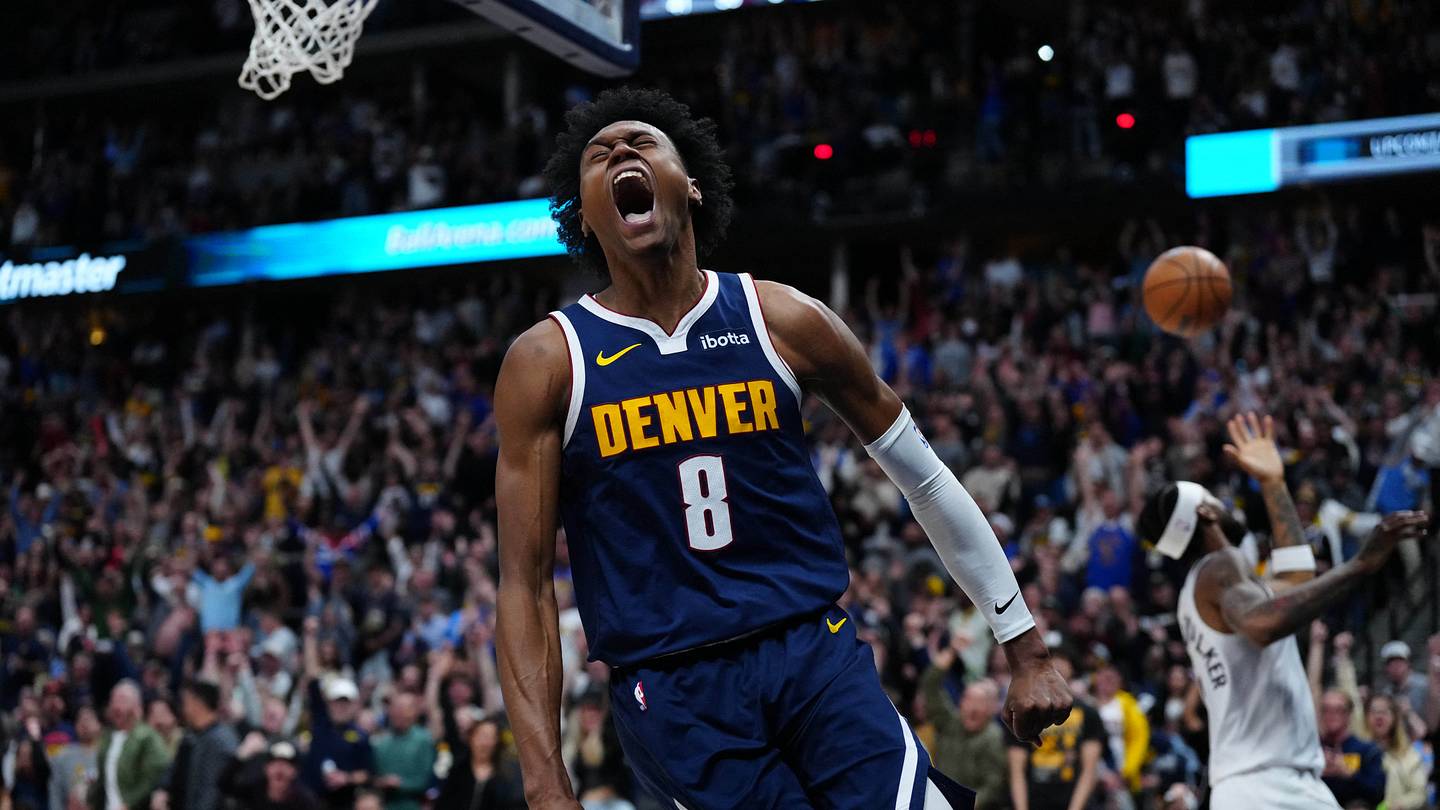
Source: SI NBA. Casualplayhub News adds summary, context, and editorial framing while linking back to the original report.
The Cleveland Cavaliers finally pulled the trigger on a move that had been simmering for months, acquiring burgeoning forward Peyton Watson from the Denver Nuggets and immediately locking him into a four-year, $88 million extension. In a corresponding deal, Max Strus is headed to the Los Angeles Clippers, where he will reunite with Darius Garland, a pairing that once sparked the Cavs' backcourt. The trade reshapes the roster in a way that signals a clear shift in philosophy.
Watson, who turns 24 in September, is not just a promising piece—he represents a rare combination of size, athleticism, and defensive tenacity at the small forward spot. Standing 6'8" with a wingspan that swallows passing lanes, he has established himself as a premier wing defender, capable of guarding positions one through four and erasing shots at the rim. Over the past several seasons, he has averaged better than a block per game, a statistic that places him in elite company among forwards. His offensive game has also evolved; last season he set career highs across the board, knocking down threes with increasing confidence and finishing above the rim with authority.
To understand the magnitude of this addition, one must look at the Cavs' history at small forward since LeBron James departed. The list includes Alonzo Gee, whose athleticism never translated into a complete game; the ill-fated Luol Deng experiment; Cedi Osman's inconsistent flashes; Isaac Okoro's defensive grit but limited offense; Lauri Markkanen's move to power forward; De'Andre Hunter's injury-riddled tenure; and Dean Wade's sporadic contributions. None possessed the two-way ceiling that Watson brings. The number eight, which Watson will wear, carries a legacy of gritty defenders like Matthew Dellavedova and Lamar Stevens—players who gave everything on the floor. Watson embodies that same mentality but with a higher level of physical tools and offensive polish.
Social media reactions reflected the excitement. A tweet from the NBA highlighted Watson's defensive prowess: a chase-down block followed by a tomahawk dunk in a crucial game against the Timberwolves. Another from the fan account Across The Cavs welcomed him as "just another DAWG to wear 8 in Cleveland," linking to a video of his highlights. The energy is palpable, and the front office, led by Koby Altman, has earned praise for executing this deal. Not only did they land a young, ascending player, but they also managed to shed salary, creating room to potentially pursue James Harden or another veteran to fill the final roster spot. The draft pick that was sent out—likely a future first-rounder—was deemed a necessary cost to swing for a difference-maker.
Watson will slot into the starting lineup from day one, earning $22 million annually. His presence immediately upgrades the Cavs' defensive versatility, allowing them to switch more effectively and protect the rim without sacrificing mobility. Offensively, he provides a slashing threat and a spot-up option that can stretch defenses. The pairing with Evan Mobley and Jarrett Allen creates a long, athletic frontcourt that can dominate on both ends. While the loss of Strus's energy and shooting will be felt, the Cavs believe Watson's potential outweighs the immediate drop-off. For a team that has hovered in the middle of the East, this move signals a bold step toward contention.
As the season approaches, fans in the 216 area code have every reason to be optimistic. The Cavs haven't had a small forward with this kind of impact since LeBron James roamed the court. Peyton Watson is not LeBron, but he brings a skill set that could transform the team's trajectory. The waiting is over—Cleveland has its new wing.
Article commentary
The Cavaliers' acquisition of Peyton Watson is a bold gamble that could redefine their ceiling. The immediate question is whether Watson can truly become the most impactful small forward in Cleveland since LeBron James—a lofty claim that demands scrutiny. LeBron carried the franchise to four Finals appearances and a championship. Watson, at 24, has yet to prove he can be a primary option on a contending team. That said, the comparison is not about individual stardom but about positional value. Since LeBron's departure, the Cavs have cycled through a dozen small forwards, none of whom provided a consistent two-way presence. Watson's defensive versatility alone sets him apart. His ability to guard multiple positions and protect the rim from the wing is a rare commodity, one that modern playoff basketball prizes highly. From a strategic standpoint, this trade addresses a glaring weakness. The Cavs have long lacked a wing who can both defend elite scorers and contribute offensively without needing the ball. Watson's off-ball movement, cutting, and improved three-point shooting make him a natural fit alongside ball-dominant guards like Donovan Mitchell and Darius Garland—though Garland's departure to the Clippers in the same deal complicates that equation. The reunion of Strus and Garland in Los Angeles suggests the Cavs are prioritizing defensive identity over offensive continuity. It's a calculated risk: losing a shooter and playmaker for a defensive stopper with upside. Financially, the $88 million extension is a substantial commitment for a player who has never averaged more than 15 points per game. But the market for young wings with defensive potential is inflated, and the Cavs had to act before Watson's value skyrocketed. The salary cap relief from Strus's contract also gives them flexibility to add another piece, perhaps a veteran scorer or a backup big. The mention of James Harden as a potential target indicates the front office is not done reshaping the roster. Harden's playmaking could offset the loss of Garland's creation, but his fit with Mitchell and Watson would require careful balance. The most compelling argument for Watson's impact is his mentality. The article draws parallels to Dellavedova and Stevens—players who won over Cleveland with their hustle. Watson brings that same blue-collar ethos but with a higher ceiling. His highlight-reel blocks and dunks are not just flash; they represent a relentless defensive motor that can energize a team. In a league where three-point shooting and switching defense dominate, Watson checks both boxes. He is not a finished product, but his trajectory suggests he could become a top-20 wing within two years. Critics will point to his limited offensive creation and occasional foul trouble as concerns. The Cavs will need to design sets that maximize his strengths—cutting, spot-ups, and transition—while minimizing his isolation duties. Coach Kenny Atkinson's system, which emphasizes ball movement and spacing, could be ideal for Watson. The bigger question is whether the Cavs have enough shooting around him. If they add Harden or another perimeter threat, the floor opens up. If not, defenses may sag off Watson, testing his consistency from deep. Ultimately, this trade is a statement. The Cavs are no longer satisfied with being a playoff team; they are swinging for a championship. Peyton Watson may not be LeBron, but he represents the best chance the franchise has had to fill that void in the post-LeBron era. The pressure is on him to deliver. If he does, this move will be remembered as the turning point. If he doesn't, the Cavs will be back to searching for a small forward—a search that has now lasted over a decade.