Second Steel Arch Rises as A's Vegas Stadium Takes Shape
Source: ABC News Sports. Casualplayhub News adds summary, context, and editorial framing while linking back to the original report.
Ad eligibility review: sensitive-topic
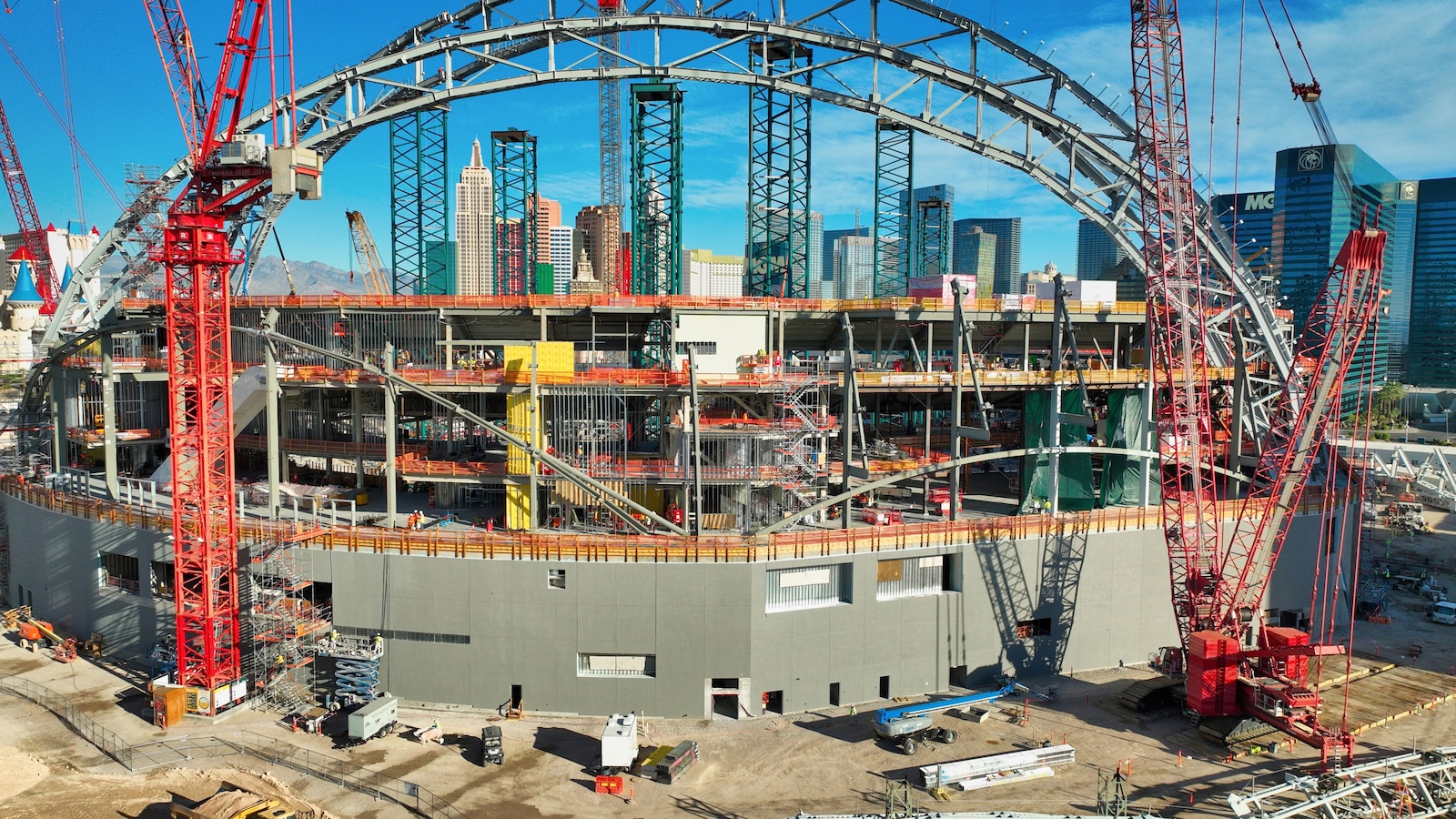
The Athletics' stadium on the Las Vegas Strip is rising rapidly, with the second steel truss arch now in place, giving the dome a distinctive silhouette reminiscent of the Sydney Opera House. Crews from Mortenson-McCarthy hoisted the center truss this week, a milestone that project director Tyler Van Eeckhaut described as "very exciting." He added that the installation "kicks off with a tremendous amount of work for the next upcoming months." The $2 billion, 33,000-seat ballpark, designed to be fully enclosed, is on schedule to open for the 2028 season, according to A's President Marc Badain. Speaking after Thursday's Las Vegas Stadium Authority meeting, Badain expressed satisfaction with the progress, noting that the local workforce has a long track record of delivering complex projects. "It's nice to see the vision come to life," he said, pointing out that the stadium will become a "nice anchor on the south part of the Strip" and likely the first structure visible to travelers landing at Harry Reid Airport. A lingering concern from the previous Stadium Authority meeting was whether the A's would need to build a temporary plaza due to delays in Bally's Corp. financing for its planned $1.19 billion mixed-use development on the same property. Bally's project includes a hotel-casino, restaurants, shopping, entertainment, and a 2,500-seat theater, all connected by an elevated plaza. However, Nick Tomasino, Bally's senior vice president for development and construction, confirmed that the company is "in the finals throes of being able to secure the financing to get started with Phase One." This means the A's will not have to construct a temporary setup. Steve Hill, president and CEO of the Las Vegas Convention and Visitors Authority, expressed confidence that Bally's will complete the project as intended. On the ticket sales front, Badain revealed that all but six seats in the Athletic Club, the premium season ticket holder section, have been sold, and about half of the club-level seats are taken. Around 75% of buyers reside in the Las Vegas area, underscoring strong local support. The ownership structure has also evolved, with an investment group that includes former Dallas Mavericks majority owner Mark Cuban and Atlanta Falcons minority owner Rashaun Williams purchasing an undisclosed minority stake in the franchise. Additionally, former major league pitcher Chan Ho Park is part of a group that has committed $70 million, with $55 million already pledged and an extra $15 million contingent on Major League Baseball approval. Majority owner John Fisher remains at the helm. While the Strip stadium takes shape, the A's are playing their second of three planned seasons at a Triple-A ballpark in West Sacramento, California, after spending 57 years in Oakland.
Article commentary
The latest construction milestone at the Athletics' Las Vegas stadium marks a tangible step forward for a franchise that has navigated a turbulent relocation process. The second steel truss arch, designed to evoke the Sydney Opera House, signals that the project is moving beyond the foundational phase and into the distinctive superstructure that will define the Strip's southern skyline. This progress is crucial for maintaining the 2028 timeline, a target that has remained firm despite the complexities of building a $2 billion venue in one of the most competitive construction markets in the country. The resolution of Bally's Corp. financing issues is equally significant. The adjacent mixed-use development is not just a revenue generator for the ballpark but a key part of the broader urban fabric. Bally's ability to secure funding for Phase One removes a potential headache for the A's, who would have otherwise needed to build a temporary plaza. This speaks to the collaborative nature of large-scale projects in Las Vegas, where public-private partnerships often determine success. Ticket sales data reveals a promising local appetite for the team. With 75% of buyers coming from the Las Vegas area and premium seats nearly sold out, the A's are tapping into a market already proven by the Golden Knights and Raiders. The strong demand suggests that the move, while painful for Oakland fans, may yield a stable fan base in a city that thrives on entertainment. The minority stake purchases by high-profile figures like Mark Cuban, Rashaun Williams, and Chan Ho Park add both financial depth and credibility. Cuban's involvement, in particular, brings a track record of innovative ownership, though his role is limited to a minority share. The conditional $70 million commitment from Park's group, pending MLB approval, indicates that investors see long-term value despite the team's current on-field struggles. The A's are currently playing in a minor league venue in West Sacramento, a temporary arrangement that highlights the awkward transition period. The urgency to complete the Las Vegas stadium is high, not only for the franchise's revenue but for its identity. The 2028 opening cannot come soon enough for a team that has left its Oakland roots behind. Overall, the project appears on track, but the true test will be whether the construction timeline holds, Bally's delivers on its promises, and the team builds a competitive roster to match its new home. The coming months of steel erection and concrete pouring will be closely watched in a city that has become synonymous with ambitious sports development.