Rybakina Retires from Cincinnati Quarterfinal with Ankle Injury
Source: ABC News Sports. Casualplayhub News adds summary, context, and editorial framing while linking back to the original report.
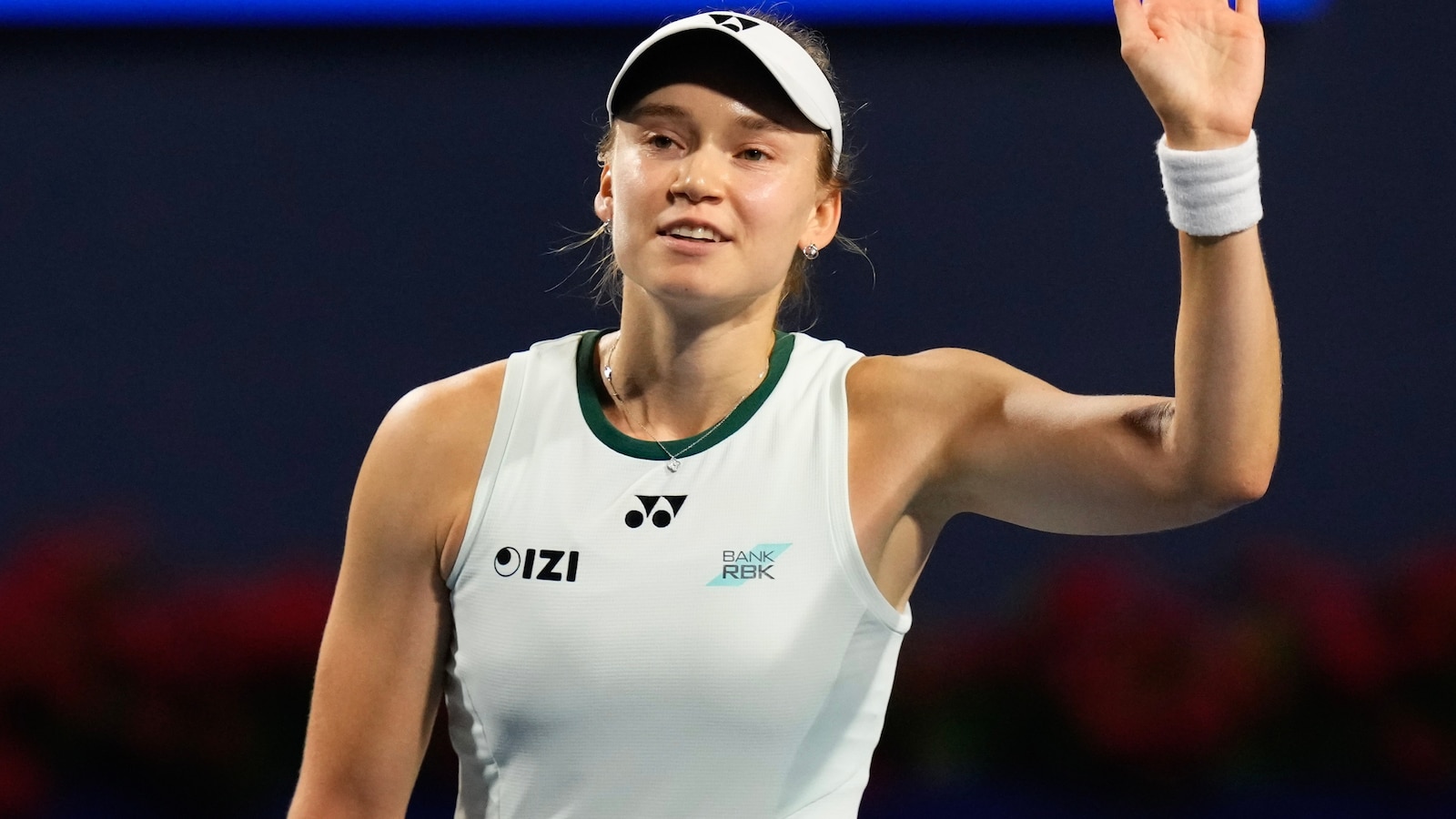
MASON, Ohio -- The Cincinnati Open took an unexpected turn Thursday night when Elena Rybakina, the world No. 2, abruptly halted her quarterfinal match against Iga Swiatek due to a persistent left ankle injury. With the score sitting at 1-4, 40-40 in the first set, Rybakina signaled for a medical timeout. Trainers rushed to her side, attending to the ankle area, but after a brief consultation, she decided she could not continue. The retirement marked a disappointing end to a match that had promised high drama between two of the tour's top players.
Rybakina later addressed the media, her voice tinged with frustration. "Of course I feel not the greatest," she said. "It's painful to walk. We'll know more tomorrow when we have the MRI. It's been bothering me for a long period of time but felt like I had it under control." The injury, which she had been managing, flared up during the second set after a wrong movement. She attempted to serve but found she could not put full weight on her leg, forcing her to call it quits.
This loss carries significant implications for Rybakina's ranking. With top seed Aryna Sabalenka losing earlier Thursday night to Sara Bejlik, Rybakina had a clear path to the world No. 1 spot if she could reach the final. Instead, she leaves Cincinnati with uncertainty about her participation in the upcoming U.S. Open.
Swiatek, the defending champion and winner of last year's semifinal against Rybakina in Cincinnati, showed empathy after the match. "Not the way you want the match to end," Swiatek said. "She didn't look good, obviously. Then she wanted treatment and I wasn't sure if she was going to be back or not. She's walking normally now. I felt really sorry for her but hopefully it's nothing serious and she's going to be ready for the U.S. Open." Swiatek, who has reached at least the semifinals in each of her last four appearances in Cincinnati, will now face American Jessica Pegula in the semifinals.
Pegula earned her spot by defeating fellow American Amanda Anisimova in a three-set thriller, 6-4, 2-6, 7-6 (4). That victory marked her tour-leading 44th win of the season. It is her second trip to the semifinals in Cincinnati, having lost to Sabalenka in the final two years ago. Pegula will look to capitalize on Swiatek's potential fatigue and Rybakina's absence.
On the men's side, the tournament saw a historic moment: four American men reached the quarterfinals for the first time since 1995. However, Flavio Cobolli dashed those hopes by defeating Tommy Paul, 2-6, 6-3, 6-4, to reach his fifth semifinal this year. The win lifts Cobolli to a career-best No. 6 in the rankings. He is the second Italian man to reach the Cincinnati semifinals, joining Jannik Sinner. Cobolli will face 22-year-old Arthur Fils, who beat Thiago Agustín Tirante, 6-3, 6-2, to become the sixth man born since 2000 to reach three ATP Masters 1000 semifinals. The men's semifinals promise a clash of rising stars, while the women's draw carries an air of uncertainty after Rybakina's injury.
Article commentary
Elena Rybakina's abrupt retirement from the Cincinnati Open quarterfinal against Iga Swiatek is a stark reminder of the fragility of professional tennis careers. The injury, a lingering left ankle issue, not only cost her a chance at a semifinal berth but also a golden opportunity to ascend to the world No. 1 ranking. With Aryna Sabalenka's earlier loss, the path was clear, making the timing of the setback particularly cruel. The fact that Rybakina had been managing the problem for a long period suggests a cautious approach, but one wrong movement undid weeks of careful preparation. As she awaits MRI results, the looming U.S. Open—just two weeks away—hangs in the balance. If the injury is serious, her absence would be a major blow to the tournament's depth and her own momentum. Swiatek's reaction, both compassionate and pragmatic, highlights the unwritten code among competitors. Her words of sympathy were genuine, but she also understood the opportunity: a semifinal match against Jessica Pegula, who is having a stellar season with 44 wins. Pegula's consistency on hard courts makes her a dangerous opponent, but Swiatek's 2-0 head-to-head record in Cincinnati, including last year's semifinal win over Rybakina, gives her a psychological edge. The Pegula-Swiatek semifinal will be a test of Pegula's ability to finally break through against a top-tier player, while Swiatek aims to defend her title and solidify her position. The men's draw offers a contrasting narrative of youthful ascension. Flavio Cobolli's rise to a career-best No. 6 ranking, after dispatching Tommy Paul, underscores the emergence of a new generation. His semifinal clash with Arthur Fils, both born after 2000, signals a shift in the ATP landscape. The fact that Fils became the sixth man born since 2000 to reach three ATP Masters 1000 semifinals is a testament to the depth of young talent. Meanwhile, the absence of American men from the semifinals, despite four reaching the quarterfinals, shows the gap between promise and results. Tommy Paul's loss to Cobolli, despite a strong first set, points to the need for consistency under pressure. From a broader perspective, the Cincinnati Open serves as a critical tune-up for the U.S. Open. Injuries and retirements, like Rybakina's, add an element of unpredictability to the season's final Grand Slam. The tournament's scheduling, with the Olympics and other events, has placed a heavy burden on players' bodies. Rybakina's case is particularly concerning because she had previously shown resilience, making the sudden withdrawal all the more jarring. The tennis community will be watching her MRI results closely, hoping for good news that keeps her in the mix for Flushing Meadows. In the meantime, Swiatek and Pegula will write the next chapter in Cincinnati, while Cobolli and Fils continue to push the boundaries of what the next generation can achieve.