Supreme Court Could Decide Prediction Market Fate by Next June
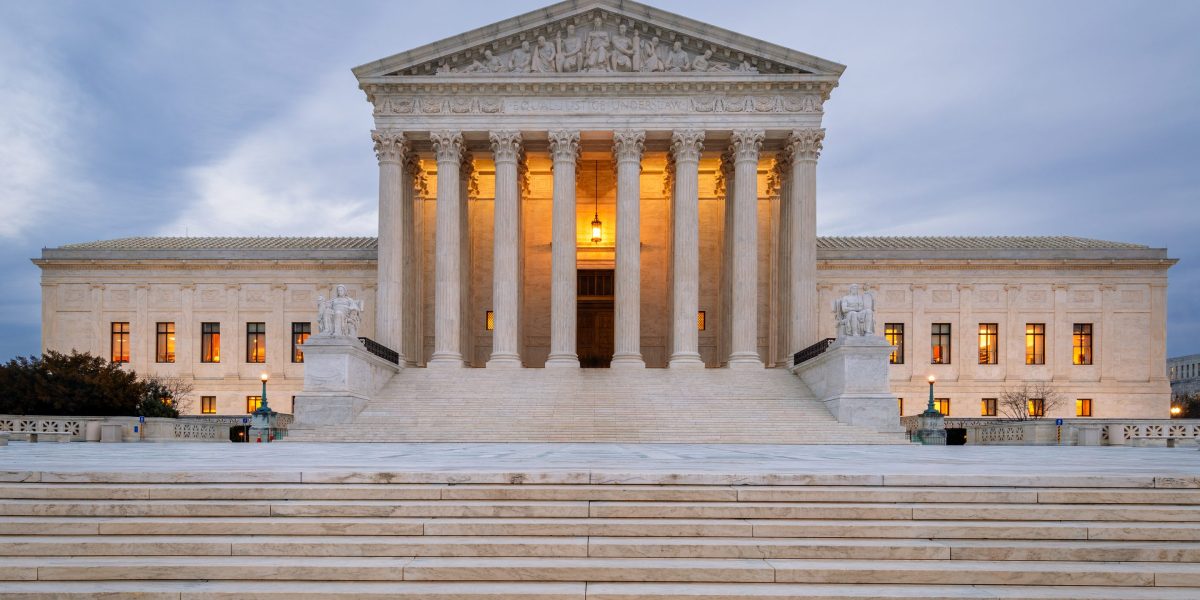
Source: Fortune. Casualplayhub News adds summary, context, and editorial framing while linking back to the original report.
Ad eligibility review: sensitive-topic
Prediction markets are hurtling toward a legal turning point, with the Commodity Futures Trading Commission and state regulators locked in a high-stakes tug-of-war over who gets to oversee these rapidly expanding platforms. The clash could ultimately force the U.S. Supreme Court to step in, potentially delivering a ruling by June of next year, according to Flip Pidot, a prediction market executive with nearly two decades in the industry.
“When you have a high-stakes intergovernmental conflict where a federal regulator like the CFTC is opposed in their position to a supermajority of state attorneys general… then that can get the Supreme Court’s attention,” Pidot, the chief strategy officer at PredictIt, told Fortune. He made the remark at a prediction markets event in New York City this week.
The legal landscape shifted in April when the U.S. Court of Appeals for the Third Circuit sided with Kalshi in its dispute with New Jersey. The court found that federal commodities law overrides the state’s gambling laws for the platform’s contracts, affirming a lower-court decision that allowed Kalshi to continue operating in the Garden State. But that victory may prove temporary, as several other cases could produce rulings more favorable to state regulators.
Earlier this year, a Ninth Circuit panel heard arguments over Nevada’s attempt to enforce its gambling laws against event contract platforms. The judges appeared skeptical of the arguments made by three prediction market companies. Meanwhile, over the past two months, Kalshi has appealed to the Second Circuit after adverse rulings by federal judges in New York and Connecticut. If just one of these appeals courts sides with the states over Kalshi, a circuit split will emerge—a scenario that almost certainly prompts the Supreme Court to intervene. Pidot expects that split to materialize as soon as November. If the high court agrees to hear the case, a decision would likely follow by June.
The fight comes as prediction markets have exploded in popularity across the United States over the last two years. Under the Trump administration, the CFTC adopted a more accommodating stance toward these platforms, arguing that event contracts traded on CFTC-registered exchanges fall under its exclusive authority. States have pushed back, contending that contracts tied to sports outcomes amount to unlicensed wagering, which they have the right to regulate under the 2018 Supreme Court decision that struck down the federal ban on sports betting.
That 2018 ruling, which held that the federal government cannot prevent states from allowing sports betting because it violates the Tenth Amendment, is central to the current dispute. Each state now decides whether and how to regulate sports betting. Since prediction market contracts closely resemble sports bets, states argue the CFTC is effectively usurping their power. In response, the CFTC asserts that the Commodity Exchange Act grants it sole authority over swaps and futures contracts, preempting state laws.
The economic stakes are enormous. Prediction markets threaten established gambling businesses, including casinos, and disrupt Native American economies that rely heavily on gaming revenue. At the same time, corporations and institutions are increasingly exploring prediction markets as financial tools for hedging risk. “This is top of mind for so many Americans… It has a huge potential impact on the economy, and we’ve only scratched the surface of it,” said Stephen Piepgrass, a prediction markets lawyer and partner at Troutman Pepper Locke.
Beyond a circuit split, Piepgrass noted that the constitutional questions raised by the dispute make Supreme Court review nearly inevitable. The clash between federal preemption and state sovereignty, combined with the economic disruptions, creates a legal powder keg that the highest court may be forced to defuse. The outcome will shape not only the future of prediction markets but also the broader balance of power between federal agencies and state governments over emerging financial technologies.
Article commentary
The legal battle over prediction markets is more than a regulatory squabble—it is a fundamental test of how the United States will govern novel financial instruments that blur the lines between betting, hedging, and investing. The Commodity Futures Trading Commission’s assertion that event contracts fall under its exclusive jurisdiction is not unreasonable; the Commodity Exchange Act is designed to oversee futures and swaps, and prediction markets often function similarly. Yet the states’ argument, rooted in the Tenth Amendment and the 2018 Supreme Court decision on sports betting, carries equal weight. The Supreme Court has already signaled that states have broad authority to regulate gambling within their borders, and prediction markets that mimic sports wagering are a natural extension of that power. The timing of this dispute is critical. Prediction markets have grown rapidly, fueled by political events, sports outcomes, and even financial indicators. The Trump administration’s friendly posture toward these platforms accelerated their expansion, but that approach may not survive a change in administration. The current legal uncertainty could chill innovation, as platforms face the risk of contradictory rulings in different circuits. A circuit split would force the Supreme Court to act, but the justices may be reluctant to wade into a area that involves complex financial regulation and state-federal relations. What makes this case particularly interesting is the economic dimension. Prediction markets threaten traditional gambling revenue streams, especially in states like Nevada that depend heavily on casino taxes. Native American tribes, which rely on gaming for economic development, also stand to lose if these platforms erode their market share. At the same time, prediction markets offer legitimate hedging tools for businesses and institutions—a use case that goes beyond pure gambling. The Supreme Court will have to weigh these competing interests, and its decision could reshape the financial landscape. Another factor is the constitutional question of federal preemption. The CFTC argues that the Commodity Exchange Act preempts state gambling laws, but the 2018 sports betting ruling suggests that states retain significant autonomy. The Court may need to clarify the limits of federal authority in this space. If it sides with the states, prediction markets could be forced to obtain state licenses, fragmenting the market and increasing compliance costs. If it sides with the CFTC, the federal government will have a monopoly over regulation, potentially stifling state-level innovation. Ultimately, this case is a bellwether for how the United States handles the intersection of technology, finance, and law. The outcome will set a precedent for other emerging markets, such as cryptocurrency derivatives or decentralized finance platforms. The Supreme Court’s decision, expected by next June, will not only determine the fate of prediction markets but also signal the direction of federal-state relations in the digital age. Both sides have strong arguments, but the Court’s conservative majority may favor states over federal agencies, especially given the recent emphasis on limiting federal overreach. The coming months will be closely watched by regulators, investors, and anyone with a stake in the future of financial innovation.