Bezos Asks Buffett: Why So Few Copy Your Strategy?
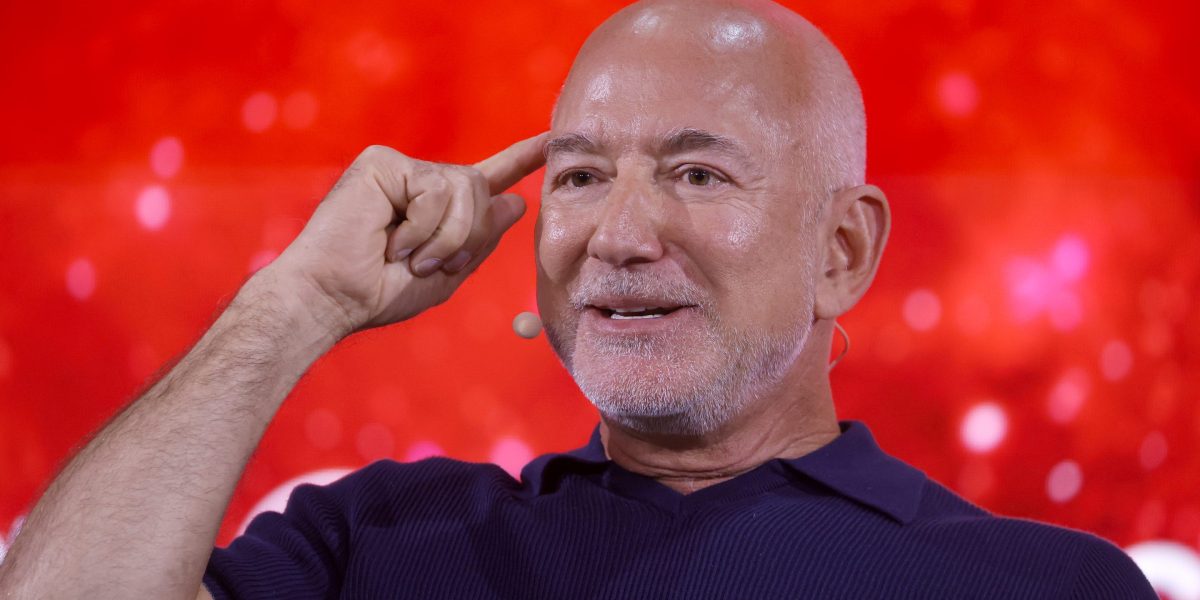
Source: Fortune. Casualplayhub News adds summary, context, and editorial framing while linking back to the original report.
Ad eligibility review: sensitive-topic
The Premier League has become a magnet for American wealth. From NFL legend Tom Brady to rapper Snoop Dogg, a parade of U.S. billionaires, CEOs, and celebrities have snapped up stakes in English football clubs. More than half of the league’s 20 teams now have American majority owners. The latest name to join this transatlantic gold rush is Jeff Bezos, the founder of Amazon and the third-richest person on the planet with a net worth of $273 billion.
Bezos isn’t going it alone. He is part of a consortium called 1892 Holdings, which also includes British-Indian millionaire Amit Bhatia and Eduardo Saverin, the Brazilian-born billionaire who co-founded Facebook. Together, they have acquired a 38% stake in Liverpool Football Club from Fenway Sports Group (FSG), the club’s current owner, for roughly £2 billion, or about $2.7 billion. For Bezos, that sum is a drop in the ocean of his fortune, but it places him at the center of one of football’s most iconic institutions.
Liverpool is a club with a proud history, but it is also a club that has known crisis. When FSG bought Liverpool in 2010 for just £300 million ($409 million), the team was, according to CEO Billy Hogan, “literally on the brink of bankruptcy.” Today, Liverpool is valued between £5 billion and £6 billion ($6.8 to $9.5 billion), a testament to FSG’s stewardship. Yet the club enters a period of flux. Last season, Liverpool finished a disappointing fifth in the Premier League, a result that cost manager Arne Slot his job. The team is now trying to rebuild, and Bezos is stepping into a sport and a club he has never owned before.
The structure of the deal reveals a deliberate, patient approach. It is a minority stake now, but with an option to take majority control within 12 months. That patience is not accidental. Bezos has long credited the legendary investor Warren Buffett as a mentor. Buffett, the chairman of Berkshire Hathaway, has famously preached the virtues of long-term investing—parking money in a low-cost S&P 500 index fund and letting it compound over decades, rather than trying to outsmart the market with individual stock picks.
Bezos once asked Buffett directly about the simplicity of his strategy. “Why don’t more people copy your investment strategy? It’s not that difficult to understand in principle,” Bezos recalled at the America Business Forum in 2025. Buffett’s answer was characteristically blunt: “He said, ‘Jeff, that’s easy. My approach is a get-rich-slowly scheme.’ And people don’t like those, but there’s a lot of truth in that for everything.”
Bezos has embraced that ethos. “If you can think in terms of seven years instead of three years, and you can defer gratification and think long term, that will give you a head start against all of your competitors, because most people can’t do that,” he said. For Liverpool fans, that means they can expect Bezos to stick around—at least seven years, if not longer. The investment is not about quick returns or flipping the club. It is a bet on the enduring power of a global brand, on the passion of the Anfield faithful, and on the long arc of sporting success.
The risks are real. Football is a volatile business, where results on the pitch determine financial fortunes. Liverpool’s recent struggles, combined with the immense competition from state-backed clubs like Manchester City and Newcastle United, mean that Bezos is entering a challenging arena. But his track record shows a willingness to endure short-term pain for long-term gain. Amazon itself was unprofitable for years before becoming a juggernaut. If Bezos applies the same patience to Liverpool, the club may find itself with a stable, visionary owner who understands that the best strategies are often the simplest—and the slowest.
Article commentary
Jeff Bezos’s entry into English football through Liverpool FC is more than a celebrity purchase; it is a case study in how the world’s wealthiest minds apply their investment philosophies to new frontiers. The trend of American ownership in the Premier League is well-documented, but Bezos brings a distinct approach shaped by his admiration for Warren Buffett. The key insight here is not the size of the stake—£2 billion is significant but manageable for Bezos—but the structure of the deal and the mindset behind it. By taking a minority stake with an option to assume majority control within a year, Bezos is hedging his bets. He avoids the immediate pressure of full ownership while gaining a foothold in a club that carries both prestige and risk. This mirrors Buffett’s own method of acquiring companies: often through preferred shares or convertible securities that allow for patient observation before committing fully. It is a “get-rich-slowly” approach applied to sports, an industry notorious for impatience and short-termism. The timing is noteworthy. Liverpool is at a low point: a fifth-place finish, a sacked manager, and a squad in transition. Buying when others might be selling is a classic value-investing move. Yet the valuation is steep—£5-6 billion for the whole club based on the 38% stake—suggesting the consortium is betting on significant future growth, likely from expanded media rights, global merchandising, or a potential Super League breakaway. Bezos’s long-term horizon gives him the luxury to wait for those catalysts. There is also a cultural dimension. American owners in the Premier League have faced criticism for prioritizing profits over tradition, as seen with the Glazers at Manchester United and the Fenway group’s earlier unpopular moves. Bezos, however, has the benefit of learning from those mistakes. His emphasis on deferring gratification and thinking in seven-year increments signals a willingness to invest in infrastructure, youth development, and stadium improvements—elements that build sustainable success rather than quick fixes. Buffett’s simple philosophy—don’t try to beat the market, just sit in an index fund—seems almost too plain for a man who built Amazon into a global empire. But Bezos’s own success shows that he understands the power of compounding, whether in business or in football. The question is whether Liverpool’s fanbase, known for its fierce loyalty and high expectations, will afford him the patience he needs. If they do, this could be a blueprint for how ultra-wealthy investors approach sports clubs: not as toys, but as long-term compounders of value. If not, the “get-rich-slowly” scheme may become a source of tension. Either way, Bezos’s move is a fascinating convergence of two worlds—sports and high finance—and a reminder that the most successful investors are often the ones who ignore the noise and focus on the long game.