War with Iran Drains U.S. Arms Stockpile, Raising Readiness Worries
Source: PBS NewsHour World. Casualplayhub News adds summary, context, and editorial framing while linking back to the original report.
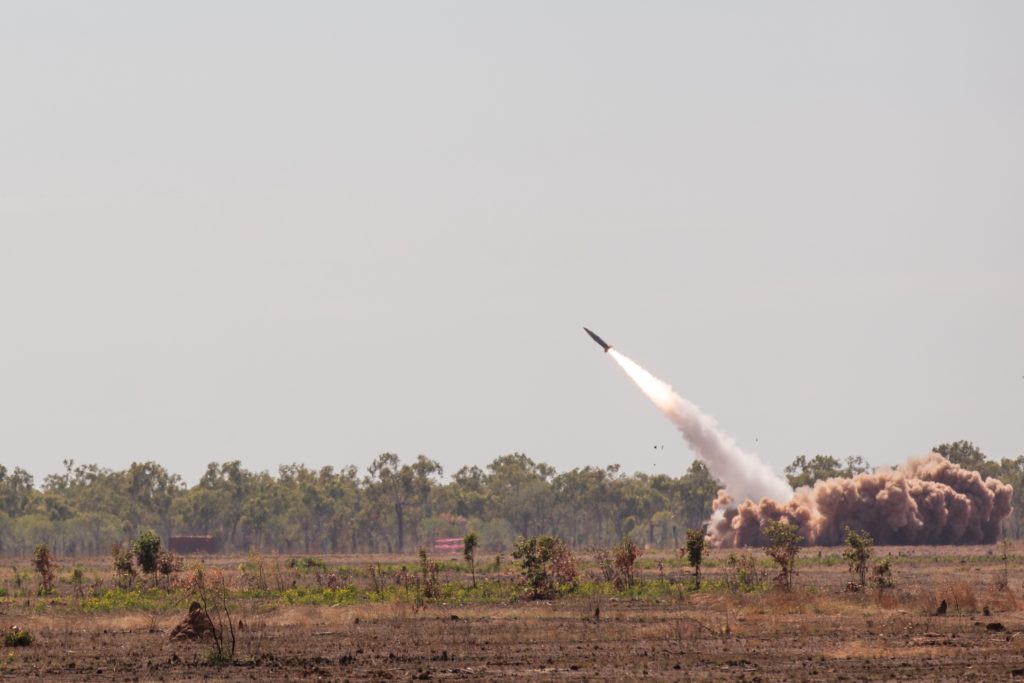
For decades, the United States has maintained the world’s most sophisticated and sought-after military arsenal — a sprawling inventory of precision-guided missiles, stealth aircraft, naval vessels, and advanced electronics that underpins its global power. But months of sustained combat operations against Iran have taken a heavy toll on that stockpile, drawing down critical munitions at a rate not seen since the height of the wars in Iraq and Afghanistan. The result, warn defense analysts, is a growing gap between military commitments and the hardware needed to fulfill them.
Foreign policy and military specialists now question whether the U.S. can rapidly pivot to deter or defeat other adversaries. The war with Iran, which began after a series of escalations in the Persian Gulf, has consumed thousands of cruise missiles, precision bombs, and drone interceptors. While the Pentagon has not released exact figures, independent assessments suggest that the inventory of certain types of munitions has fallen below the benchmarks set by the National Defense Strategy. This depletion limits the military’s ability to simultaneously defend allies in Europe, the Middle East, and the Indo-Pacific.
On a recent episode of “Compass Points,” moderator Nick Schifrin sat down with three seasoned experts to dissect the problem. Bill LaPlante, a former Pentagon acquisition chief, argued that the current conflict has exposed weaknesses in the defense industrial base. “We are burning through precision munitions at a pace that the industrial base was never designed to sustain,” LaPlante said. “The question is not whether we can win in Iran, but whether we can still fight and win any other war.”
Randy Schriver, a former senior Defense Department official for Asia, focused on the strategic consequences. He warned that China and Russia are closely watching the U.S. logistical strain. “Adversaries are not just monitoring our military movements; they are crunching numbers on how many missiles we have left,” Schriver noted. “If they see a window of vulnerability, they will exploit it.”
Celeste Wallander, a former assistant secretary of defense for international security affairs, offered a different perspective. She argued that the U.S. military still retains qualitative advantages that cannot be easily replicated. “Our technology, training, and network of alliances are not just about numbers,” Wallander said. “Even with a reduced stockpile, we can still deter aggression through signal and posture.” However, she conceded that the longer the conflict continues, the harder it becomes to maintain that edge.
The discussion highlighted a central tension: the need to support ongoing operations in Iran while simultaneously rebuilding for future contingencies. The Pentagon has already begun emergency procurement measures, but experts say that ramping up production of complex systems like Javelin antitank missiles or Tomahawk cruise missiles can take years. Meanwhile, the U.S. Navy has reduced its presence in the South China Sea and the Baltic Sea to free up assets for the Iranian theater, a move that allies in Taipei and Tallinn view with deepening unease.
LaPlante emphasized that the defense budget is finite. “Every dollar spent on replenishing munitions for Iran is a dollar not spent on modernization or on the other combatant commands,” he said. “We are making hard choices, and some capabilities will inevitably degrade.”
Schriver added that the political will to sustain such a conflict is also a factor. “The American public and Congress have a limited tolerance for long wars without clear success,” he said. “If the administration cannot show rapid progress, pressure to de-escalate will grow, and that could be interpreted as weakness by adversaries.”
Wallander, however, urged caution against overstating the crisis. “The United States has faced stockpile challenges before and recovered,” she said. “The key is recognizing the problem early and making the right investments now.”
As the war in Iran grinds on, the U.S. military confronts a sobering reality: the arsenal that once seemed inexhaustible is finite, and the choices made today will shape the global balance of power for years to come.
Article commentary
The depletion of America’s advanced weapons stockpile after months of war with Iran is more than a logistical headache; it is a strategic inflection point with global ramifications. The discussion among LaPlante, Schriver, and Wallander illuminates a core dilemma that has long shadowed U.S. defense planning: the tension between immediate operational demands and long-term readiness. While the United States remains the world’s preeminent military power, its reliance on high-end precision munitions creates a vulnerability that authoritarian rivals are well-positioned to exploit. One of the most striking aspects of the current situation is the speed at which the inventory has been drawn down. The Iran conflict, unlike the counterinsurgency campaigns in Iraq and Afghanistan, pits the U.S. military against a state adversary with a sizable and capable air defense network. This has forced the Pentagon to employ standoff weapons and guided munitions at an intensity that strains industrial capacity. The defense industrial base, which has been downsized and consolidated since the end of the Cold War, simply cannot surge production quickly enough to replace losses in real time. This creates a dangerous window. China, in particular, has been methodically expanding its own military reach and stockpiling munitions. Beijing’s leadership has made clear its ambition to challenge U.S. dominance in the Indo-Pacific. A prolonged conflict that ties down American naval and air assets in the Middle East provides a permissive environment for Chinese aggression in the South China Sea or even against Taiwan. Similarly, Russia, embroiled in its own war in Ukraine, may see an opportunity to test NATO’s resolve if the U.S. appears overstretched. Yet the situation is not entirely bleak. The United States retains a vast network of allies and bases, superior intelligence, and a flexible force structure that can adapt to multiple missions. The challenge, as Wallander noted, is to use those assets wisely while rebuilding the arsenal. The Pentagon’s ability to manage risk across theaters will depend on smart prioritization and perhaps some creative uses of allied capabilities. For example, European allies could increase their own burden-sharing in the Baltic and Mediterranean, freeing up U.S. assets for the Pacific. Another critical factor is political. The Biden administration, or whichever president is in office, must articulate a clear strategy to the American people. Vague commitments to “defeat Iran” without a measurable end state will erode public support and embolden domestic opposition. Congress, too, has a role: it must fund the defense industrial base with the urgency usually reserved for wartime, while also demanding accountability and oversight. Ultimately, the debate over stockpile depletion is a debate about strategy. The United States cannot be everywhere at once, nor can it fight indefinitely without replenishment. The current crisis forces a reckoning with the limits of military power. The question is not merely whether America can defend its allies, but whether it can maintain the credibility of its commitments. The answer will depend on decisions made in the coming months — and on whether adversaries interpret depletion as opportunity or as a temporary setback. From a geopolitical perspective, the most concerning scenario is one in which the U.S. becomes entangled in a multi-front conflict. The Iran war has already stretched resources thin. A simultaneous crisis with China or North Korea could overwhelm the system. This is why the strategic community is watching the Pentagon’s replenishment efforts with such intensity. The window for recovery is narrow, and the cost of inaction is measured not only in dollars but in the stability of the international order.