Shannon Becomes Wolves' Bench Linchpin
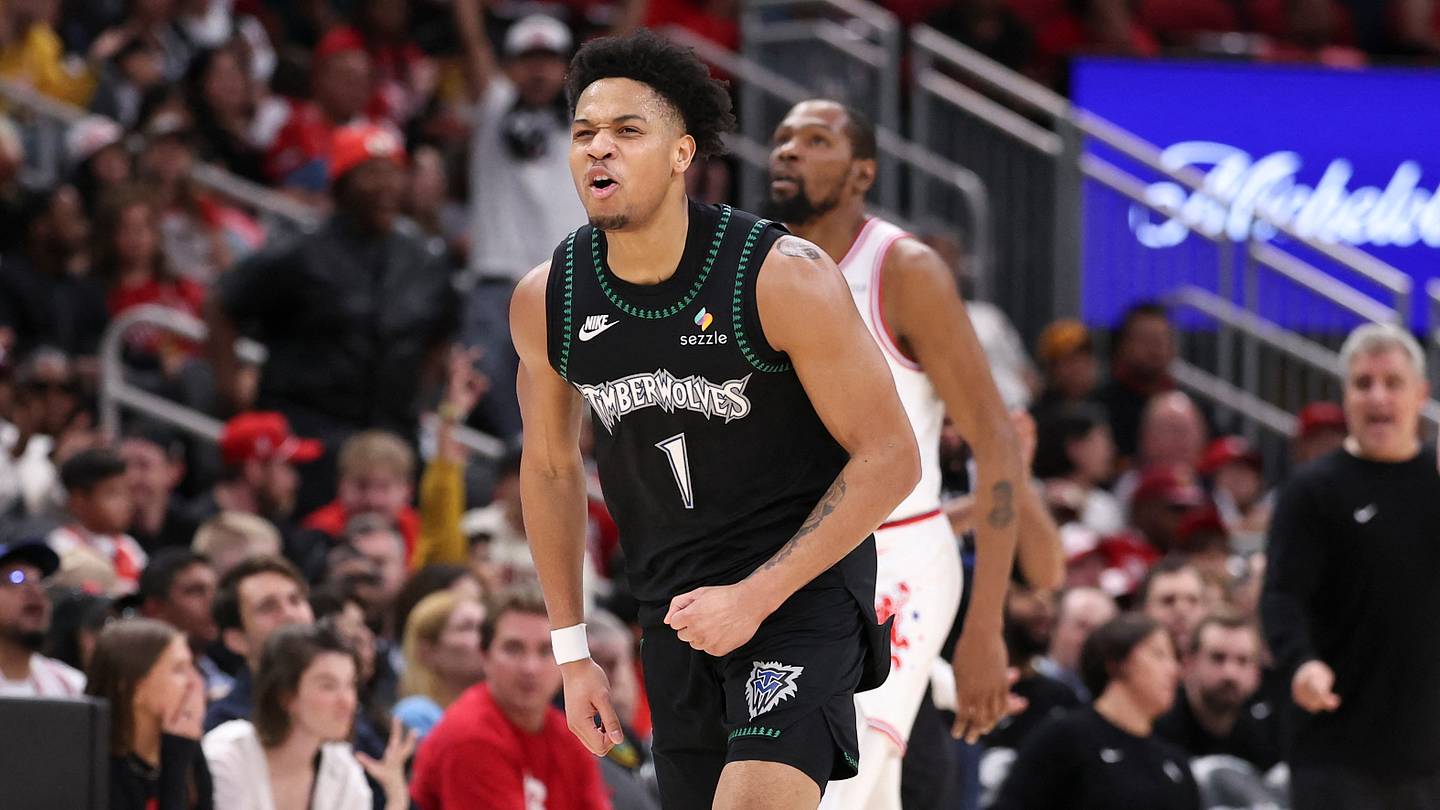
Source: SI NBA. Casualplayhub News adds summary, context, and editorial framing while linking back to the original report.
Ad eligibility review: sensitive-topic
The 2026-27 Minnesota Timberwolves enter the season with a ceiling that surpasses any previous version in franchise history. Yet the bench unit, once a key advantage for head coach Chris Finch, has been dismantled over the past 14 months. A combination of cap-driven transactions and untimely injuries has eroded the team's depth. If Ayo Dosunmu starts in the season opener against the Miami Heat on October 21, Finch will have zero proven contributors to turn to from the bench.
On a reserve unit that features Terrence Shannon Jr., Jaylen Clark, Bones Hyland, Josh Green, Trey Lyles, and Joan Beringer, only Shannon and Hyland are true on-ball scorers. But Shannon is the only one with the size and all-around upside to make an impact in multiple facets of the game. A first-round pick out of Illinois, Shannon was among the nation's leading scorers in college, averaging 36.2% from three on 6.6 attempts per game. Standing 6-foot-6 with a wingspan over 6-foot-8, he is a superb athlete and a blur in transition. His half-court game was a question mark coming into the league—his assist rate was just 12.9% in his final collegiate season—but he earned trust during the playoffs last year.
After injuries to Anthony Edwards, Donte DiVincenzo, and Dosunmu, Shannon delivered a breakout performance. He scored 24 points in the closeout game against Denver in the first round. In the second round against San Antonio, with Edwards and Dosunmu returning, his minutes fluctuated, but he still averaged 10.7 points, 2.7 rebounds, and 1.8 assists in 24.5 minutes per game across six games, though he shot just 4 of 20 from deep. Finch later conceded that he should have given Shannon more touches. He also discussed pairing Shannon with Edwards to allow Ant to play off the ball more often. Those comments came before the trade for LaMelo Ball, but they underscored how encouraged the Wolves brass was by Shannon's playoff performance and their desire to get Edwards off the ball.
Shannon and Josh Green are the only wings on the roster—aside from Edwards, Dosunmu, and Jaden McDaniels—with any NBA track record. Opportunity will be plentiful, especially if either Dosunmu or Green starts. Why is Shannon's production more critical than Hyland's? Hyland, at 6-foot-2 and under 170 pounds, is a scoring guard in a point guard's body. He provides offensive sparks but is streaky and defensively limited. Shannon, conversely, can play the two or three and has shown he can run some offense. He has even scaled up to play small-ball power forward, a role he may fill more often given the current roster. Hyland will likely be relegated to a backup role behind Ball, while Shannon can fill multiple lineup slots.
Defensive consistency and rebounding are the two areas where Shannon must improve—especially if he logs minutes at the four. Finch will give him perimeter assignments in bigger lineups, but in smaller configurations, Shannon will need to do much better than his 5.0% rebound rate from last season to earn minutes over traditional bigs like Lyles and Beringer. Shannon has the right combination of talent, experience, and opportunity to make a real impact off the bench. While Finch has few alternatives, Shannon must seize early chances to secure his role as the season unfolds. Part of the expectation is volume-based: there is a vacuum of bench scoring left by Naz Reid, DiVincenzo, and potentially Dosunmu. But Shannon also possesses the size, explosiveness, and scoring chops to genuinely elevate this Timberwolves team.
Article commentary
The Timberwolves' roster construction entering the 2026-27 season reflects a deliberate gamble on star power over depth. The trade for LaMelo Ball, combined with earlier cap-driven departures, has left the bench thin—a stark contrast to the franchise's recent identity. Terrence Shannon Jr. now stands as the most critical reserve, not because he is a proven star, but because the team has stripped away nearly every other reliable option. His emergence is as much a product of necessity as of his own talent. Shannon's playoff performance last season was a genuine revelation. Scoring 24 points in a closeout game against a championship-caliber Denver team is no fluke. His ability to create his own shot, especially when the offense stagnates, fills a void that players like Naz Reid and Donte DiVincenzo once occupied. But the sample size is small, and his shooting efficiency—4 of 20 from deep in the second round—raises questions about consistency. The Timberwolves are betting that his physical tools and work ethic will translate into a more reliable floor game. Finch's comments about wanting to play Shannon alongside Edwards to let Ant operate off the ball are telling. The arrival of LaMelo Ball complicates that vision; Ball is a ball-dominant point guard who also needs the ball in his hands. The Wolves now have three players—Edwards, Ball, and Shannon—who thrive with the ball, but only two can be on the floor at once. Shannon's versatility to play off the ball, as a cutter or spot-up shooter, becomes crucial. However, his assist rate has never been high, so he must prove he can make quick decisions without the ball. Defensively, Shannon's size and athleticism give him the potential to guard multiple positions, but his 5.0% rebound rate is a glaring weakness for a player who may see minutes at power forward. In small-ball lineups, he will be expected to hold his own on the glass against bigger opponents. If he cannot, Finch will be forced to rely on Trey Lyles or Joan Beringer, which limits the team's offensive spacing. The broader context is that the Timberwolves are operating in a win-now window with a high payroll. The bench's thinness is a calculated risk: if the starting unit—likely Ball, Edwards, Jaden McDaniels, Julius Randle, and Rudy Gobert—stays healthy, the Wolves can mask the lack of depth. But injuries are inevitable, and when they come, Shannon's shoulders will carry a heavy load. His development over the first 20 games will determine whether the Timberwolves' ceiling is a mirage or a reality. The opportunity is clear; the execution remains to be seen.