NYPD Launches Drone Interception at 2026 US Open
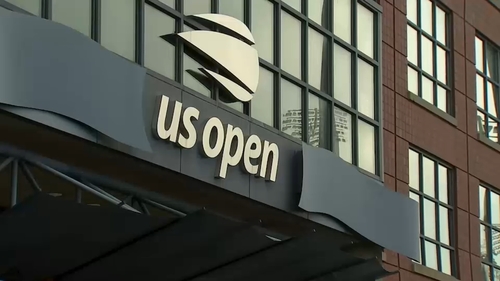
Source: ABC30 Fresno Sports. Casualplayhub News adds summary, context, and editorial framing while linking back to the original report.
Ad eligibility review: sensitive-topic
FLUSHING MEADOWS, Queens — As the tennis world converges on the Billie Jean King National Tennis Center for the 2026 U.S. Open, the New York Police Department is unveiling a security operation that goes far beyond the usual perimeter patrols. For the first time, the NYPD will have the power to actively intercept unauthorized drones over the tournament grounds, marking a significant shift in how local law enforcement handles aerial threats at major public events.
Police Commissioner Jessica Tisch outlined the comprehensive deployment during a briefing. “Working alongside the dedicated U.S. Open detail for the duration of this event will be our bomb squad, our aviation and mounted units, and our emergency service unit, as well as our intel and counterterrorism personnel to include explosive detection canines, heavy weapons teams, plainclothes personnel and more,” Tisch said. The scale of the operation reflects a growing recognition that drones pose a unique risk in crowded venues.
The new authority comes from an agreement with the Department of Homeland Security, allowing the NYPD to use its own equipment and tactics to detect, track, and neutralize drones. Previously, federal agencies held exclusive jurisdiction over drone countermeasures. Now, the NYPD will operate a mobile command center equipped with sophisticated radar and radio frequency sensors to identify rogue drones. Once detected, officers can deploy jamming or spoofing technology to disrupt the drone’s control link or navigation, forcing it to land or return to its operator.
Deputy Commissioner Rebecca Weiner, who leads the NYPD Counterterrorism Bureau, explained that drone mitigation is just one layer of the security plan. “Mitigation is one of several tools that we use to protect against unauthorized drones. There will be a federal temporary flight restriction as well over this facility that allows us to take these countermeasures,” Weiner said. The temporary flight restriction, issued by the Federal Aviation Administration, creates a no-fly zone over the tennis center and surrounding areas, making any drone flight illegal unless specifically authorized.
The timing of the announcement is not coincidental. Earlier this year, during the FIFA World Cup, multiple drones were intercepted near stadiums, raising alarms among security officials. While none of those incidents led to violence, they underscored the potential for drones to be used for surveillance, smuggling, or even as weapons. The U.S. Open, which draws tens of thousands of spectators daily, presents a similar target.
Tisch emphasized the pioneering nature of the NYPD’s new role. “This will be the first major event where the NYPD uses this new authority, and it will be the first event in the country where state or local law enforcement conducts in-depth drone mitigation operations,” she said. The statement signals a shift in the federal-local dynamic, with local police taking on responsibilities once reserved for agencies like the Department of Homeland Security and the FBI.
The enhanced security measures will be in place throughout the tournament, from the first round to the finals. Officers will be visible both in uniform and plainclothes, while bomb-sniffing dogs and heavy weapons teams provide additional deterrence. Aerial surveillance from NYPD helicopters will complement the ground-based drone detection systems.
The U.S. Open has long been a high-profile event for New York City, drawing international stars and millions of television viewers. With drones becoming cheaper and more capable, the threat landscape has evolved. The NYPD’s new approach aims to stay ahead of that evolution, but it also raises questions about privacy and the potential for overreach. For now, officials are focused on ensuring the safety of players, staff, and fans. As one security expert noted, the tournament is a test case for a new era of event security.
Article commentary
The NYPD’s deployment of drone countermeasures at the 2026 U.S. Open represents a notable milestone in the evolution of public safety at large-scale events. By securing an agreement with the Department of Homeland Security to take on drone mitigation duties, the NYPD is stepping into a role traditionally held by federal agencies. This shift reflects a broader trend: as drone technology becomes more accessible, local law enforcement is increasingly expected to handle aerial threats, even as legal and technical frameworks lag behind. One of the most significant aspects of this operation is its precedent-setting nature. Commissioner Tisch explicitly stated that this is the first major event where state or local law enforcement will conduct “in-depth drone mitigation operations.” If successful, similar programs could be adopted by police departments across the country, especially for events like the Super Bowl, political conventions, or major concerts. However, each jurisdiction will face its own challenges, from funding and training to navigating the patchwork of federal, state, and local regulations. Privacy advocates are likely to watch this development closely. The technology used to neutralize drones—jamming or spoofing—can interfere with other wireless communications, potentially affecting nearby devices or even emergency services. Moreover, the capability to detect and track drones raises questions about surveillance of lawful drone operators and bystanders. While the NYPD has emphasized that its focus is on unauthorized drones, the line between “unauthorized” and “suspicious” can blur in practice. Clear protocols and oversight will be essential to prevent misuse. Another concern is the potential for escalation. If a drone operator refuses to comply with a countermeasure, or if the drone is being piloted with malicious intent, law enforcement may need to escalate its response. The NYPD has not detailed what happens after a drone is intercepted—whether the operator is identified, charged, or simply warned. These are questions that need to be addressed publicly to build trust. From a security perspective, the move is a logical response to a real threat. Drones have been used for smuggling contraband into prisons, disrupting airports, and even carrying explosives in conflict zones. At a crowded event like the U.S. Open, a single rogue drone could cause panic or worse. The temporary flight restriction provides a legal basis for action, but the ability to physically intercept drones adds a layer of deterrence that passive measures cannot match. Ultimately, the NYPD’s drone operation at the U.S. Open is a test case—not just for the city, but for the entire country. It will be judged by its effectiveness in preventing incidents, its transparency, and its respect for civil liberties. If the NYPD can strike that balance, it may pave the way for a new standard in event security. If not, it could fuel a backlash that sets back the very cooperation between federal and local agencies that made this operation possible. The tennis world will be watching, but so will privacy advocates, tech experts, and security professionals around the globe.