Virgil van Dijk: 5 defining moments from dishwashing to Liverpool legend
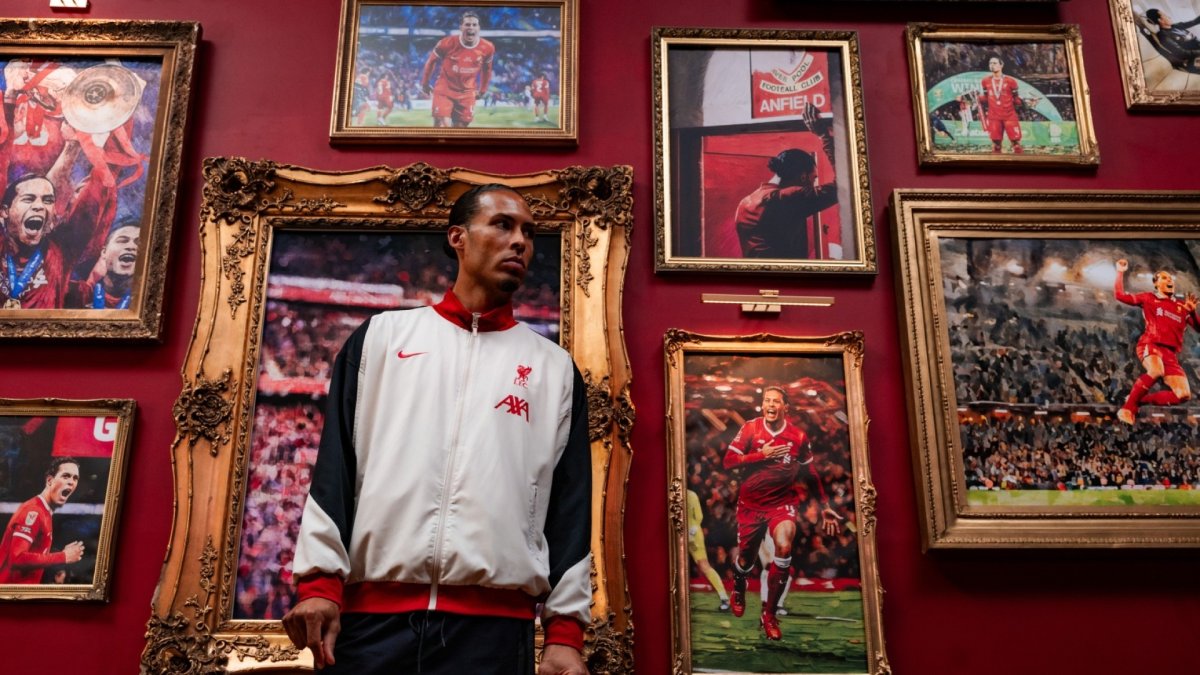
Source: NBC Connecticut Sports. Casualplayhub News adds summary, context, and editorial framing while linking back to the original report.
Virgil van Dijk stands as a colossus in modern football. The Liverpool captain and Netherlands international has redefined the art of defending, combining physical dominance with elegant composure. But his path to the top was far from straightforward. Here are five key moments that shaped his remarkable career.
**1. The dishwasher years**
Long before Anfield roared his name, van Dijk was a teenager working in a restaurant kitchen in Breda, the Netherlands. He washed dishes and scrubbed floors to help support his family. The job was grueling, but it taught him discipline. "I had to be up at 6 a.m. for training, then work until late at night," he once recalled. "It made me appreciate every opportunity." Those early struggles forged a mentality that would later define his game.
**2. A brush with catastrophe**
In 2012, while playing for FC Groningen, van Dijk faced a health crisis that nearly ended his career. He was diagnosed with appendicitis, followed by peritonitis and a kidney infection. He spent two weeks in hospital, lost significant weight, and doctors warned he might never play again. But van Dijk fought back with relentless rehab. "I was determined to prove them wrong," he said. Within months, he was back on the pitch, stronger than before.
**3. The record transfer**
In January 2018, Liverpool paid Southampton £75 million to sign van Dijk — a world record for a defender. The move raised eyebrows. Critics questioned whether any defender could be worth that sum. But van Dijk silenced doubters instantly. His arrival transformed Liverpool's backline, turning a leaky defense into the bedrock of a title-winning side. The fee now looks like a bargain.
**4. Champions League glory**
On June 1, 2019, van Dijk captained Liverpool to a sixth European Cup, beating Tottenham 2-0 in Madrid. He was named UEFA Man of the Match, dominating the final with his air of authority. That night, he became the first defender to win the UEFA Men's Player of the Year award since 2011. The triumph was personal: two years earlier, he had watched Liverpool lose a Champions League final from his sofa, injured. The redemption arc was complete.
**5. The leadership burden**
When Jordan Henderson left Liverpool in 2023, van Dijk inherited the captain's armband. It was a natural progression. His voice now steers the team through adversity, whether organizing the backline or rallying teammates after setbacks. Off the pitch, he has become a symbol of calm resilience. His leadership extends beyond football: he speaks openly about mental health, the pressures of elite sport, and the importance of family. "I want to be remembered not just as a player, but as a person who made a difference," he said.
These five facts paint a portrait of a man who rose from obscurity through sheer grit. Van Dijk's story is not just about football. It is about overcoming obstacles, embracing responsibility, and never forgetting where you came from.
Article commentary
Van Dijk's journey from a dishwashing teenager to a Premier League and Champions League winner is a classic tale of perseverance. But his story carries deeper resonance, especially in an era where footballers are often portrayed as detached celebrities. Van Dijk remains grounded, and that authenticity is rare. His early health scare — the peritonitis that nearly killed him — is a reminder that athletic success often hinges on survival as much as talent. The appendicitis incident could have ended his career before it started. Instead, it became a crucible. His record transfer fee was divisive at the time. Defenders are traditionally undervalued in the transfer market, with attackers commanding astronomical sums. Van Dijk's £75 million move challenged that orthodoxy. He proved that a world-class defender can be worth every penny, reshaping Liverpool's identity. The club's subsequent success — the 2019 Champions League, the 2020 Premier League title — was built on his presence. One could argue that no single signing defined Liverpool's modern era more than his arrival. Yet the narrative is not without nuance. Van Dijk's form dipped after a serious knee injury in 2020. Some questioned whether he would ever regain his peak level. He did, but not immediately. The recovery process was slow, and Liverpool's defense suffered in his absence. This highlighted his irreplaceable role. When he returned, he was slightly less dominant, but his intelligence and positioning compensated. The episode underscores the fragility of athletic greatness. His leadership style is also worth examining. Van Dijk leads by example, not by shouting. He is known for his calmness, which can be both a strength and a weakness. In moments of chaos, his composure steadies the team. But some critics argue that Liverpool sometimes lacks the fiery intensity that vocal leaders like Steven Gerrard provided. Van Dijk's approach is more measured, and it suits the modern game, but it may not resonate in every crisis. Off the pitch, van Dijk's advocacy for mental health is commendable. He has spoken about the loneliness of professional football and the importance of seeking help. In a sport that often demands stoicism, his openness is refreshing. He also maintains strong ties to his hometown, Breda, funding youth football programs. Ultimately, van Dijk's legacy is secure. He redefined the defender's role, proving that defensive excellence can be as glamorous as attacking flair. His story is a blueprint for aspiring players: talent, hard work, luck, and resilience. But it also raises questions about how football values different positions. The defender's market may never fully reflect his importance, but van Dijk's career is a powerful argument for a reassessment. As he approaches the twilight of his playing days, his influence remains profound — both on and off the pitch.