NYPD Ramps Up Drone Patrols for 2026 US Open in Queens
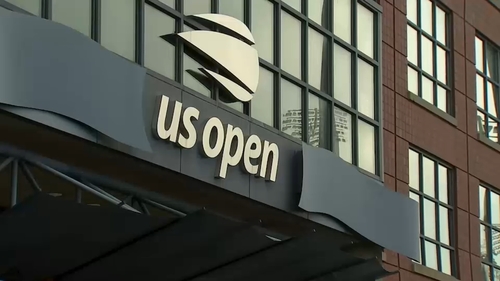
Source: ABC 7 Chicago Sports. Casualplayhub News adds summary, context, and editorial framing while linking back to the original report.
Ad eligibility review: sensitive-topic
Flushing Meadows, Queens – The 2026 U.S. Open is set to unfold under an unprecedented security umbrella, with the New York Police Department rolling out a multi-layered operation that, for the first time, gives local officers the power to actively intercept rogue drones. Police Commissioner Jessica Tisch outlined the strategy on Saturday, emphasizing that the tournament will be guarded by a robust mix of units.
"Working alongside the dedicated U.S. Open detail for the duration of this event will be our bomb squad, our aviation and mounted units, and our emergency service unit, as well as our intel and counterterrorism personnel to include explosive detection canines, heavy weapons teams, plainclothes personnel and more," Tisch said.
The centerpiece of this year's security is a newly granted authority from the Department of Homeland Security, allowing the NYPD to deploy its own drone countermeasures. Previously, such operations were the exclusive domain of federal agencies. Now, the department will operate a mobile command center equipped with sophisticated tracking and interception technology. Deputy Commissioner Rebecca Weiner, who leads the NYPD Counterterrorism Bureau, explained that drone mitigation is just one piece of a larger puzzle.
"Mitigation is one of several tools that we use to protect against unauthorized drones. There will be a federal temporary flight restriction as well over this facility that allows us to take these countermeasures," Weiner said.
The decision to expand local drone enforcement stems from a growing pattern of unauthorized drone activity at major sporting events. Officials noted that during the World Cup earlier this year, several drones were intercepted near stadiums, raising alarms about potential security gaps. Tisch described the U.S. Open as a landmark moment for the NYPD.
"This will be the first major event where the NYPD uses this new authority, and it will be the first event in the country where state or local law enforcement conducts in-depth drone mitigation operations," Tisch said.
Beyond drones, the security perimeter will include heavy weapons teams, explosive detection canines, and plainclothes officers blending with the crowd. The aviation unit will maintain aerial surveillance, while mounted officers patrol the grounds. The bomb squad and emergency service unit stand ready for any incident. The mobile control center, staffed by counterterrorism analysts, will monitor the airspace in real time, ready to act if a drone breaches the restricted zone.
The tournament, which draws tens of thousands of spectators daily, has long been a high-profile target. The NYPD's layered approach aims to address both traditional threats and the emerging challenge of drones, which can be used for surveillance, disruption, or even weaponization. By integrating federal authorization with local resources, the department hopes to set a model for other cities facing similar risks.
Tisch stressed that the measures are not just about technology but about coordination. "We are leveraging every asset we have to ensure the safety of everyone at the U.S. Open," she said. The enhanced security will remain in place for the entire tournament, from the first round to the final match.
This marks a significant shift in how local law enforcement handles drone threats. As drones become cheaper and more accessible, the ability to quickly neutralize them without relying on federal agencies becomes a critical tool. The U.S. Open will serve as a test case for this new paradigm, with the NYPD's performance closely watched by security experts nationwide.
Article commentary
The NYPD's decision to deploy its own drone interception capabilities at the 2026 U.S. Open represents a notable evolution in the relationship between local law enforcement and federal aviation security. Historically, counter-drone operations have been tightly controlled by the Department of Homeland Security and the Federal Aviation Administration, with state and local agencies limited to observation and reporting. This new agreement, granting the NYPD authority to actively mitigate drones, signals a pragmatic response to a rapidly growing threat. Drones have become a persistent nuisance and potential danger at large public gatherings. From aerial spying to payload drops, the risks are real and escalating. The World Cup interceptions earlier this year underscored that even major international events are vulnerable. By empowering local police to act, the DHS is acknowledging that federal agencies cannot be everywhere at once. The NYPD, with its extensive resources and experience in high-profile events, is a logical partner for such a pilot program. However, this expansion of local authority raises important questions about privacy, accountability, and the potential for mission creep. Drone mitigation technologies range from radio frequency jamming to physical capture, and some methods can interfere with other electronic devices or create safety hazards. The NYPD's mobile control center will presumably use targeted, non-destructive techniques, but the public has little visibility into the specific tactics employed. As the department takes on this role, it will need to balance security with transparency, ensuring that the measures do not infringe on legitimate drone operations or the civil liberties of spectators. Another layer of complexity is the legal framework. While the FAA's temporary flight restriction over the U.S. Open provides a clear legal basis for enforcement, the broader question of whether local police should have standalone drone mitigation authority remains unresolved. The NYPD's operation is effectively a test case, one that could influence future federal regulations. If successful, other major cities may push for similar agreements, accelerating a shift toward decentralized drone security. From a strategic perspective, the U.S. Open is an ideal venue for this demonstration. The tournament is a multi-week event with a controlled perimeter, heavy media coverage, and a diverse crowd. The NYPD can refine its protocols in real time, gathering data on drone behavior, response times, and public reaction. The lessons learned here will likely inform security planning for the 2028 Olympics, the Super Bowl, and other marquee events. Yet, the NYPD's new authority is not a silver bullet. Drones are evolving rapidly, with improved autonomy, longer battery life, and counter-countermeasure capabilities. The department must continuously update its technology and training to stay ahead. Moreover, the focus on drones should not detract from other security essentials—the bomb squad, canine units, and plainclothes officers remain equally important. Ultimately, the NYPD's move reflects a broader trend: the decentralization of security responsibilities in an age of asymmetric threats. By empowering local agencies, the federal government is betting on speed and flexibility. The U.S. Open will provide the first real-world test of that bet. The outcome will be watched not only by tennis fans but by security professionals across the country who are eager to see whether local drone mitigation can be executed safely, legally, and effectively.