Ormat's Geothermal Evolution: Powering AI Data Centers After 60 Years Underground
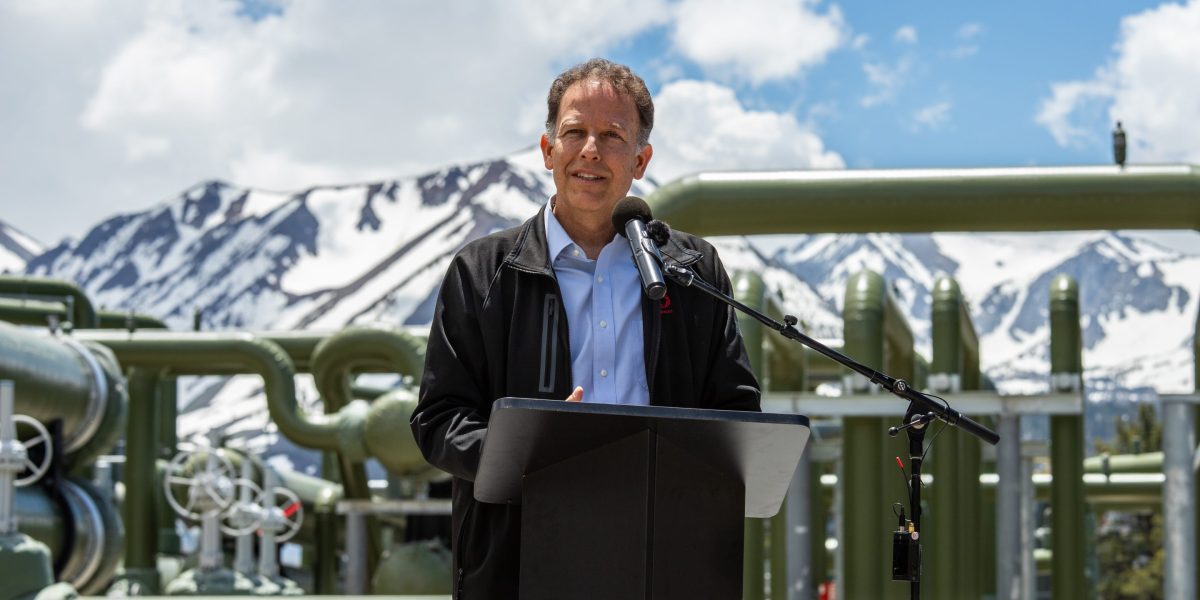
Source: Fortune. Casualplayhub News adds summary, context, and editorial framing while linking back to the original report.
For sixty years, Ormat Technologies has built its reputation by placing geothermal power plants where nature permits—above underground reservoirs of high-pressure water or steam, often along the Pacific Ring of Fire that stretches from Asia to the Americas. That strategy turned the company into the world's largest geothermal operator. Now, Ormat is steering toward a new frontier: the insatiable energy appetite of AI data centers. The company aims to construct baseload, clean power plants across the western United States by blending its traditional geothermal expertise with cutting-edge oil-drilling and fracking techniques. The approach is called enhanced geothermal systems, or EGS, and it promises to unlock geothermal energy almost anywhere by tapping deeper, hotter reservoirs more efficiently.
“We’re in a very rare situation where all the stars are aligned exactly on time,” said Doron Blachar, Ormat’s CEO, in an interview. “The hyperscalers and the AI demand put us in a situation where we see endless demand for our product. The more electricity we can generate, the more we sell, and we’ve been doing a lot of exploration in the U.S. over the last few years.”
Ormat is launching two separate EGS pilot projects in Nevada, each with a different partner. One is with Sage Geosystems, a geothermal startup, at Ormat’s Blue Mountain power plant. The other involves SLB, the century-old oilfield services giant, at the Desert Peak plant. Blachar is confident that even if EGS fails, Ormat’s existing traditional geothermal growth and battery energy storage business—tied to solar installations nationwide—will keep the company profitable. But he sees EGS as the biggest growth driver and believes Ormat is better positioned than any competitor to scale it.
“We know how to buy land positions. We have contracts with hyperscalers, with utilities, for hundreds of megawatts. We know how to get the permits. We know how to get the interconnections,” Blachar said. “The uniqueness is we have all the ingredients to develop EGS. Once the pilots are successful, we’ll start running.”
On Wall Street, Ormat is often compared to Fervo, an EGS-focused startup that went public in May with the largest clean energy IPO in U.S. history. Fervo’s market cap quickly soared to $10 billion before falling to $5 billion after some setbacks. Ormat’s stock, meanwhile, has risen nearly 20% over twelve months, reaching a market cap of about $6.75 billion—slightly below an all-time high from early June. Ormat posted revenues of $662.7 million for the first half of 2026, up 43% from the prior year, with net profit of $71.2 million, a 4% year-on-year increase. Blachar emphasizes that Ormat is profitable outside its pilot projects, a distinction from many startups.
Founded in Israel and now headquartered in Reno, Nevada, Ormat has operated globally for decades. Nevada is a geothermal hotspot, and both EGS pilots are located there. The company has also acquired new acreage in New Mexico, Oregon, and Idaho, and Blachar expressed bullishness about Texas. Sage’s first pilot, a precursor to its Ormat collaboration, came online in August near San Antonio. Blachar, who joined Ormat as CFO in 2013 and became CEO in 2020, still works from Tel Aviv and travels regularly to project sites worldwide, including Indonesia, which is Ormat’s largest growth area outside the U.S.
Ormat’s current global power portfolio stands at 1.85 gigawatts, enough to power about 1.4 million U.S. homes or two large data center complexes. The company’s 2028 target is to reach 2.8 gigawatts through traditional geothermal and battery storage, not counting EGS. But that scale pales compared to what EGS could unlock. Historically, Ormat developed about 100 megawatts of geothermal power annually. Each EGS project with a hyperscaler could easily be 500 megawatts, Blachar said.
Political dynamics favor geothermal. Republicans attack wind and solar, while Democrats target fossil fuel emissions, but geothermal enjoys bipartisan support. Democrats favor clean energy, and Republicans appreciate that traditional oil and gas companies can profit from geothermal expansion. SLB, for instance, is leveraging its subsurface analysis and drilling expertise. Ormat’s pilots with SLB and Sage are expected to be drilled next and could be online by late 2027. “Once they finish, we will start developing EGS projects,” Blachar said.
Twenty years ago, Ormat experimented with EGS but found it too costly and difficult. Drilling technology has since advanced rapidly, with U.S. oil producers now able to drill five-mile-long horizontal wells to maximize output. Earlier this year, Ormat launched the Ormega100 power plant unit, a standardized design with fewer moving parts intended to scale economically with EGS. “EGS today is becoming a much more realistic outcome,” Blachar said. “When you take Ormat’s experience and business development in power plant design, and the amount of land and positions we have in the U.S., we are going to take advantage of this new technology and grow much faster.”
Article commentary
Ormat Technologies’ pivot to enhanced geothermal systems (EGS) represents a calculated bet on the intersection of two powerful trends: the exponential growth of AI-driven data center energy demand and the maturation of drilling technologies originally developed for oil and gas. The company’s 60-year track record as the world’s largest geothermal operator provides a foundation of operational expertise, permitting know-how, and existing relationships with hyperscalers and utilities—assets that pure-play startups like Fervo cannot easily replicate. Yet the EGS race is far from decided, and Ormat’s strategy carries both promise and risk. From a financial perspective, Ormat appears well-positioned. Its stock has risen nearly 20% over the past year, and the company reported strong revenue growth of 43% for the first half of 2026, with solid profitability. This contrasts with Fervo, whose market cap has halved despite a high-profile IPO, reflecting investor skepticism about the near-term economics of EGS. Ormat’s diversified business—traditional geothermal plus battery storage—provides a buffer if EGS pilots underwhelm. But the company’s valuation remains modest relative to the potential upside, suggesting the market is pricing in substantial execution risk. The technological challenge is the most critical variable. EGS relies on fracturing hot, dry rock deep underground—a process akin to fracking but with different geological targets. While the science is proven, the economic viability hinges on drilling costs, well productivity, and long-term reliability. Ormat’s pilot projects with Sage Geosystems and SLB are designed to demonstrate these parameters. SLB’s involvement is particularly notable, as it brings decades of subsurface expertise and the ability to scale drilling operations. If the pilots succeed by late 2027, Ormat could move quickly to commercialize, given its existing land holdings and regulatory approvals. Political tailwinds are unusually strong. Geothermal enjoys bipartisan support in the U.S., with Democrats embracing its clean energy attributes and Republicans seeing it as a natural extension of the oil and gas industry. This insulation from partisan energy debates is a significant advantage, especially as wind and solar face regulatory headwinds in some states. The Inflation Reduction Act’s tax credits for geothermal also bolster the economics. However, Ormat faces stiff competition. Fervo remains a formidable rival, and other players—including conventional oil and gas companies—are eyeing the geothermal space. The success of EGS will also depend on the pace of AI data center buildout; any slowdown in demand could undermine the urgency that currently drives the industry. Additionally, nuclear power and natural gas with carbon capture present alternative baseload solutions that could compete for the same customers. Ormat’s decision to run two parallel pilots with different partners is a smart risk-mitigation strategy. It also signals confidence in the underlying technology. But the company’s history of experimenting with EGS two decades ago—and abandoning it due to cost—serves as a cautionary tale. The key difference today is the convergence of advanced drilling, higher energy prices, and a desperate need for clean, reliable power. If Ormat can leverage its 60 years of experience to turn EGS into a commercial reality, it may not only power the cloud but also redefine the geothermal industry for a new era.