Canada-U.S. Trade War: Carney Accuses U.S. of Weaponizing Economic Integration
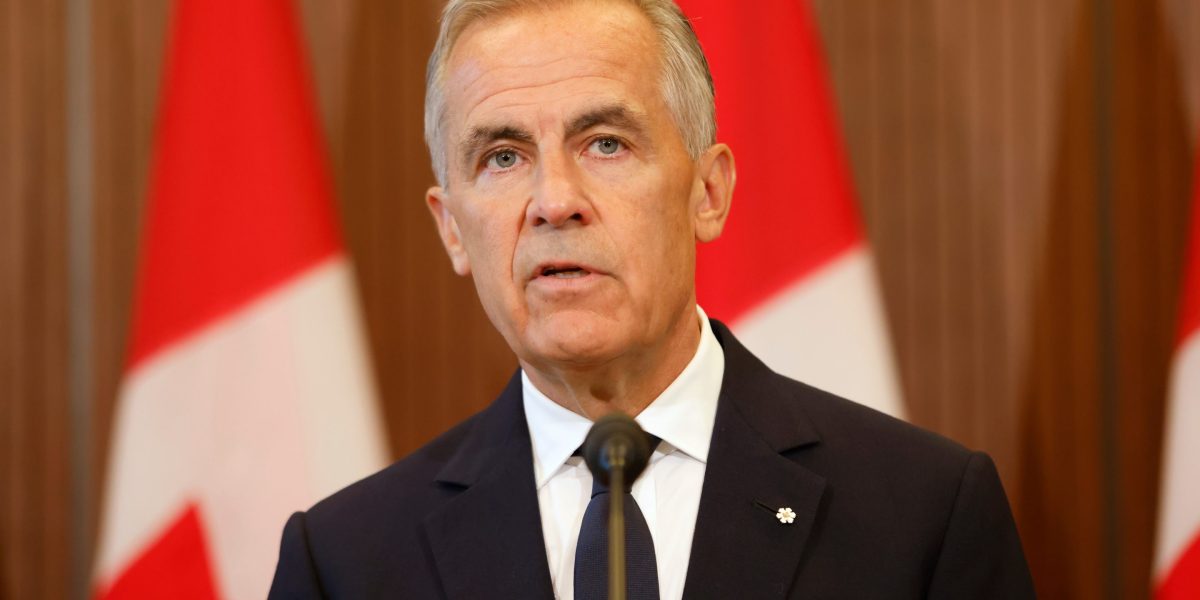
Source: Fortune. Casualplayhub News adds summary, context, and editorial framing while linking back to the original report.
Ad eligibility review: sensitive-topic
The United States and Canada, longtime allies sharing the world's longest undefended border, spiraled deeper into a trade confrontation on Saturday, marked by sharp accusations and new tariffs that will push up costs for consumers on both sides. The breakdown followed a dramatic failure of negotiations in Washington late Friday, with each side pointing fingers at the other. The U.S. then imposed 50% tariffs on $20 billion worth of Canadian goods, and Canada responded by setting September 8 as the start date for its retaliatory duties.
President Donald Trump's import taxes target roughly 5% of what Canada ships to the U.S. annually, hitting products ranging from hockey sticks to tongue depressors. Prime Minister Mark Carney announced that Ottawa would deploy targeted tariff protection for industries exposed to the new U.S. duties, including certain steel products, as well as sectors like dairy, appliances, agricultural equipment, pulp and paper, and electronics. No further talks have been scheduled.
Perhaps the most immediate casualty is trust. Carney accused Washington of using economic integration as a weapon, saying its signature was "written in pencil." Speaking in a martial tone, he stated, "You're at war when you get attacked," adding that Canada has the reserves, resilience, and a plan to respond. But Jamieson Greer, Trump's chief trade negotiator, argued that the U.S. had no choice after a year of retaliation by its longtime partner. "We've said enough, and so we've taken countermeasures. Our interest is in protecting American workers and protecting American supply chains," Greer told Fox & Friends Weekend.
Carney said Canada had been willing to drop remaining retaliatory tariffs on steel, aluminum, and autos if the U.S. substantially lowered its own, and to encourage provinces to restore U.S. alcohol sales. But Washington's final demands went too far. "They asked too much and offered too little," Carney said. Greer countered that the administration was offering to cut tariffs on steel, autos, and lumber—"things that are sensitive for them"—and that Canada had always had the best deal, but did not want it. As a result, he said, "We're moving forward with measures that respond to Canadian retaliation."
Carney revealed that the U.S. added last-minute terms that would have reduced tariff relief for Canadian-made vehicles, restricted Canada's ability to strike trade deals with other countries, and weakened protections for language, culture, and sovereignty. He called these demands "unacceptable." The sudden reversal marked a sharp turn from just two days earlier, when officials from both countries sounded optimistic about a compromise. Ontario Premier Doug Ford, who leads Canada's most populous province, praised Carney for rejecting the deal, saying it would have hurt Ontario's auto, steel, and manufacturing sectors. Ford urged Canada to use every tool in its toolbox to fight the U.S. tariffs.
The moves also cast doubt on the future of the US-Mexico-Canada Agreement (USMCA), a crucial trade pact for all three nations. Carney said the breakdown was "certainly not good news" for the agreement's review and that the failed negotiations gave Canada "a new perspective" on what Washington wants from the broader economic relationship. The political impact may be even larger than the economic fallout. The two countries traded $880 billion worth of goods and services last year.
Initially, the tariffs were set to take effect at 12:01 a.m. Wednesday. Trump extended the deadline by three days to allow talks, but the countries could not reach an agreement. The U.S. and Canada have wrangled over trade for decades, poking at sore spots like Canadian softwood lumber and U.S. access to Canada's protected dairy market. Yet they managed to remain friends, allies, and trading partners. Canadian soldiers fought alongside Americans in Afghanistan after 9/11. The 5,525-mile border is undefended, with nearly 330,000 people and $2 billion in goods crossing daily. Some 800,000 Canadians live in the United States.
Trump's approach marks a radical departure from the traditionally cooperative relationship. He has imposed tariffs to bring manufacturing back to the U.S. and made inflammatory comments about turning Canada into the 51st state. Carney acknowledged that "America has changed" and that the two countries would "not return to our old relationship." The Canadian public is frustrated. A petition to expel U.S. Ambassador Pete Hoekstra, a Trump ally, has gathered nearly 248,000 signatures since July 21, accusing him of normalizing Trump's annexation talk.
Despite the rift, both sides had strong incentives to find a compromise. Nearly 72% of Canada's goods exports last year went to the U.S. The Trump administration may be wary of imposing new tariffs—paid by U.S. importers who pass costs to consumers—before the November midterm elections. American voters are already frustrated with the high cost of living. "Both sides will be under immense pressure in the coming days to still find an off-ramp," said Ryan Majerus, a partner at King & Spalding and a former U.S. trade official. Joshua Bolten, CEO of the Business Roundtable, warned that tariffs and retaliation risk raising costs for American businesses and families, disrupting vital supply chains, and urged both governments to resume negotiations.
Trump has made tariffs the centerpiece of his second-term economic agenda. Last year, he imposed double-digit import taxes on almost every country, citing the long-standing U.S. trade deficit as a national emergency. The Supreme Court in February ruled that he had overstepped his authority, striking down the trade penalties and setting the stage for refunds to importers. So Trump looked for other legal authority. For Canada, he invoked Section 338 of the Tariff Act of 1930, a rarely used Depression-era provision allowing tariffs of up to 50% against countries deemed to discriminate against U.S. businesses. This provision is part of the Smoot-Hawley tariff law, widely blamed for worsening the Great Depression. Section 338 has never before been used to impose tariffs.
The rift comes as the U.S., Mexico, and Canada try to renew the USMCA, which Trump negotiated in his first term and once praised as a triumph. The U.S. has begun formal talks with Mexico over revamping the agreement, but talks with Canada have not started, and the escalating trade conflict casts doubt on whether they will.
Article commentary
The collapse of the latest U.S.-Canada trade negotiations marks a sobering inflection point in one of the world's most consequential economic relationships. For decades, the two countries have managed to contain their trade disputes within a framework of mutual respect and shared interests, but the current escalation reveals a fundamental shift in how Washington views its northern neighbor. The invocation of Section 338 of the Tariff Act of 1930—a dusted-off relic of the Smoot-Hawley era—is particularly telling. It signals that the Trump administration is willing to deploy extreme, historically untested measures to achieve its economic objectives, even at the cost of alienating a close ally. The timing could not be worse. With the USMCA review looming, the breakdown in trust threatens to unravel the very trade architecture that underpins North American competitiveness. Carney's depiction of the U.S. using economic integration as a weapon resonates deeply, because it highlights a paradox: the same interdependence that was supposed to bind the two nations together is now being exploited as a pressure point. The last-minute demands—restricting Canada's trade deals with other countries, weakening protections for language and culture, and reducing tariff relief for Canadian vehicles—suggest that Washington seeks not just a better deal, but a fundamental reordering of the bilateral relationship. Yet the economic stakes are enormous. The $880 billion in annual bilateral trade supports millions of jobs on both sides. The new 50% tariffs on $20 billion of Canadian goods will raise costs for American consumers and businesses, particularly in sectors like autos and steel that rely on cross-border supply chains. The Canadian response, while targeted, will likewise hurt U.S. exporters. The political calculus appears to be that the short-term pain is worth the long-term gain of reshoring manufacturing, but history suggests that trade wars rarely produce clear winners. The Smoot-Hawley precedent is a cautionary tale: protectionist policies tend to trigger retaliation, shrink global trade, and deepen recessions. From a geopolitical perspective, the rift comes at a fragile moment. The United States needs Canada's cooperation on issues ranging from Arctic security to critical mineral supply chains. Alienating a partner that has fought alongside American troops in Afghanistan and shares the world's longest undefended border undermines broader strategic interests. The public outcry in Canada—evidenced by the petition to expel U.S. Ambassador Pete Hoekstra—reflects a growing sense of betrayal that may take years to repair. Looking ahead, both sides have strong incentives to find an off-ramp before the November midterm elections. The pressure on the Trump administration to avoid price increases that could anger voters is considerable. Conversely, Carney's government must balance domestic political demands for retaliation with the need to avoid a prolonged conflict that could cripple Canada's export-dependent economy. The coming weeks will test whether pragmatic economic interests can overcome the nationalist rhetoric that has driven the current crisis. If not, the U.S.-Canada relationship may be permanently altered, with consequences far beyond the trade figures.