Mark Mitchell's Court Victory Paves Way to Kentucky
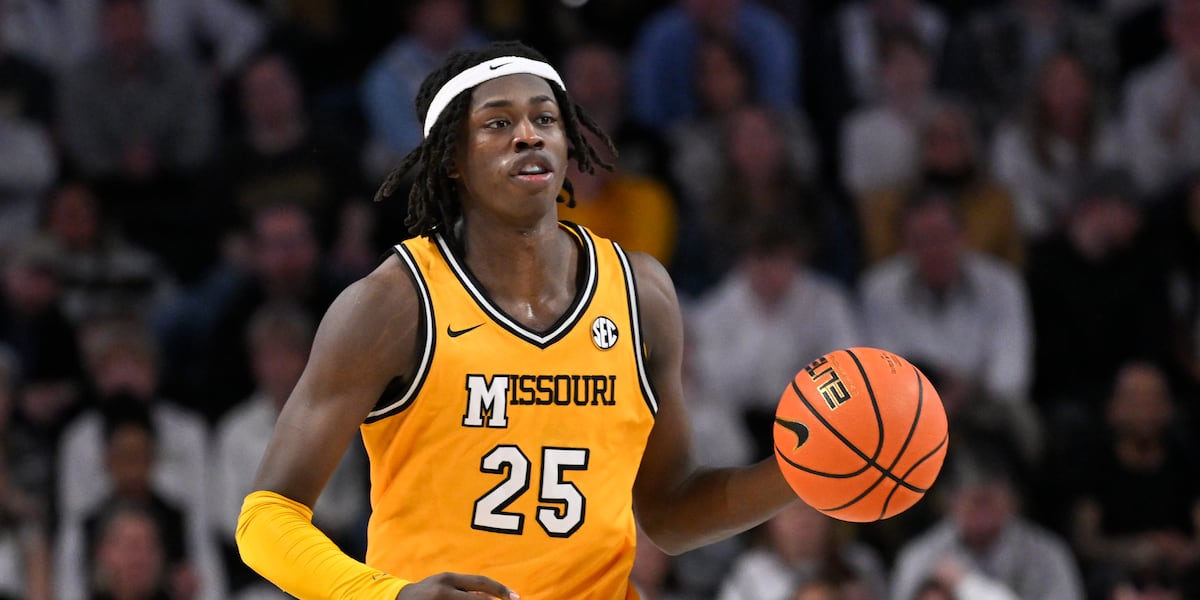
Source: WYMT Sports. Casualplayhub News adds summary, context, and editorial framing while linking back to the original report.
Mark Mitchell's journey to Lexington took a decisive turn in a Louisville courtroom before he ever stepped onto the Kentucky campus. The former Missouri forward, who earned All-SEC Second Team honors last season, committed to the Wildcats on Friday, claiming the team's final scholarship slot. The commitment came directly after Mitchell secured a temporary injunction against the NCAA, a legal victory that cleared the path for his immediate eligibility.
Mitchell, a 6-foot-9, 225-pound forward, brings a stat line that immediately elevates Kentucky's frontcourt. He averaged 18.3 points, 5.2 rebounds, and 3.6 assists per game last season, shooting 54.7% from the field. His versatility allows him to operate both inside and on the perimeter, a skill set that coach John Calipari has historically used to create mismatches. The Wildcats, who have been working to fill gaps in their rotation, now have a player who can stretch defenses and attack the rim with equal effectiveness.
His path to Kentucky was anything but straightforward. Mitchell had been ruled ineligible by the NCAA due to what the organization deemed a violation of transfer rules. Contesting the decision, he filed a lawsuit in Louisville, arguing that the NCAA's restrictions were arbitrary and harmed his career. On Thursday, a judge granted a temporary injunction, ordering the NCAA to allow Mitchell to play while the case proceeds. The ruling was a narrow but significant win, one that Mitchell leveraged to enter the transfer portal on Friday morning. Within hours, Kentucky had secured his commitment.
For the Wildcats, Mitchell's arrival addresses a pressing need for depth and athleticism. Kentucky's roster had been set with 12 scholarship players, leaving one open spot. The coaching staff prioritized a versatile forward who could defend multiple positions and contribute offensively from day one. Mitchell fits that mold. His ability to score in transition, rebound in traffic, and facilitate from the high post gives Kentucky a different dynamic than they had previously.
Beyond the court, Mitchell's commitment adds a layer of complexity to the evolving landscape of college basketball. The use of temporary injunctions to bypass NCAA rulings has become more common, with players and their legal teams challenging the status quo. Mitchell's case is the latest in a series of judicial interventions that have forced the NCAA to reconsider its enforcement mechanisms. The organization has not commented on the specific ruling, but the pattern is clear: the courtroom is becoming a parallel pathway to eligibility.
Kentucky now enters the season with a roster that balances experienced transfers and promising freshmen. Mitchell's experience in the SEC means he will not need a lengthy adjustment period. He is familiar with the physicality of the conference, the pace of play, and the scouting that comes with facing top-tier opponents. That familiarity should accelerate his integration into Kentucky's system.
Coach Calipari expressed confidence in Mitchell's ability to contribute immediately, noting that his versatility allows for multiple lineup configurations. Whether starting alongside the team's returning big men or coming off the bench as a scoring spark, Mitchell is expected to play significant minutes. The Wildcats' staff has already begun integrating him into their offensive schemes, emphasizing pick-and-roll actions and isolation sets that highlight his strength attacking the basket.
Mitchell's addition also shifts the national perception of Kentucky. With a roster now featuring a blend of talent and experience, the Wildcats are projected as a borderline top-ten team. Analysts point to their depth, size, and defensive potential as reasons for optimism. The SEC remains competitive, with several teams boasting strong lineups, but Kentucky's new configuration gives them a fighting chance in a conference that often determines the national champion.
As the season approaches, all eyes will be on how Mitchell adapts to his new surroundings. His legal battle is not over—the injunction is temporary, and the broader case against the NCAA continues. But for now, he is eligible, he is committed, and he is ready to play. The Wildcats have their final piece, and the college basketball world is watching to see how it fits.
Article commentary
Mark Mitchell's commitment to Kentucky is more than a roster move—it is a signal of how dramatically the college sports landscape has shifted. The legal injunction that made his eligibility possible is part of a broader trend where players are using the courts to challenge NCAA rules that many deem outdated or unfair. This case, like others before it, reveals a growing tension between the NCAA's regulatory authority and the rights of individual athletes. From a basketball perspective, Mitchell is a significant addition. His numbers at Missouri—18.3 points, 5.2 rebounds, and 3.6 assists—are not just solid; they are elite for a forward in the SEC. His shooting efficiency of 54.7% from the field indicates he is not a volume scorer but a smart, selective player who makes the most of his opportunities. For Kentucky, which has struggled with inconsistent perimeter shooting and interior scoring in recent seasons, Mitchell provides a reliable option who can create his own shot and draw fouls. Yet the bigger story is the legal context. Mitchell's temporary injunction is the latest in a string of judicial victories for athletes against the NCAA. The organization's ability to enforce transfer restrictions and eligibility rules has been steadily eroded by court rulings that prioritize player mobility and due process. While the NCAA has argued that its rules preserve competitive balance and academic integrity, judges have increasingly sided with players who claim those rules are arbitrary and harmful. This case also highlights the transfer portal's role as a de facto free agency system. Mitchell entered the portal on Friday and committed to Kentucky within hours. That speed is possible because the portal has become a centralized marketplace where players and coaches act quickly. But it also raises questions about the long-term stability of college rosters. Teams can lose key players overnight, and programs must constantly adapt. Kentucky's ability to secure Mitchell instantly shows the power of a brand and a coach's reputation, but it also underscores the transactional nature of modern college basketball. Critics might argue that the increasing reliance on legal challenges undermines the NCAA's authority and creates a chaotic environment. Supporters, however, see it as a necessary correction to a system that has long restricted player freedom. The truth likely lies somewhere in between. The NCAA needs to reform its rules to avoid constant litigation, but players also need clear, fair pathways to eligibility. Mitchell's case is a symptom of a system in transition. For Kentucky, the immediate impact is clear. The Wildcats now have a versatile forward who can stretch the floor, defend multiple positions, and provide leadership on a young team. With Mitchell, they are a more dangerous team in March. But the broader implications extend beyond one season. As more players follow Mitchell's legal playbook, the NCAA will face increasing pressure to overhaul its rules. The question is whether the organization will adapt voluntarily or be forced to change by the courts. In the end, Mitchell's story is about opportunity—the opportunity to play where he wants, for a coach he trusts, and in a system that finally recognized his right to choose. That is a win for the player, a win for Kentucky, and a reminder that college athletics is evolving faster than anyone imagined.