Venezuela's Dollarization: Biggest Currency Shift Since Euro, Says Hanke
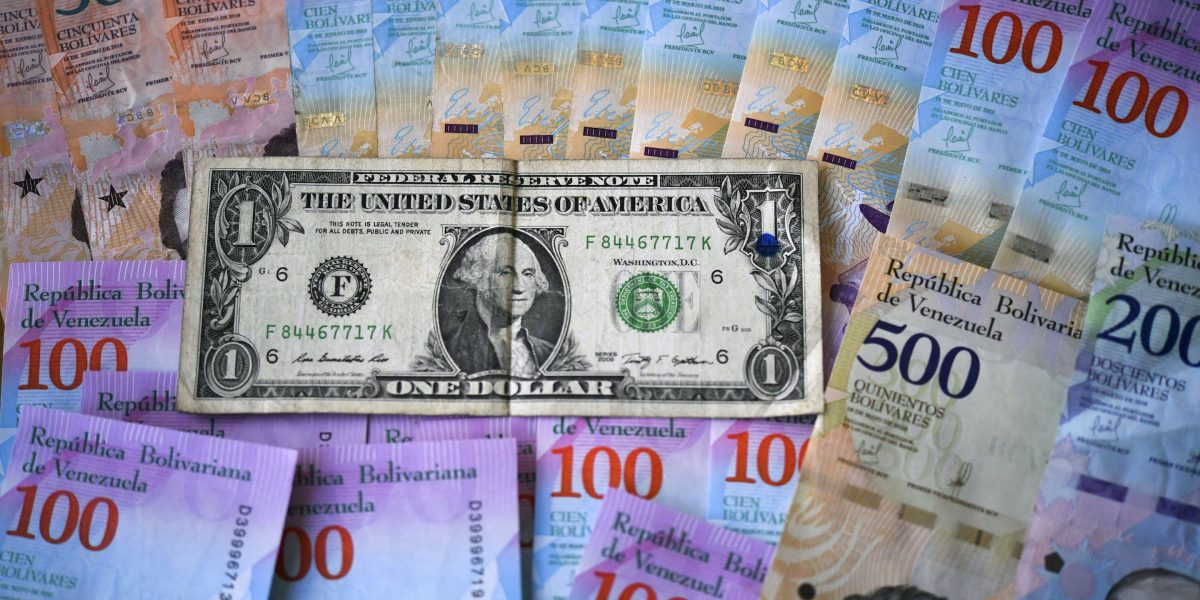
Source: Fortune. Casualplayhub News adds summary, context, and editorial framing while linking back to the original report.
Steve Hanke, a professor of applied economics at Johns Hopkins University, has long been known as the "Money Doctor" for his role in helping governments around the world stabilize their currencies. His latest patient: Venezuela, a nation grappling with annual inflation of 400% and a collapsing bolivar. Hanke, now a special advisor to the country's National Assembly, is pushing a drastic cure: complete adoption of the U.S. dollar, which would mean scrapping the bolivar and shuttering the central bank. The logic is straightforward, he says. "Taming inflation is the key to restoring stability in Venezuela, and all the other progress flows from that," Hanke explained in an interview with Fortune's Shawn Tully. "Stability isn't everything, but without stability, which means stable prices, you have nothing. And there's no better case study showing that's true than Venezuela." The proposal would remove the central bank's ability to print money to cover government debts, a practice that fuels hyperinflation.
Hanke's track record gives him credibility. In 1999, he persuaded Montenegro to abandon the Yugoslav dinar for the Deutschemark. A year later, he oversaw Ecuador's transition from the sucre to the U.S. dollar, the first dollarization in Latin America since Panama's move a century earlier. In 2009, he became an informal advisor to Zimbabwe's prime minister. That country dollarized and curbed hyperinflation, but a new government dropped the dollar in 2013, and inflation roared back. Now Hanke is trying again in Venezuela, after a failed attempt in the mid-1990s to install a currency board that didn't win a majority in the National Assembly. This time, he sees a 50% to 80% likelihood that the assembly will approve official dollarization. "It would be the biggest switch from domestic currencies to an alternative since the introduction of the euro in 1999," Hanke told Tully.
Interestingly, the U.S. dollar is already deeply embedded in Venezuela's economy. The bolivar has plummeted 78% against the greenback in the past year alone, forcing most consumers to buy everyday goods with dollars. "Spontaneous dollarization" has taken hold, with virtually everyone outside government employment or those receiving state pensions using the greenback. Hanke argues this informal shift makes official adoption more likely. But the risks are real. Losing the central bank as a lender of last resort and effectively handing monetary policy to the Federal Reserve are daunting obstacles. Even Argentine President Javier Milei, who campaigned on dollarization, pulled back after taking office. He managed to cool inflation by slashing subsidies and the budget deficit, but the annual rate remains high. Argentina also must defend the peso, which is pegged to the dollar. When regional elections last year crushed Milei's party, the peso tumbled, and U.S. Treasury Secretary Scott Bessent stepped in with a currency swap line.
Despite these challenges, Hanke sees dollarization as the key to unlocking Venezuela's oil-dependent economy. A currency switch would spark a surge in foreign investment, particularly in the oil sector, he predicts. The country also carries $250 billion in debt, about 150% of GDP. "Increased production would provide the dollars needed to pay the principal and interest," Hanke said. Ending hyperinflation would lower interest rates, encouraging borrowing by consumers and businesses, which would ignite the housing market and drive domestic investment. "If it happens soon, Venezuela would take off from negative growth this year to positive growth next year," Hanke added. The plan is ambitious, but the Money Doctor has seen it work before.
Article commentary
Steve Hanke's proposal to fully dollarize Venezuela represents one of the most dramatic currency reforms in modern history, but it carries significant risks and uncertainties. The idea of abandoning the bolivar and effectively dissolving the central bank is not new—Hanke himself has been advocating for it since the 1990s. His track record in Montenegro, Ecuador, and Zimbabwe gives him a degree of credibility, but each case is unique, and Venezuela's political and economic landscape is fraught with additional complications. The most immediate challenge is the loss of monetary sovereignty. Handing over control of interest rates and money supply to the Federal Reserve means Venezuela would have no independent tool to respond to domestic shocks. While dollarization can stabilize prices and curb inflation, it also ties the economy to U.S. monetary policy, which may not align with Venezuela's needs. The Federal Reserve's decisions are made with the U.S. economy in mind, not a fragile, oil-dependent nation in the midst of a humanitarian crisis. Moreover, the absence of a lender of last resort could leave the banking system vulnerable during a crisis, as seen in other dollarized economies like Ecuador, which had to rely on external support during the 2008 financial crisis. Another hurdle is the political will within Venezuela. The National Assembly has considered dollarization before, but Hanke's earlier attempt for a currency board failed. The current odds of 50% to 80% are optimistic, especially given the government's reliance on the central bank to finance spending. Even if the plan is approved, implementation would be messy. The country already uses dollars informally, but official dollarization would require a massive logistical effort: converting all contracts, assets, and liabilities into dollars, setting exchange rates, and ensuring sufficient dollar reserves. The $250 billion in debt is another elephant in the room. Hanke argues that increased oil production would generate the dollars needed to service it, but Venezuela's oil sector has been decimated by years of mismanagement, sanctions, and infrastructure decay. A revival would require massive investment and a favorable geopolitical environment, which is far from guaranteed. Comparative examples are instructive. Argentina's Javier Milei, despite his dollarization rhetoric, backed off after taking office, opting instead for fiscal austerity and a crawling peg. The peso's vulnerability in the face of electoral setbacks demonstrated the risks of even partial dollarization. Zimbabwe's experience also shows that the benefits of dollarization can be reversed if political commitment wanes. Hanke's plan is a bold bet on stability, but it hinges on Venezuela's ability to attract foreign investment, maintain political cohesion, and weather external shocks. Without those, dollarization could simply replace one set of problems with another. The commentary should recognize that while the monetary cure is elegant in theory, the patient's recovery depends on much more than just switching currencies.