Freeman: Notre Dame Misses Window for 2022 Recruits
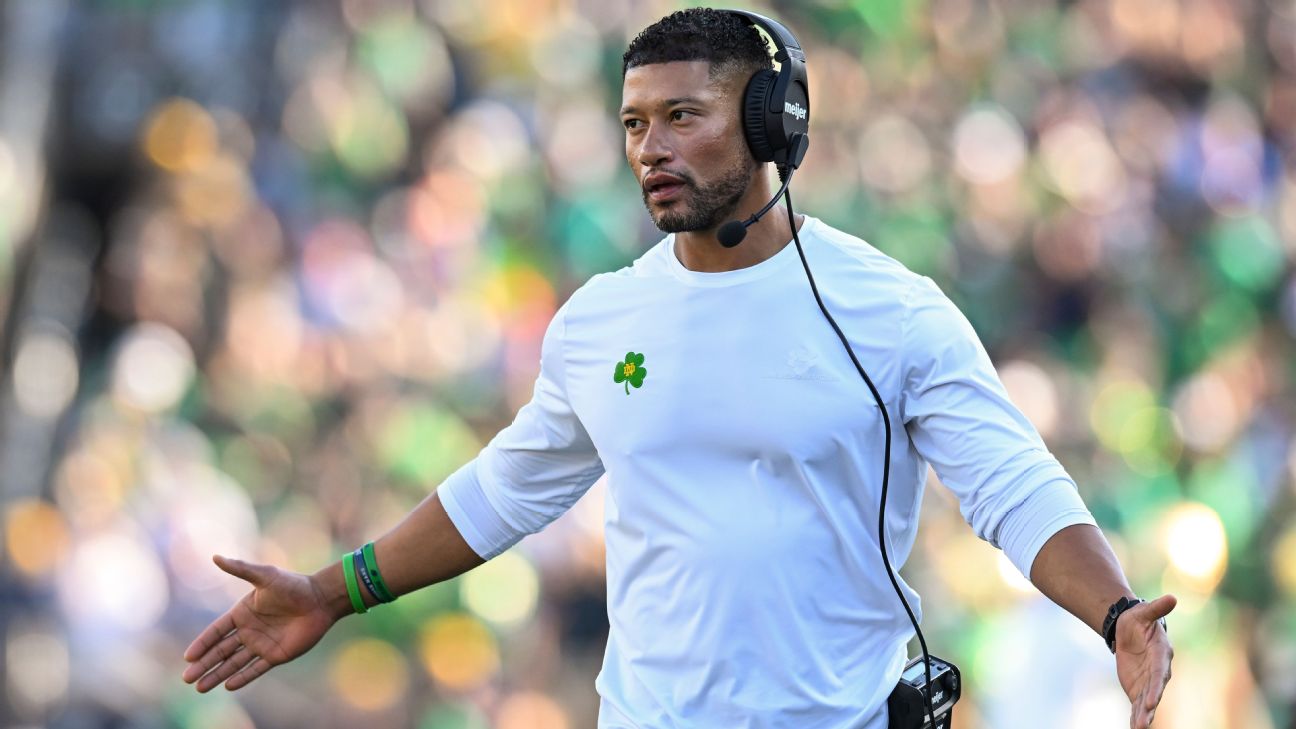
Source: ABC 7 Chicago Sports. Casualplayhub News adds summary, context, and editorial framing while linking back to the original report.
Ad eligibility review: sensitive-topic
Notre Dame is sitting out the scramble to add players from the 2022 recruiting class, with head coach Marcus Freeman declaring that the university's academic calendar and admissions process make it simply too late. Speaking to reporters on Friday, Freeman clarified that the Fighting Irish will not be among the teams seeking to capitalize on recent legal decisions that could allow certain athletes to return for an extra season this fall.
The situation stems from a federal judge's ruling that opened the door for players in the 2022 recruiting class who have played four consecutive seasons to come back for a fifth year. That decision was quickly challenged, and an appeals court on Friday granted the NCAA a stay, effectively reversing the order. But the legal wrangling is far from over. Dozens of athletes across the country have obtained temporary restraining orders through separate state lawsuits, allowing them to compete this fall regardless of the NCAA's appeal.
One such athlete with ties to Notre Dame is defensive end Junior Tuihalamaka. He made seven starts over four seasons with the Fighting Irish and was among 15 players—including some currently in the NFL—who were granted a temporary restraining order by a Louisiana judge on Wednesday. Tuihalamaka's name surfaced when Freeman was asked about the possibility of bringing him back to South Bend. The coach's response was unequivocal.
"For us at Notre Dame, it's just too late [with] the graduate admissions process, and I don't think it would put a person in a good situation this late—school starts on Monday—to have success in the classroom and on the field, so that's been our stance on it," Freeman said. He added, "Our admissions has already done their admissions and cycles. That's where the university and the athletic program stands right now."
Freeman's comments came just hours before Tuihalamaka made his next move. According to his agent, who spoke to ESPN's Pete Thamel, the defensive end committed to LSU on Friday, choosing to join the Tigers rather than wait for a potential return to Notre Dame. The decision underscores the rapid pace of roster movement in the wake of the legal rulings.
Notre Dame's fall semester begins Monday, which has left the program with virtually no time to evaluate, admit, and integrate a new player. The university's graduate admissions process operates on set cycles, and those cycles are already closed for the current term. Freeman emphasized that any late addition would struggle to balance academics and athletics, and the program would rather prioritize the well-being of its student-athletes.
This cautious approach stands in contrast to some other programs that have aggressively pursued eligible players. The legal landscape remains fluid, with the NCAA's stay adding uncertainty to the eligibility of players who have not yet secured individual restraining orders. For Notre Dame, the decision is as much about institutional philosophy as it is about logistics. The Fighting Irish have long prided themselves on a rigorous academic standard, and the current situation tests that commitment.
Tuihalamaka's departure to LSU marks the end of his Notre Dame chapter, but his case highlights the broader implications of the legal battles. The temporary restraining orders have created a patchwork of eligibility across the country, with some players suiting up while others remain in limbo. For Notre Dame, the choice to sit out this recruiting cycle is a deliberate one, rooted in the belief that timing and academic integrity matter more than a short-term roster boost.
As the season approaches, the Fighting Irish will move forward with their current roster, having decided that the window for adding 2022 class players has closed. Freeman's message was clear: Notre Dame will not compromise its principles for the sake of a few extra bodies, even if the legal landscape shifts further.
Article commentary
Notre Dame's decision to forgo adding players from the 2022 recruiting class, despite a legal window opening, reflects the unique intersection of academic rigor, athletic pragmatism, and institutional identity. While other programs are scrambling to take advantage of temporary restraining orders and court rulings, the Fighting Irish are essentially saying: the timing doesn't work, and we won't force it. This is not a case of administrative laziness or a lack of ambition. Marcus Freeman's comments reveal a deep respect for the admissions process and the academic calendar. Notre Dame operates on a semester system that begins Monday, leaving virtually no time to vet, admit, and integrate a new graduate student. The university's graduate admissions cycles are already closed, and any attempt to expedite a player's entry would likely set them up for failure both in the classroom and on the field. Freeman's stance is a reminder that college athletics, at its core, is about the student-athlete experience—even when the legal system is pushing for expediency. From a broader perspective, this situation highlights the growing divide between the NCAA's traditional governance and the court-driven landscape of athlete eligibility. The federal judge's ruling and subsequent appeals have created a confusing patchwork: some players can play via state restraining orders, others cannot due to the NCAA's stay. Notre Dame's choice to opt out is a safe harbor in a storm. It avoids the legal and logistical headaches that other schools are navigating, but it also raises questions about whether the program is leaving talent on the table. Junior Tuihalamaka, who started seven games for the Irish, committed to LSU within hours of Freeman's press conference. That's a tangible loss, but one Notre Dame seems willing to accept. Critics might argue that the university is being too rigid. In a competitive landscape where roster depth can make or break a season, turning away a proven player seems counterintuitive. Yet Notre Dame's brand has always been built on a foundation of academic integrity and long-term planning. The school is not in the business of last-minute exceptions, especially when they could compromise the very values that attract recruits in the first place. Freeman's decision also protects the program from potential backlash if a late addition were to struggle academically or disrupt team chemistry. Looking ahead, this episode may serve as a bellwether for how elite academic institutions handle the evolving eligibility rules. As more players seek additional years through legal channels, schools will have to decide whether to bend their processes or hold firm. Notre Dame has drawn a clear line, and it will be interesting to see if other universities with similar academic standards follow suit. For now, the Fighting Irish are betting that disciplined adherence to their calendar and admissions system will pay off in the long run—even if it means missing out on a short-term boost.