Kuminga's Next Move: A Three-Team Trade Blueprint
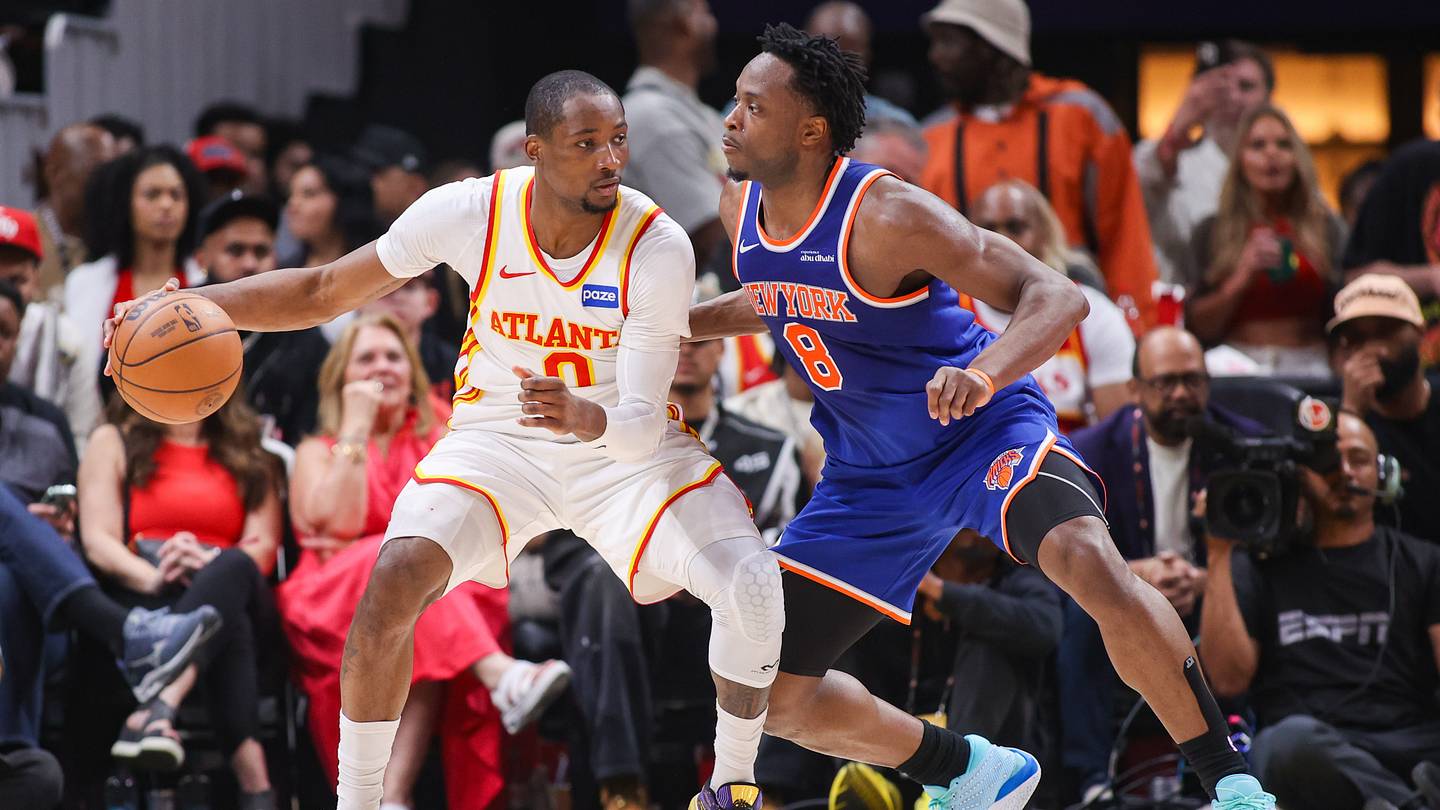
Source: SI NBA. Casualplayhub News adds summary, context, and editorial framing while linking back to the original report.
The summer's free agency dominoes continue to fall, but one notable name remains in limbo: Jonathan Kuminga. After the Nuggets and Cavaliers finalized a four-year, $88 million sign-and-trade for Peyton Watson, the spotlight shifts to the 23-year-old forward who finds himself without a clear landing spot. Unlike Watson, Kuminga is an unrestricted free agent, meaning he can sign with any team. Yet his market has not matched his expectations. Kuminga is reportedly seeking a franchise that offers a prominent role, long-term financial security, and the chance to earn another big contract down the road. That combination has proven elusive, but a creative three-team framework could unlock a path forward.
The Atlanta Hawks, who acquired Kuminga from Golden State at the trade deadline, have already signaled that he does not fit their long-term vision. General manager Onsi Saleh has been transparent about resetting the roster, and Kuminga's presence as a pending free agent made him a logical trade chip. Meanwhile, the Indiana Pacers have quietly had a quiet offseason on the wing. Their only notable addition was Kelly Oubre Jr., a solid perimeter defender and improved three-point shooter, but hardly a splash for a team with Eastern Conference aspirations. Indiana is also wary of spending premium draft capital after their previous deal for Ivica Zubac, but they could use insurance behind Pascal Siakam and a player who thrives in their up-tempo system.
The proposed trade: Atlanta receives Jarace Walker, Ben Sheppard, and a 2027 second-round pick from Indiana. Indiana lands Jonathan Kuminga on a three-year, $54 million deal, Bilal Coulibaly, and a 2033 second-round pick from Atlanta. Washington gets Obi Toppin, Quenton Jackson, and a 2030 first-round pick swap from Indiana.
From Atlanta's perspective, this deal brings in two young players who have struggled to earn consistent minutes in Indiana but fill specific needs. Ben Sheppard is a low-turnover guard who shoots 36.2% from three and plays sound defense. His turnover rate ranks in the 86th percentile among wings, and his shooting numbers would likely improve in a smaller role. Jarace Walker, only 22, struggled early but turned a corner after January 1st, averaging 13.8 points, 5.7 rebounds, and 3.1 assists on 41.7% from deep. He is on an expiring contract, giving Atlanta flexibility to develop him or move him later. The Hawks are not in a rush to contend, so they can afford to be patient.
For Washington, Obi Toppin provides a proven lob threat who pairs well with Trae Young. While the pairing of Alex Sarr and Anthony Davis will likely keep Toppin out of the starting lineup, his three-point shooting (over 35% the last three seasons) addresses a glaring need for spacing. The Wizards also gain a first-round pick swap from Indiana, adding to their asset collection as they rebuild.
Indiana's side of the deal is the most intriguing. The Pacers would part with Jarace Walker, a promising but raw prospect, but they would receive two forwards who fit their identity. Bilal Coulibaly is a standout perimeter defender with a 3.4% steal rate and averages 2.3 stocks per game. He pairs well with Andrew Nembhard and Aaron Nesmith, giving Indiana multiple options to counter the Knicks' wing depth. Coulibaly's offense is a work in progress, but Tyrese Haliburton's playmaking can elevate him in transition. Kuminga, meanwhile, is not a direct replacement for Pascal Siakam. Instead, he offers versatility: he can defend bigger players on the perimeter, draws fouls at a high rate (free-throw rate of 0.36, 91st percentile among forwards), and grabs defensive rebounds (17.9% DREB%). Those traits help a Pacers team that ranked 16th in defensive rebounds per game.
Still, the Pacers may ultimately choose to stay put, trusting internal development and a healthy Haliburton to lift them. But if Kuminga's market remains cold, this three-team framework could become a reality. It provides a clean exit for Atlanta, a win-now boost for Indiana, and future assets for Washington. The next few weeks will determine whether Kuminga finds a home or waits for a market that never fully materializes.
Article commentary
This proposed trade is a fascinating exercise in roster construction, but its feasibility depends on several factors that may not align. Jonathan Kuminga's value is at an interesting crossroads. He is a 23-year-old forward with elite athleticism, a growing offensive game, and defensive versatility. However, his inconsistent production in Golden State and Atlanta has left teams questioning whether he can be a core piece on a contender. The three-year, $54 million deal in this scenario is reasonable—roughly $18 million per year—but it requires a team to commit to him as a starter or key rotation player. For the Atlanta Hawks, the motivation is clear. They have no interest in retaining Kuminga long-term, and recouping two young players plus a draft pick is a solid return. Jarace Walker is a high-upside forward who showed flashes of three-point shooting and playmaking in the second half of last season. Ben Sheppard is a low-usage, high-efficiency wing who can slot into a backup role. The Hawks are in a rebuilding phase, so taking on Walker's expiring contract and developing him makes sense. The second-round pick is a minor sweetener, but the real value is in the young talent. Indiana's calculus is more complex. The Pacers are a team on the rise, coming off a deep playoff run, and they need to maximize their window. Adding Kuminga and Coulibaly gives them two young wings who can contribute immediately. Kuminga's ability to draw fouls and rebound fits Siakam's backup role, while Coulibaly's defense addresses a weakness on the perimeter. Losing Jarace Walker stings, but Walker's development timeline may not match Indiana's contention timeline. The Pacers also avoid giving up a high-value first-round pick, instead offering a second-rounder and a swap. That is a manageable cost for a team that believes it can compete now. The Washington Wizards are the classic third-party facilitator. They take on Obi Toppin's contract, which is reasonable for a proven shooter, and add a first-round pick swap. Toppin's role as a backup big who can stretch the floor is valuable, and the pick swap gives them future flexibility. For a rebuilding team, accumulating assets is the name of the game, and this deal does that without sacrificing long-term cap space. One potential hurdle is Kuminga's own preferences. He has been reportedly seeking a team where he can be a focal point. In Indiana, he would be behind Siakam and possibly Zubac, though his minutes could still be significant. The Pacers' fast-paced style suits him, but he may view the role as too limited. Another factor is the market. If a team like the Brooklyn Nets or Detroit Pistons steps up with a larger offer, Kuminga could simply sign outright, bypassing the sign-and-trade entirely. Overall, this trade is a well-constructed theoretical solution that addresses each team's needs. It is not a blockbuster, but it is a sensible move for all sides. The biggest question is whether the Pacers are willing to bet on Kuminga's upside over Walker's development. Given their win-now mindset, the answer might be yes. The next few weeks will reveal if this blueprint becomes reality or remains a hypothetical.