Eight Sleep's $3,000 Mattress Cover Pivots to Fight Sleep Apnea
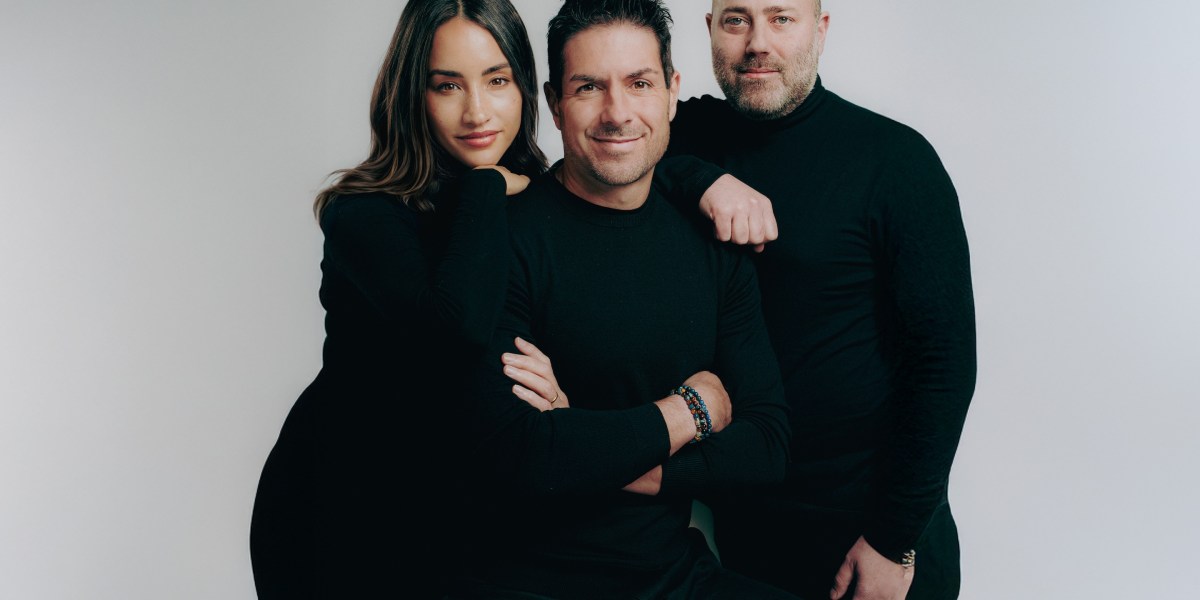
Source: Fortune. Casualplayhub News adds summary, context, and editorial framing while linking back to the original report.
Eight Sleep, the startup that created a $2,999 mattress cover used by tech titans Elon Musk and Mark Zuckerberg, is trying to shed its celebrity association. The company is now chasing FDA approval to detect and treat sleep apnea, a move that could recast its Pod as a medical device rather than a pricey sleep accessory. Matteo Franceschetti, cofounder and CEO, told Fortune the regulatory process is going fairly smoothly. Eight Sleep began pursuing FDA clearance for sleep apnea detection and mitigation in 2025, and is conducting clinical studies to back its submissions. So far, only one independent study on the Pod's benefits has been published, alongside several preprints that are positive but not yet independently verified. The company has also funded multiple studies on sleep apnea that appear in scientific journals, and it sits on a massive cache of aggregated, de-identified user data that could support broader health research.
FDA clearance for sleep apnea detection would place Eight Sleep in a more rigorous regulatory lane similar to that of Apple Watch and Samsung Galaxy Watch, both cleared since 2024 to flag sleep apnea risk. The FDA sets a lower bar for detection—essentially identifying snoring severe enough to stop breathing—than for diagnosis. Eight Sleep is aiming for a more clinical, prescription-based diagnostic aid, comparable to existing home sleep-testing devices. While the Apple Watch can alert users to signs of apnea, Eight Sleep claims it will quantify apnea events per hour. In August 2026, the company began a clinical trial with Abu Dhabi's Department of Health to test whether the Pod can automatically reposition sleep apnea patients, potentially serving as an alternative to CPAP machines. Other U.S. health-tech firms are also using the emirate's Department of Health as a springboard for medical credibility: Oura signed a joint research program on women's health and cardiometabolic risk, and Whoop secured a $75 million investment from Mubadala to validate its biomarker labs.
Franceschetti's goal is to get insurers to treat the Pod as a medical device rather than a luxury purchase. The company is working on making the Pod more affordable, though it hasn't laid out a clear cost structure. The Pod already qualifies for HSA and FSA reimbursement through Truemed. Whether regulators will agree that it treats a condition, rather than just tracking one, remains an open question.
The Pod sits atop a mattress and connects to a hub that pumps heated or cooled water through internal tubing, with each side of the bed having its own temperature zone. Built-in sensors track heart rate, breathing, and movement, and an AI model adjusts temperature overnight and generates a sleep score. Automatic control requires an annual subscription of $199 to $399; without it, users only get manual temperature buttons. Both Musk and Zuckerberg are among executives, athletes, and celebrities who credit the company with transforming their sleep. Formula 1 driver Charles Leclerc is an investor, and the Aston Martin Aramco F1 team signed a reportedly eight-figure partnership in February 2026. In March 2026, Eight Sleep raised $50 million from Tether at a $1.5 billion valuation. The company was profitable last year.
Franceschetti's ambition is to become the biggest health technology company in the world. He is not an engineer or a doctor; he trained as a securities lawyer in Milan, from a family of lawyers, judges, and doctors. His father's death in 2008 pushed him toward riskier ventures. He describes himself as part race car driver—bold and ambitious—and part lawyer—intellectually disciplined. In 2014, Franceschetti, Massimo Andreasi Bassi, and Alexandra Zatarain started Eight Sleep in a garage, building the first prototype and throwing a pajama party to demo it for investors. Zatarain, then 24, wrote the pitch deck in a few hours and joined that night; she is now married to Franceschetti and runs brand and marketing, while Bassi is chief technology officer. An Indiegogo campaign raised over $1.2 million (well above the $100,000 goal) and 8,000 pre-orders before the product existed, which the founders used to get into Y Combinator's 2015 class after two rejections.
The decade since has been a steady climb through funding rounds: a $14 million Series B in 2018 led by Khosla Ventures, an $86 million Series C in 2021 near a $500 million valuation, a $100 million Series D in August 2025 near $1 billion, and the Tether round in March 2026 at $1.5 billion. Total funding exceeds $310 million. Eight Sleep has never disclosed revenue; Franceschetti dodged specifics. Third-party estimates peg 2025 revenue at roughly $264 million, flat with 2024, but Franceschetti disputes that, saying revenue has grown close to 30 times since the Pod's 2019 launch, that the company was profitable in 2025, and that cumulative Pod sales exceed $500 million. Eight Sleep now sells in 35 countries, including a 2026 launch in China.
Franceschetti draws a comparison to Tesla: the Pod is the Model S, a premium flagship meant to fund cheaper models later. He insists the company doesn't want to be luxury. The smart-mattress category has seen a cautionary tale: Sleep Number filed for Chapter 11 in June 2026 with $672 million in debt after net sales fell 16%, and Sleep Country Canada bought its assets for $701 million. Eight Sleep, direct-to-consumer with roughly 100 employees, says it avoided that trap. Market-size estimates range from $1.87 billion to nearly $5 billion for the global smart mattress category. Franceschetti prefers comparing to wearable-health brands: Oura, valued around $11 billion, and WHOOP, valued at $10.1 billion. Alexandra Zatarain told Fortune, We see ourselves as a completely different market that literally doesn't exist.
The problem Eight Sleep is chasing is real. Roughly 30.5% of American adults sleep fewer than seven hours a night, per the CDC, and RAND Europe estimates insufficient sleep costs the U.S. up to $411 billion a year. The American Academy of Sleep Medicine says undiagnosed sleep apnea alone costs nearly $150 billion annually—exactly the condition Eight Sleep's FDA filing targets. Franceschetti said the most consequential part of Eight Sleep's future has nothing to do with billionaires or race cars. He recalled a doctor at a major U.S. medical institution emailing him about an underage patient whose medical condition prevented her from regulating her own body temperature; her family couldn't afford a Pod. Cancer will be a big market for us, he said, describing patients whose hormone-related treatments disrupt temperature regulation.
Article commentary
Eight Sleep's pivot from a luxury sleep gadget to a medical device company is a bold strategic gamble that reflects a broader trend in consumer health tech: moving from wellness tracking to clinical intervention. The company's pursuit of FDA clearance for sleep apnea detection and treatment is ambitious, but it faces significant hurdles. The regulatory path for a device that claims to diagnose or treat a medical condition is far more demanding than for a general wellness product. While the FDA has cleared wearables like Apple Watch and Samsung Galaxy Watch for sleep apnea risk detection, those are non-invasive, low-risk alerts. Eight Sleep aims for a higher bar—quantifying apnea events per hour and potentially repositioning patients—which requires rigorous clinical evidence. The company has only one published independent study, and its preprints are not yet verified. Its reliance on internal funding and user data may raise questions about bias and reproducibility. The partnership with Abu Dhabi's Department of Health is a smart move to gain international credibility and access to a population with high sleep apnea prevalence. Oura and Whoop have similarly leveraged the emirate for research validation. However, the clinical trial for automatic repositioning is a novel approach that could disrupt the CPAP market, but it also introduces risks: a mattress cover that physically moves a sleeping patient must be proven safe and effective, especially for those with severe apnea. The potential for insurance reimbursement is a game-changer. If Eight Sleep can convince insurers that the Pod reduces healthcare costs by treating undiagnosed apnea, it could dramatically expand its market. But the current $2,999 price tag plus annual subscription is a barrier. The company's analogy to Tesla—using a flagship to fund cheaper models—is plausible, but Tesla has a massive scale and manufacturing advantage. Eight Sleep, with only 100 employees and $264 million in estimated revenue, is still a niche player. The bankruptcy of Sleep Number, a unit-share leader, underscores the challenges in the smart-mattress space. Eight Sleep's direct-to-consumer model and profitability offer some insulation, but the overall market is fragmented and price-sensitive. Franceschetti's background as a securities lawyer rather than a medical or engineering expert is notable. He compensates with a mix of boldness and discipline, but the company's technical credibility will depend on its clinical trial results. The personal story of the underage patient unable to afford a Pod highlights the tension between the company's luxury origins and its healthcare ambitions. Making the Pod affordable without sacrificing margins will require a radical cost structure shift, possibly through partnerships with insurers or healthcare systems. The broader societal cost of sleep deprivation—over $400 billion annually in the U.S.—provides a strong rationale for intervention. But whether Eight Sleep can transition from a billionaires' toy to a mass-market medical device remains an open question. The company's valuation of $1.5 billion suggests investor confidence, but the path to $11 billion valuations like Oura's is long. The next few years will be critical as FDA decisions and clinical trial outcomes shape the narrative. If successful, Eight Sleep could redefine the intersection of consumer electronics and healthcare. If not, it risks being remembered as a pricey mattress cover with a compelling marketing story.