U.S. Treasury Unveils 'Greatest Financial Offensive' Against Iran
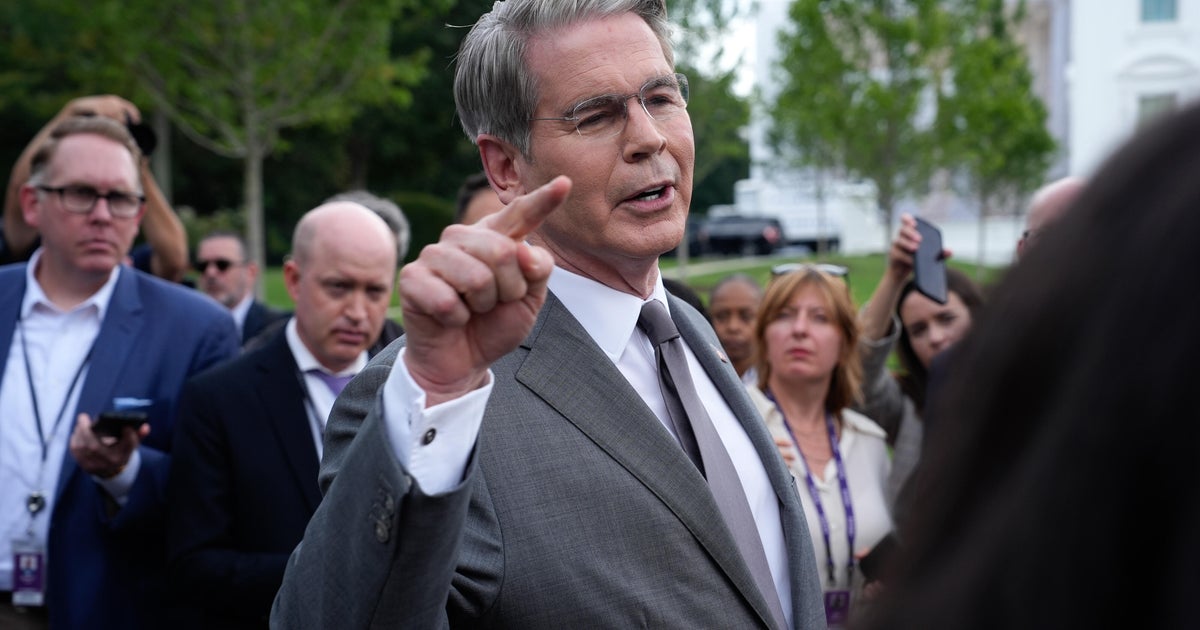
Source: CBS News World. Casualplayhub News adds summary, context, and editorial framing while linking back to the original report.
Ad eligibility review: sensitive-topic
The U.S. Treasury Department is set to announce a sweeping new round of sanctions against Iran on Monday, a move Treasury Secretary Scott Bessent described as "the single greatest financial offensive ever marshalled against an adversary." The announcement comes after President Donald Trump warned of an "economic D-Day" for Tehran, signaling a sharp escalation in Washington's pressure campaign.
Bessent, speaking at a press conference, outlined a strategy that aims to cripple Iran's financial infrastructure, target its oil exports, and isolate the regime from international markets. The sanctions are designed to force Iran back to the negotiating table over its nuclear program, which has been a source of tension between the two nations for decades.
The new measures build on existing sanctions that have already severely restricted Iran's economy. However, officials say this package is unprecedented in scope and severity. It targets not only Iranian state-owned entities but also foreign companies and individuals that facilitate trade with Iran, particularly in the energy sector. The Treasury Department's Office of Foreign Assets Control (OFAC) is expected to add dozens of new names to its sanctions list.
The timing of the announcement is significant. It comes amid stalled negotiations over the Joint Comprehensive Plan of Action (JCPOA), the 2015 nuclear deal that the United States withdrew from in 2018. Since then, Iran has accelerated its uranium enrichment, raising concerns among international observers. The Biden administration had attempted to revive the deal, but talks collapsed last year. Now, with Trump back in office, the approach has shifted back to maximum pressure.
Bessent emphasized that the sanctions are not merely punitive but are intended to create leverage. "We are sending a clear message: the Iranian regime cannot continue to destabilize the region while benefiting from the global financial system," he said. The Treasury Secretary also warned that any nation or company that aids Iran's evasion of sanctions will face severe consequences.
This economic offensive aims to break the stalemate and force Iran to accept strict limits on its nuclear activities. However, critics argue that past maximum pressure campaigns have failed to change Iran's behavior and have instead hardened its stance. Some analysts predict that Iran may respond by further enriching uranium or by disrupting oil shipments through the Strait of Hormuz.
The sanctions are expected to have a significant impact on global oil markets. Iran is a major oil producer, and any reduction in its exports could drive up prices. The United States has already been coordinating with allies to ensure sufficient supply, but the risk of volatility remains.
As the Treasury Department prepares to unveil the details, the international community watches closely. The European Union and other powers have expressed concern about the escalation, urging restraint. Russia and China, both close to Iran, have condemned the new sanctions as unilateral and illegal.
The announcement marks a new chapter in the long-running confrontation between the United States and Iran. Whether this "greatest financial offensive" will achieve its goals remains uncertain, but it is clear that the Trump administration is betting on economic pressure as its primary tool.
Article commentary
The unveiling of what Treasury Secretary Scott Bessent calls the "single greatest financial offensive ever marshalled against an adversary" represents a dramatic escalation in the U.S.-Iran standoff. But the history of sanctions as a tool of statecraft suggests that such sweeping measures often yield mixed results. The original summary explicitly frames this as a "strategy shift" to pile economic pressure on Tehran, hoping to break a stalemate. Yet the question lingers: can sanctions alone force a major geopolitical shift? Economic coercion has been a cornerstone of U.S. foreign policy for decades, from the embargo against Cuba to the layered sanctions on North Korea. In Iran's case, the record is instructive. The previous maximum pressure campaign, initiated during Trump's first term, did drive Iran's economy into deep recession, slashing oil exports and inflating the rial. But it did not produce a new nuclear deal or halt Iran's enrichment activities. Instead, Tehran accelerated its nuclear program, expanded its missile development, and deepened its alliances with Russia and China. The "economic D-Day" warning suggests a belief that total financial strangulation can finally force capitulation. Yet the adversary is not a passive target. Iran has developed sophisticated evasion networks, including ship-to-ship transfers and the use of shell companies, to keep oil flowing. Its regional proxies, such as Hezbollah and the Houthis, exert counter-pressure that complicates any U.S. strategy. Moreover, the timing of this offensive raises strategic questions. The announcement comes after the collapse of JCPOA revival talks, with Iran now enriching uranium to near weapons-grade levels. The window for diplomacy has narrowed, while the risk of miscalculation grows. The Treasury's approach may be intended to create leverage, but it also risks pushing Iran into a corner, where it might see proliferation as its only defense. The phrase "breaking the stalemate" implies a binary outcome: either Iran submits or it does not. In reality, the outcome is likely to be more fluid, with the regime adapting to the pressure while the U.S. faces the challenge of maintaining multilateral support. The European Union, Russia, and China have all voiced opposition to unilateral sanctions, and the effectiveness of the offensive depends heavily on cooperation from other major economies. Without that, the sanctions risk becoming a paper tiger, squeezing Iran but not crippling it. Another critical dimension is the global economic impact. Iran sits on the Strait of Hormuz, a chokepoint for about 20% of the world's oil. Any sharp reduction in Iranian exports, or a retaliatory disruption of shipping, could send oil prices soaring. The U.S. has some cushion through its own production and coordination with Saudi Arabia, but the global economy is already fragile from inflation and geopolitical tensions. A spike in energy costs could ripple through markets, undermining the very political stability that the sanctions aim to protect. Finally, the commentary must consider the psychological and political aspects. The Trump administration is betting that a show of overwhelming financial force will signal resolve and deter Iran from further escalation. But in the Middle East, such gestures often invite reciprocal hardline postures. Iran's leadership has repeatedly framed U.S. pressure as a sign of weakness, not strength, and has used it to rally domestic support. The "greatest financial offensive" may be a potent tool, but it is not a silver bullet. The stalemate may become a spiral, and the greatest risk is that the economic war becomes a prelude to a military one.