Thunder's Top Seed Quest: Northwest Division Grows More Daunting
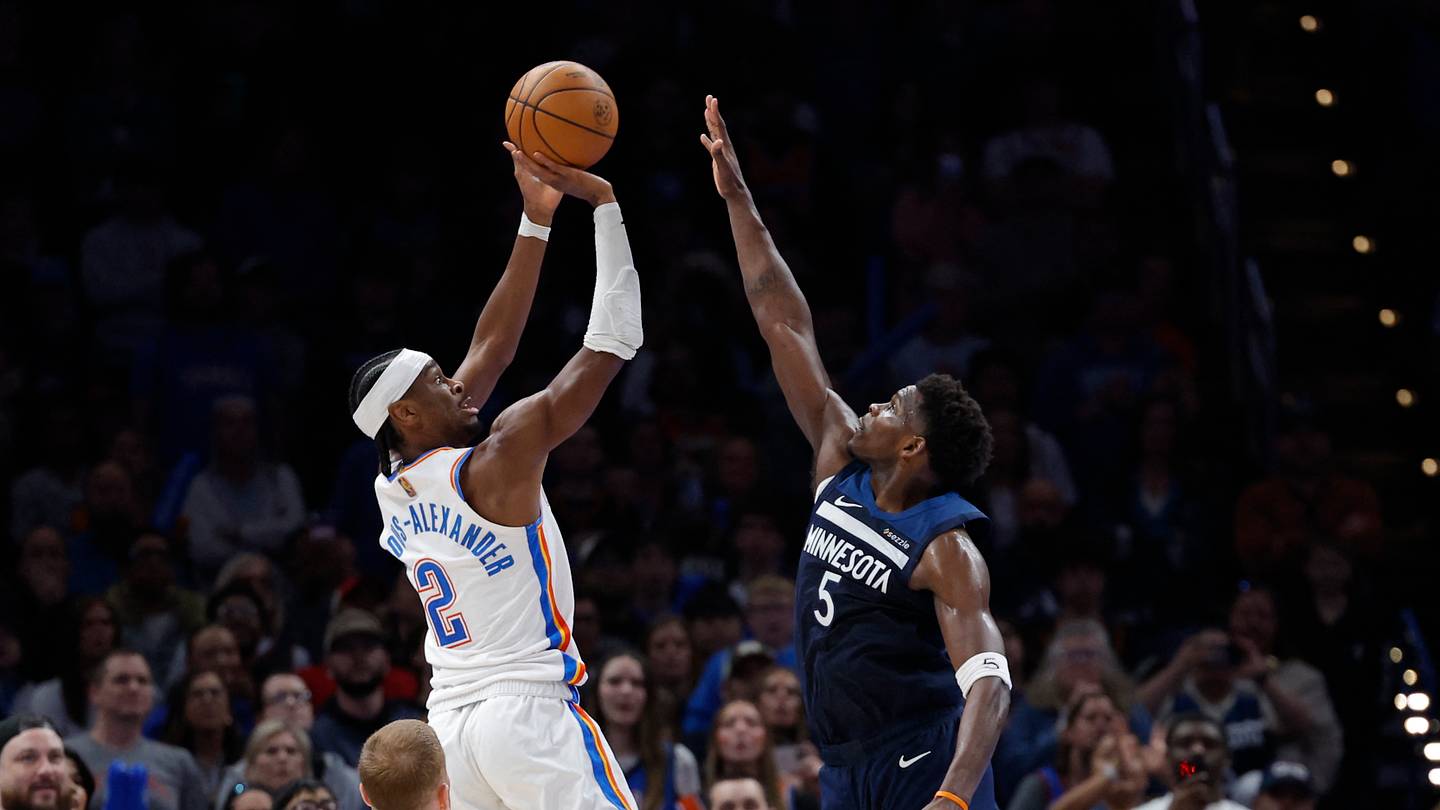
Source: SI NBA. Casualplayhub News adds summary, context, and editorial framing while linking back to the original report.
Oklahoma City has become a model of consistency in the NBA, topping the Western Conference standings for three straight years. The Thunder are on the verge of a historic fourth consecutive No. 1 seed, a feat that would cement their place among the league's elite. But the road ahead may be rockier than any they have traveled in recent seasons.
Over the past three seasons, the Thunder have claimed the top seed with relative ease. They have been a clear contender for a fourth straight. The Northwest Division saw 10 playoff appearances in that span, with nine coming from Oklahoma City, Minnesota, and Denver. The lone exception was Portland, who made the playoffs last season and immediately handed the Thunder its first loss of the season in November.
While the Timberwolves and Nuggets remain potent—both possess star power that can swing any game, though questions about their bench depth linger—the division's expansion of talent does not stop there. The Portland Trail Blazers, after a first-round playoff exit, have not sat still. They added Ja Morant, a dynamic scorer and playmaker, and will see the return of Damian Lillard, who missed significant time with injury. This backcourt pairing instantly elevates Portland's ceiling.
Meanwhile, the Utah Jazz are no longer a rebuilding project. With the additions of Jaren Jackson Jr., a former Defensive Player of the Year, and Darryn Peterson, a promising young guard, Utah has rapidly become a legitimate playoff contender for the 2027 season. The young core already in place, including Keyonte George and Walker Kessler, now has veteran leadership and elite rim protection. The Jazz are poised to end their playoff drought, adding another layer of difficulty to the Thunder's divisional schedule.
These new threats are not just theoretical. Divisional games account for nearly 20% of the Thunder's schedule, meaning roughly 16 games against teams that are all improving. A single slip-up against a lower-tier opponent could cost Oklahoma City the top seed. The days of cruising through division matchups are over.
The Thunder's own roster remains strong, but the margin for error has shrunk. The Northwest Division, once a two-team race, has become a gauntlet. The Thunder's historic run will be tested not only by the league's best but by the very teams they share a division with. How they navigate this new landscape will define their season.
Ivan White, a sports media student at Oklahoma State University who has covered the Thunder since 2022, contributed this report. It was published 2 hours ago.
Article commentary
The Thunder's dominance in the Western Conference has been built on consistency and a deep roster. But the Northwest Division's evolution presents a unique challenge. Historically, strong divisions have often produced the league's best teams, but they also create a brutal path to the top seed. The 2020s have seen the rise of the Pacific Division with the Warriors and Lakers, but the Northwest is now replicating that intensity. The 2010s Southwest Division, featuring the Spurs, Mavericks, Rockets, Grizzlies, and Pelicans, was a gauntlet that often produced multiple 50-win teams. The Thunder's situation mirrors that. In such a division, even a great team can slip to a lower seed. The Thunder must approach each divisional game with playoff intensity. From a tactical standpoint, the Thunder face a scheduling quirk: divisional games are played with extra intensity, and the familiarity between teams leads to frequent upsets. The Thunder's 16 divisional games could be the difference between a 60-win season and a 55-win season. In a conference where the top seed might be decided by one or two games, every loss to a direct rival matters. The Thunder's margin for error is razor-thin. Portland's addition of Ja Morant and return of Damian Lillard creates a dynamic backcourt that can exploit defensive weaknesses. The Thunder's perimeter defense, anchored by Lu Dort and Shai Gilgeous-Alexander, will be tested often. Utah's acquisition of Jaren Jackson Jr. gives them a two-way anchor who can guard multiple positions and stretch the floor. The Jazz's young guards, Keyonte George and Collin Sexton, provide scoring punch. Minnesota's Anthony Edwards and Denver's Nikola Jokic remain the division's biggest threats, but now the Thunder must also prepare for a resurgent Blazers team and a hungry Jazz squad. The psychological factor cannot be ignored. The Thunder have grown accustomed to winning the division handily. Now, every game carries higher stakes. The pressure of maintaining a historic streak could weigh on the team. Conversely, playing tough competition might sharpen their edge for the playoffs. The Thunder's core, including Chet Holmgren and Jalen Williams, is still developing. The added challenge could accelerate their growth. However, the Thunder's front office has built a deep roster capable of withstanding injuries. Their bench players, such as Isaiah Joe and Cason Wallace, provide reliable production. The Thunder's ability to rotate and rest key players will be crucial. The risk of overexertion in divisional games is real, but the reward is battle-tested readiness for the postseason. Additionally, the Thunder benefit from continuity—their core has played together for years, while teams like Portland and Utah are integrating new stars. That chemistry could give the Thunder an early-season advantage. Ultimately, the Northwest Division's strength may be a double-edged sword. It could prevent the Thunder from securing the No. 1 seed, but it also prepares them for the playoff grind. If they emerge from this gauntlet on top, they will be even more dangerous. The race for the top seed in the West just got a lot more interesting, and the Thunder have their work cut out for them. The coming season will test not only their talent but their resilience.