Sharpe's Meniscus Injury Clears Blazers' Backcourt Logjam
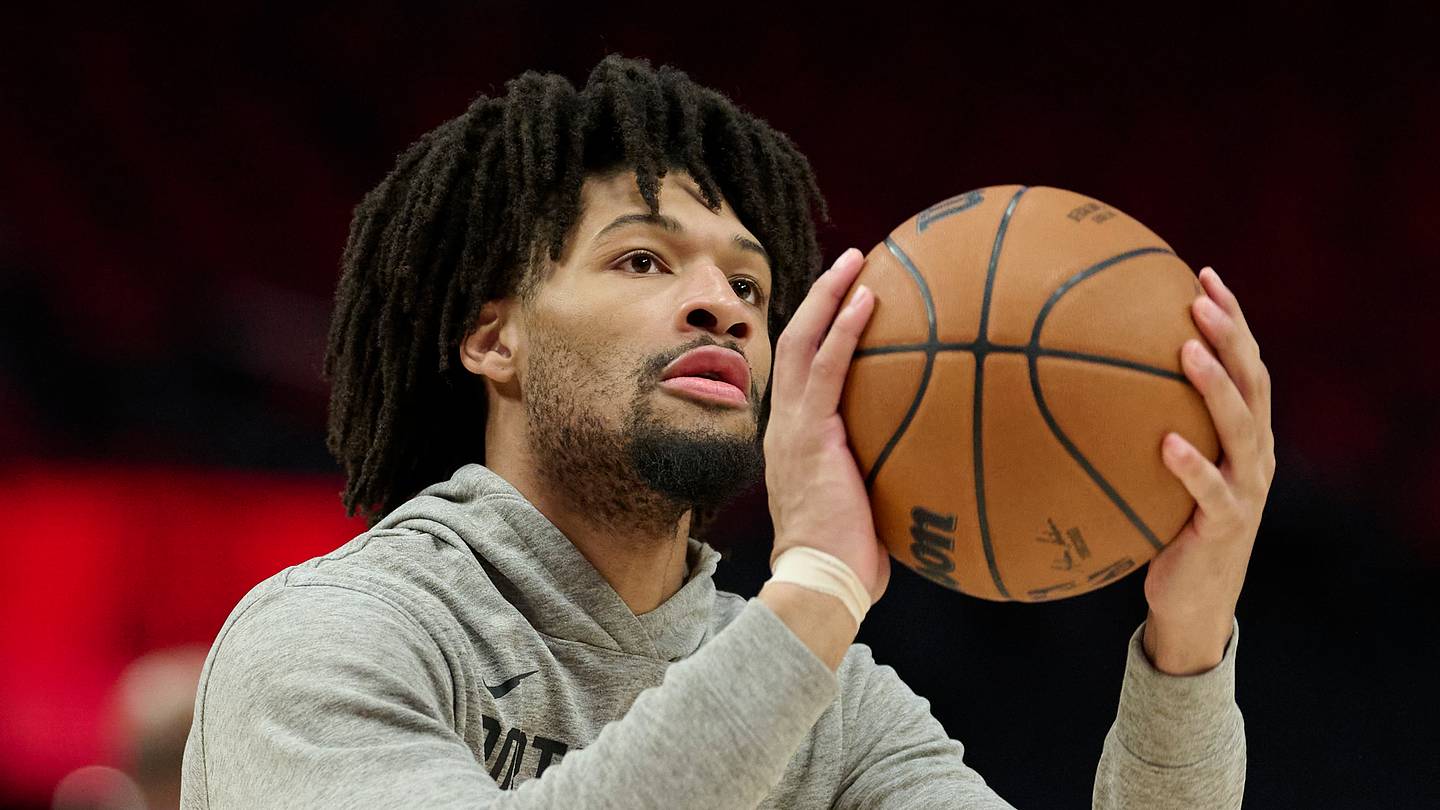
Source: SI NBA. Casualplayhub News adds summary, context, and editorial framing while linking back to the original report.
The Portland Trail Blazers are navigating a difficult but perhaps clarifying situation after losing shooting guard Shaedon Sharpe to a torn meniscus. The injury will sideline him for the majority of the 2026-27 campaign, a blow that would cripple many teams. However, the Blazers are uniquely positioned to absorb the loss thanks to a deep and versatile backcourt.
Sharpe's absence comes at a time when the Blazers were already facing a crowded guard rotation. The return of Damian Lillard, who missed the 2025 playoffs with a torn Achilles, and the high-profile acquisition of All-Star point guard Ja Morant from the Memphis Grizzlies had already pushed Sharpe out of the starting lineup. He was expected to become a secondary shooter, requiring him to adapt his game to fit into a new role. Now, the injury has made the decision for the team.
Portland's new starting backcourt will feature Lillard and Morant, with Jrue Holiday and Scoot Henderson providing depth off the bench. The Blazers' roster also includes John Tonje, Chris Youngblood, Toumani Camara, Vit Krejci, Jayson Kent, Deni Avdija, Sidy Cissoko, Micah Potter, Jeremy Sochan, Donovan Clingan, Robert Williams III, Yang Hansen, and Branden Carlson. This lineup offers a mix of veteran leadership and young talent, but the guard rotation had been a puzzle. Sharpe's injury, while unfortunate, removes the immediate pressure to balance minutes among five capable guards.
Head coach Micah Nori now faces the challenge of finding the right combinations on the court. Without Sharpe, he can experiment with lineups that feature Lillard and Morant together, or use Holiday and Henderson as change-of-pace options. The team's scoring responsibilities will fall more heavily on Lillard, Morant, and forward Deni Avdija, all of whom have been leading scorers for their respective teams in the past. This shared offensive load could actually ease their transition into the season, as they can rely on each other rather than forcing individual heroics.
Lillard and Morant bring contrasting styles: Lillard's deep shooting and off-ball movement complement Morant's explosiveness and playmaking. Holiday adds defensive tenacity, while Henderson provides youthful energy. The Blazers' frontcourt, anchored by Clingan and Williams, also benefits from the backcourt clarity. The team can now focus on building chemistry without the distraction of a logjam.
Looking ahead, Sharpe's return later in the season could be a significant boost. If Portland is in playoff contention, his fresh legs and scoring ability would give the team added depth. The Blazers can treat his recovery as a midseason reinforcement, similar to a trade deadline acquisition. However, the team must first navigate the early months without him, using the time to establish a rhythm and identify which lineups work best.
While the Blazers would prefer to have Sharpe healthy, his injury has inadvertently simplified their roster management. The silver lining lies in the clarity it provides, allowing the team to build around its core stars without the complications of a crowded guard rotation. As the season unfolds, Portland's depth will be tested, but the pieces are in place to turn a setback into a strategic advantage.
Article commentary
The Blazers' situation with Shaedon Sharpe's injury offers a revealing case study in how roster depth can transform a potential crisis into a manageable adjustment. At first glance, losing a promising young guard for most of the season is a significant setback. Sharpe had shown flashes of scoring ability and athleticism, and his development was a key part of Portland's long-term plans. However, the team's front office had already engineered a guard-heavy roster, with Lillard, Morant, Holiday, and Henderson all vying for minutes. The injury, while unfortunate, removes the immediate pressure of balancing four or five players at similar positions. This is not to say the Blazers are better off without Sharpe. His talent is undeniable, and his absence will be felt in certain matchups. But the nature of the NBA season often requires teams to adapt to injuries, and Portland's depth is a luxury that many teams lack. The combination of Lillard and Morant is a high-risk, high-reward pairing. Both are ball-dominant guards who thrive with the ball in their hands. In theory, they can coexist: Lillard can spot up off Morant's drives, and Morant can attack while Lillard draws defenders. However, early-season chemistry will be critical. The absence of Sharpe allows the coaching staff to focus on making this duo work without the distraction of a third guard demanding touches. Another key factor is how the injury affects the development of Scoot Henderson. The second-year guard now has a clearer path to consistent minutes behind Lillard and Morant. Henderson, who showed flashes of playmaking and scoring as a rookie, can benefit from extended playing time alongside veteran guards. This could accelerate his growth, which is crucial for the Blazers' future beyond the Lillard and Morant era. Defensively, the Blazers may actually improve without Sharpe. Lillard and Morant are not known for their defensive prowess, but Holiday is a former All-Defensive player, and Henderson has the physical tools to become a plus defender. Sharpe, while athletic, was still developing on that end. The team's defensive schemes may become more cohesive with a clearer rotation. From a strategic standpoint, the Blazers now have a built-in narrative for the season: 'survive until Sharpe returns.' This gives the team a tangible goal and a reason to stay competitive even if early results are inconsistent. If Portland is in playoff contention by the time Sharpe is healthy, his return could provide a spark similar to a midseason trade. If the team struggles, Sharpe's absence becomes a convenient explanation while the front office evaluates trade options. Ultimately, the Blazers' situation is a reminder that injuries are not always catastrophic. In a league where roster construction is often about fitting pieces together, sometimes a missing piece can actually help the puzzle become clearer. For Portland, the silver lining is not just about depth—it's about the opportunity to build cohesion, develop young talent, and create a foundation for a playoff run. Whether this opportunity translates into success depends on how well Lillard and Morant mesh, how the supporting cast performs, and whether the team can stay healthy elsewhere. The injury to Sharpe is a challenge, but the Blazers are better equipped to handle it than most.